
Excavation dewatering is an essential process in the construction industry for ensuring stable and safe excavation works. It involves the removal of water from the ground to lower the water table and provide a dry and stable environment for construction activities. This article will delve into the details of excavation dewatering systems, their purpose, types, and application in different construction works. By understanding the importance and functioning of these systems, construction professionals can effectively plan and execute excavation works to prevent potential hazards and delays.
Table of Contents
Selection of Excavation Dewatering System for Construction Works
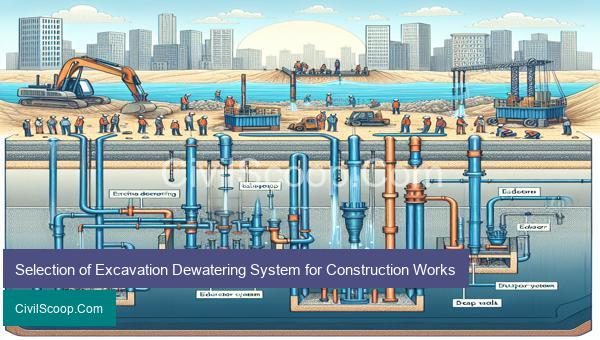
Excavation dewatering is an essential part of construction projects, especially for deep excavations or when working in areas with high water tables. It involves removing groundwater from the soil to create a safe and dry work environment for construction activities. The selection of the most appropriate excavation dewatering system is critical for the success of any project, and it requires careful consideration of various factors.
1. Site Conditions: The first step in selecting an excavation dewatering system is to understand the site conditions. Factors such as the depth of excavation, soil type, and permeability of the soil, as well as the water table level, must be evaluated. For example, a deep excavation in silty soil with a high water table will require a different dewatering system than a shallow excavation in sandy soil.
2. Type of Construction: The type of construction being carried out also plays a significant role in selecting the dewatering system. For example, if the project involves foundation construction, a wellpoint dewatering system may be more suitable as it can maintain a dry working area with lower water levels. On the other hand, if the project involves tunneling, a deep well dewatering system may be necessary to control the water table level around the excavation.
3. Cost: The cost of the dewatering system must also be taken into consideration. The chosen system should be both effective and economical. Factors that can affect the cost include the type and size of dewatering equipment, as well as the duration of the project.
4. Environmental Impact: The environmental impact of the dewatering system is another crucial consideration. The chosen system should not only be effective but also environmentally friendly. The disposal of water from the dewatering process must also comply with local regulations.
5. Project Duration: The duration of the project is an essential factor to consider as it will influence the type of dewatering system chosen. Short-term projects may require different equipment and methods compared to long-term projects.
6. Local Regulations: It is crucial to consider any local regulations and permits required for excavation dewatering. Some areas may have restrictions on the discharge of groundwater, and the chosen system must comply with these regulations.
7. Maintenance and Monitoring: Regular maintenance and monitoring of the dewatering system are essential to ensure its effectiveness throughout the project. The chosen system should have easy access for maintenance, and the project team should have a plan in place for regular monitoring and maintenance.
8. Emergency Response Plan: It is essential to have an emergency response plan in place in case of unforeseen events, such as heavy rainfall. This plan should include contingency measures such as backup pumps or alternative dewatering methods.
In conclusion, the selection of an excavation dewatering system is a critical decision that requires consideration of various factors. It is essential to involve experienced professionals such as geotechnical engineers in the decision-making process to ensure the most suitable and cost-effective system is chosen for the project. Proper selection and implementation of an appropriate dewatering system will ensure a safe and efficient construction process.
Factors Influencing the Cost of a Dewatering System

A dewatering system is an important element in many civil engineering projects, particularly those that involve construction below the water table. The purpose of a dewatering system is to remove groundwater from the site to create a dry working environment for construction activities. However, the cost of a dewatering system can vary greatly depending on a number of factors. In this article, we will discuss some of the key factors that influence the cost of a dewatering system.
1. Water table level
The most significant factor affecting the cost of a dewatering system is the level of the water table. The higher the water table, the more challenging it will be to remove the water, which can result in a more complex and costly dewatering system. For instance, if the water table is close to the surface, it may require deeper and specialized dewatering methods such as wellpoint systems, which can significantly increase the cost of the project.
2. Soil conditions
Soil type and permeability are critical factors that influence the cost of a dewatering system. For example, clay soils have a low permeability, making it more difficult and time-consuming to remove groundwater, resulting in higher costs. On the other hand, sandy or gravel soils are more porous, making it easier to dewater and therefore reducing the cost of the system.
3. Project duration
The duration of the project can also impact the cost of a dewatering system. Longer projects will require the dewatering system to run for an extended period, resulting in higher energy and maintenance costs. Material costs, such as pumps and pipes, can also increase if the project duration is longer.
4. Size of the site
The size of the dewatering site is another crucial factor to consider when estimating the cost of a dewatering system. A larger site will require more pumps, pipes, and other equipment, resulting in a higher cost. Additionally, a larger site may necessitate multiple dewatering systems to effectively remove groundwater, further increasing the cost.
5. Dewatering method
There are various methods of dewatering, and each method has a different cost associated with it. For instance, wellpoint systems are typically more expensive than simple sump pumps, but they may be more effective in certain soil conditions. The dewatering method must be carefully evaluated to determine the most cost-effective option.
6. Environmental regulations
Dewatering activities can have a significant impact on the environment, so it is crucial to comply with environmental regulations. Depending on the project location and local regulations, it may be necessary to implement additional measures, such as water treatment, to minimize the impact of dewatering on the environment. These measures can increase the cost of the dewatering system.
7. Access to the site
The accessibility of the site can also affect the cost of a dewatering system. If the site is difficult to access, it may require specialized equipment and techniques, resulting in increased costs. Similarly, if the site is located in a busy area or has limited space, it may be challenging to install and maintain the dewatering system, increasing the overall cost.
In conclusion, the cost of a dewatering system can vary greatly depending on site-specific factors such as the water table level, soil conditions, project duration, site size, dewatering method, environmental regulations, and site accessibility. As a civil engineer, it is essential to carefully assess these factors to determine
Factors Affecting the Selection of Dewatering System
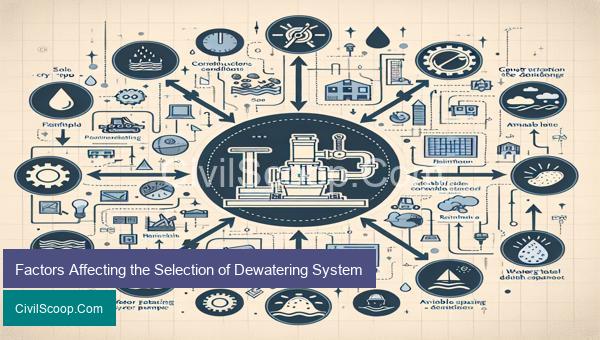
Dewatering is the process of removing excess water from the ground or underground structures to provide a dry and stable working environment. It is an essential part of construction projects, especially in areas where there is high water table or in excavations below the water level. The selection of a suitable dewatering system is crucial for the success of any construction project. Various factors affect the selection of a dewatering system, and they are discussed below.
1. Site Conditions:
The site conditions play a significant role in determining the type of dewatering system to be used. Factors such as soil type, permeability, and water table level can influence the effectiveness of the dewatering method. For instance, in sandy or gravelly soil, wellpoint systems are more effective, whereas deep well systems are suitable for clay or silty soils.
2. Groundwater Flow:
The direction and rate of groundwater flow can also affect the choice of dewatering system. If the groundwater flow is high, a more robust dewatering system, such as deep well systems, may be required to prevent water from seeping back into the excavation. In contrast, in areas with low groundwater flow, simpler methods like sump pumping may suffice.
3. Project Duration:
The duration of the project is an important factor to consider when selecting a dewatering system. Short-term projects may require temporary dewatering systems, such as wellpoints or sump pumping, which can be easily removed once the project is completed. On the other hand, long-term projects may require more permanent solutions, such as deep well systems, which can operate for extended periods.
4. Project Size:
The size and scope of the project can also impact the dewatering system selection. For large-scale projects, like building foundations or tunnels, a combination of dewatering methods may be necessary to effectively control the groundwater level. Smaller projects may only require a single dewatering system.
5. Environmental Concerns:
Before selecting a dewatering system, it is crucial to consider any environmental concerns that may arise. Some dewatering methods, such as open pumping, can have a negative impact on the environment by depleting the groundwater or causing soil erosion. In such cases, alternative dewatering methods should be considered.
6. Cost:
The cost of the dewatering system is also a crucial factor to consider. Some dewatering methods may be more expensive due to the equipment and materials required, installation and maintenance costs, and energy consumption. A cost-benefit analysis should be conducted to determine the most economical and effective dewatering system for the project.
7. Excess Water Treatment:
In some cases, the excess water from dewatering may require treatment before being discharged back into the environment. The type and extent of water treatment needed can affect the choice of dewatering system. Systems that produce less contaminated water, such as wellpoints or deep wells, may be preferable to those that produce highly turbid water, such as jet eductors.
In conclusion, the selection of a dewatering system is a complex process that requires careful consideration of various factors. It is crucial to involve a professional engineer in the selection process to ensure the most suitable and effective dewatering system is chosen for the project.
Conclusion
In conclusion, excavation dewatering systems have become an essential component of any construction project. They not only help to prevent water damage and maintain safety on the job site, but also ensure the smooth and efficient progress of the excavation process. With various types of dewatering techniques available to choose from and advancements in technology, it is important for construction professionals to understand the different options and choose the best solution for their specific project. Proper planning, maintenance, and monitoring of the dewatering system are crucial to its success. Therefore, it is vital for construction companies to ensure that they have a well-designed and properly implemented dewatering system in place for any excavation works. With the right dewatering system, construction projects can be completed on time