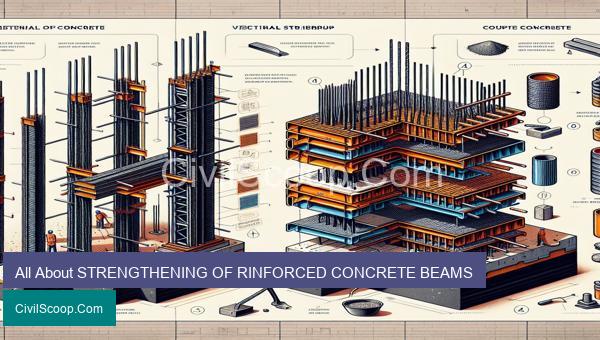
Reinforced concrete beams play a crucial role in the construction of buildings and infrastructure, providing strength and stability to support heavy loads. However, over time these structures may weaken due to various factors such as increased loads, environmental elements, or poor construction practices. To ensure the longevity and safety of reinforced concrete beams, it is essential to strengthen them through various methods and techniques. In this article, we will delve into the concept of strengthening reinforced concrete beams, exploring the reasons why it is necessary, different methods used, and the benefits it offers. By understanding the importance of strengthening, we can ensure the durability and structural integrity of these critical components in construction.
Table of Contents
STRENGTHENING OF RINFORCED CONCRETE BEAMS
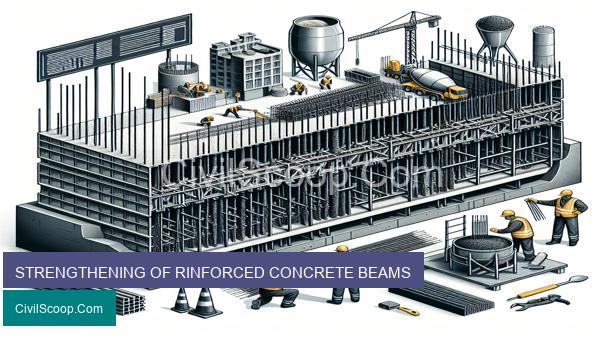
Reinforced concrete beams are commonly used in the construction of structures due to their strength and durability. However, over time, these beams may experience degradation or damage due to various factors such as weathering, overloading, or corrosion of the reinforcement. To ensure the structural integrity and safety of the building, it is essential to strengthen these reinforced concrete beams. The process of strengthening involves adding additional support or reinforcing material to the beam, increasing its load-carrying capacity and overall strength.
There are several methods available for the strengthening of reinforced concrete beams, and the choice of method depends on the specific requirements and conditions of the structure. Some common methods of strengthening reinforced concrete beams are as follows:
1. External Bonding with Carbon Fiber Reinforced Polymer (CFRP):
One of the most popular and effective methods of strengthening concrete beams is by externally bonding them with Carbon Fiber Reinforced Polymer (CFRP) sheets. CFRP is a high-strength and lightweight material that can significantly improve the flexural and shear strength of the beams. The sheets are bonded to the beams using epoxy adhesive, and once cured, they form a strong bond. The CFRP sheets act as external reinforcement, preventing the beams from cracking under heavy loads and increasing their load-carrying capacity.
2. Steel Plate Bonding:
Similar to CFRP, steel plates can also be bonded externally to the concrete beams using epoxy adhesive. The plates are typically used for strengthening beams that are subjected to high shear forces. Steel has a high tensile strength and can withstand high stresses, making it an effective material for strengthening beams under heavy loads. The plates are either bolted or welded to the beam and are covered with concrete to protect them from corrosion.
3. Near Surface Mounted (NSM) Reinforcement:
NSM is a more recent method of strengthening concrete beams, which involves embedding CFRP bars or wires into shallow grooves or holes cut along the length of the beam. The bars are then filled with epoxy adhesive to bond them to the beam, providing an additional layer of reinforcement. This method is less invasive than external bonding and can be used for strengthening beams in areas with limited accessibility.
4. Steel Section Encasement.
Another method of strengthening concrete beams is by encasing them in a steel section connected to the beam. This type of strengthening is commonly used for beams supporting columns or other structural elements. The steel section, usually in the form of a U or H shape, is connected to the reinforced concrete beam with shear connectors. The steel section provides additional stiffness and strength to the beam, allowing it to carry heavier loads.
In addition to the above methods, there are also other techniques such as Fiber Reinforced Polymer (FRP) wrapping, Prestressing and Shoring, Shotcrete Lining, and Jacketing, which can be used for the strengthening of reinforced concrete beams.
It is essential to conduct a comprehensive structural assessment and determine the cause and extent of the damage before selecting the appropriate method for strengthening the reinforced concrete beams. Proper design calculations, quality materials, and skilled workmanship are crucial for ensuring the effectiveness and durability of the strengthening measures. Strengthening of reinforced concrete beams not only improves their load-carrying capacity but also extends their service life, making them safer and more reliable structural members in buildings and other structures.
Conclusion
To wrap up, the strengthening of reinforced concrete beams is a crucial aspect in the construction industry. It not only improves the overall strength and durability of structures but also helps to prevent potential failures and mitigate risks. With the advancement of technology and materials, various techniques have been developed to effectively strengthen and retrofit existing reinforced concrete beams. From externally bonded methods to internal reinforcement systems, engineers and contractors have a variety of options to choose from based on the specific needs of a project. By incorporating strengthening strategies, we can ensure safer and more resilient structures for the present and future generations. It is essential to stay updated with the latest advancements in the field and continuously evaluate and improve the existing structures to ensure their longevity and safety. Ultimately, strengthening reinforced concrete beams is an