
The concept of time value of money is a central principle in finance that highlights the importance of understanding the relationship between time, money, and value. It is a fundamental concept that is used to make various financial decisions, from personal investments to business decisions. Understanding the time value of money is crucial in effectively managing financial resources and maximizing their potential. In this article, we will delve into the basics of time value of money, its significance, and how it is calculated. Whether you are a business owner, investor, or simply interested in improving your financial literacy, a solid understanding of time value of money is essential. So, let’s dive in and explore all about time value of money.
Table of Contents
THE TIME VALUE OF MONEY
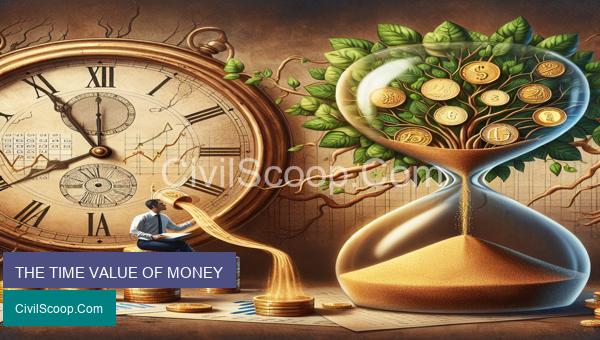
The time value of money is a concept that is fundamental in the field of finance and economics, and plays a crucial role in decision-making processes. It refers to the idea that the value of money changes over time due to various factors such as inflation, opportunity cost, and interest rates.
In simple terms, the time value of money suggests that a dollar received today is worth more than a dollar received in the future. This is because money has the potential to earn interest or generate returns, and thus, the longer you hold onto it, the more it is worth. This concept is based on the principle that a rational person would prefer to receive a certain amount of money today rather than in the future.
The time value of money is important for individuals, businesses, and governments as it helps in making financial decisions. It is also a key factor in measuring the profitability and success of investments. For instance, if you were offered two investment options, one that pays $100 today and the other pays $100 a year from now, you would choose the option that gives you $100 today. This is because you can use that money to earn income or interest during the year, making it more valuable than the $100 received in the future.
The concept of time value of money is closely related to the concept of opportunity cost. Opportunity cost refers to the returns that could have been earned if the money had been invested in another project or option. The higher the opportunity cost, the greater the value of money today.
One of the key factors that influence the time value of money is inflation. Inflation is the general increase in the price level of goods and services. The purchasing power of money decreases with inflation, meaning a dollar today will have a lesser value in the future. This is why investing money in assets that have a higher rate of return than the inflation rate is crucial to maintain its value over time.
Interest rates also play a significant role in the time value of money. If interest rates are high, the time value of money will be higher, and vice versa. This is because high-interest rates mean the opportunity cost of holding money is higher, making it more valuable.
In conclusion, the time value of money is a critical concept in decision-making, financial planning, and investments. It highlights the benefits of having money today rather than in the future and emphasizes the importance of investing money to maintain its value over time. Understanding this concept is essential for individuals and businesses to make sound financial decisions and achieve their financial goals.
Conclusion
In conclusion, understanding the concept of time value of money is crucial in making informed financial decisions. By recognizing that the value of money changes over time, we can make smarter investments, savings, and borrowing decisions. This concept also emphasizes the importance of considering the impact of inflation and interest rates on our finances. With the proper understanding and application of time value of money, we can make our money work more effectively for us and enhance our overall financial success. So, take the time to learn about time value of money and incorporate it into your financial planning. It will undoubtedly benefit you in the long run.