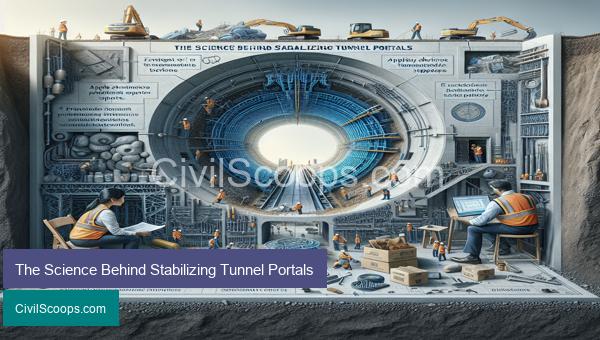
Tunnel portals, though often overlooked, play a crucial role in the safety and stability of underground transportation systems.
These structures are responsible for supporting the weight of the earth above, as well as protecting the entrance and exit of the tunnel.
However, ensuring the stability of tunnel portals is no easy task. It requires a deep understanding of the underlying scientific principles and careful engineering techniques.
In this article, we will delve into the science behind stabilizing tunnel portals, exploring the challenges faced and the solutions employed to ensure the safety and longevity of these vital structures.
Table of Contents
The Physics of Stabilizing Tunnel Portals
Tunnel portals serve as the entrance and exit points of a tunnel, connecting the underground passage to the surface. They are crucial elements in the stability and safety of any tunnel construction.
Failure to properly stabilize the portals can result in collapses, which can cause extensive damage and endanger the lives of those using the tunnel.
The physics of stabilizing tunnel portals involves understanding the forces at play and how to counteract them. The main forces that affect tunnel portals are gravity, soil pressure, water pressure, and seismic forces.
Gravity is one of the most significant forces at play in stabilizing tunnel portals. It exerts a downward force on the surrounding soil, which can cause it to settle or fail.
In order to counteract this, engineers use reinforcement techniques such as steel beams, rock bolts, and concrete anchors to distribute the weight of the tunnel portal and resist gravity.
Soil pressure is another factor that engineers must consider when stabilizing tunnel portals. As the excavation process exposes the rock or soil, it can cause lateral pressure on the sides of the tunnel.
This can lead to instability and even cause the tunnel walls to collapse. To counteract this, engineers use retaining walls, shotcrete, and grouting to reinforce the soil and distribute the pressure more evenly.
Water pressure is another important factor in the stability of tunnel portals. Water can seep into the tunnel and create hydrostatic pressure, which can cause the walls to weaken and fail.
In order to prevent this, engineers use waterproofing methods such as drainage systems, membrane layers, and sealants to keep water from entering the tunnel and putting pressure on the portals.
Finally, seismic forces must also be taken into account when stabilizing tunnel portals. Earthquakes and other seismic events can create strong movements that can destabilize the tunnel portals.
To mitigate the effects of seismic forces, engineers use advanced reinforcement techniques such as seismic isolation bearings and base isolation systems to absorb the energy and reduce the impact on the tunnel portals.
In addition to these forces, engineers must also consider the type of soil and rock present, the depth of the tunnel, and the expected traffic and loads that will be passing through the tunnel. All of these factors play a role in determining the appropriate stabilization methods for tunnel portals.
Technology Involved in Stabilizing Tunnel Portals
Tunnel portals are structures that mark the entrance and exit points of a tunnel and play a crucial role in the safe and efficient operation of the tunnel.
The stability of these structures is of utmost importance as any failure can lead to serious consequences such as collapse of the tunnel or ground surface above it.
In recent years, there have been advancements in technology involved in stabilizing tunnel portals, making them stronger and more resilient.
1. Ground Improvement Techniques:
The construction of tunnel portals often involves excavation and removal of large amounts of soil and rock, which can weaken the ground and lead to instability.
Ground improvement techniques such as soil reinforcement, grouting, and soil nailing can be used to strengthen the surrounding soil and prevent it from collapsing.
Soil reinforcement with materials like geogrids or geotextiles can increase the bearing capacity of the soil, while grouting involves injecting a cement-like material into the soil to fill voids and improve its strength.
Soil nailing, on the other hand, involves the insertion of steel bars into the ground to provide support and prevent soil movement.
2. Rock Bolting:
In case of tunnel portals in rocky terrain, rock bolting is a widely used technique for stabilization. It involves drilling holes into the rock and inserting steel bolts to reinforce the rock and prevent any movement or rock falls. Rock bolting can also be combined with other techniques such as shotcrete or mesh to provide additional support.
3. Shotcrete Lining:
Shotcrete is a method of spraying concrete onto a surface at high velocity, creating a strong and durable layer of concrete. Shotcrete can be used to line the tunnel portals, providing additional support to the surrounding soil or rocks. It can also be reinforced with steel bars for added strength.
4. Grouting Curtain:
Tunnel portals are often subjected to seepage of water, which can cause erosion and lead to instability. To prevent this, grouting curtains can be installed along the tunnel portal walls.
These involve the injection of grout or cement into the ground to create a water-tight barrier, preventing any water from seeping into the ground and causing erosion.
5. Seismic-Resistant Design:
With the increase in frequency and severity of natural disasters, including earthquakes, it is crucial to design tunnel portals with seismic-resistance in mind.
This involves using advanced seismic analysis techniques and designing structures that can withstand the forces of earthquakes.
In addition, seismic-resistant materials such as fiber-reinforced concrete and reinforced steel can be used in the construction of tunnel portals to make them more resilient.
The Cost of Stabilizing Tunnel Portals
Tunnel portals are an essential component of any underground tunnel system. They serve as the entrance and exit points for the tunnel, providing access for people, vehicles, and equipment.
However, during the construction of these portals, various challenges may arise, one of which is maintaining the stability of the tunnel portals.
The cost of stabilizing tunnel portals depends on several factors, including the geological conditions, construction methods, and the type of stabilization techniques used.
In this article, we will discuss the different aspects that contribute to the cost of stabilizing tunnel portals.
Geological Conditions:
The geological conditions influence the cost of stabilizing tunnel portals significantly. The type of rock and soil encountered at the portal location can affect the stability of the portal and the required stabilization measures.
For example, if the portal is built through unstable or water-bearing ground, additional measures will be necessary to ensure its stability, leading to higher costs.
Construction Methods:
The construction methods used to build tunnel portals also play a crucial role in determining the cost of stabilization. Tunnel portals are typically built using two methods: cut-and-cover and NATM (New Austrian Tunnelling Method).
The cut-and-cover method involves excavating a trench, building the tunnel structure, and then backfilling the trench.
On the other hand, NATM utilizes a sprayed concrete shell to support the tunnel while it is excavated. While the cut-and-cover method is generally cheaper, it may not be suitable for all types of ground conditions.
Therefore, the method chosen will depend on the geological conditions and impact the overall stabilization cost.
Stabilization Techniques:
The type of stabilization techniques used to reinforce the portal structure is a significant factor in the overall cost. These techniques may include steel or concrete supports, rock bolts, shotcrete, and grouting.
The choice of stabilization method depends on the type of ground encountered and the overall design of the tunnel portal.
For example, if the portal is built in weak soils, extensive grouting may be required, which can significantly increase the overall cost of stabilization.
Site Access and Logistics:
Tunnel portals are often located in remote areas, making it challenging to access the site and transport materials and equipment.
This can add to the overall cost of stabilizing the portal as specialized equipment and skilled workers may need to be brought in from a distance.
Environmental Factors:
The environmental impact of stabilizing tunnel portals should also be considered. If the portal is located in a sensitive area, additional measures may be required to minimize the impact of construction on the environment.
For example, in urban areas, noise and vibration control measures may be necessary, which can increase the overall cost of stabilization.
Advantages of Stabilizing Tunnel Portals
Stabilizing tunnel portals is an essential part of any tunnel construction project. Tunnel portals are the entrance and exit points of a tunnel, and their stability is crucial for the proper functioning of the tunnel as well as the safety of the users. Stabilizing the tunnel portals has many advantages, some of which are listed below.
- Ensures Structural Stability: The primary advantage of stabilizing tunnel portals is that it helps to maintain the structural stability of the portals. The portal area is usually the weakest point of a tunnel, as it is exposed to the external environment, including wind, water, and other natural forces. Stabilization techniques such as shotcreting, rock bolting, and grouting help to strengthen the portal area and prevent any collapse or damage.
- Prevents Soil Erosion: Tunnel portals are often built on steep slopes, which are prone to soil erosion. This can compromise the stability of the portals and lead to landslides or other hazards. Stabilizing techniques like retaining walls, soil nailing, and erosion control measures can be used to prevent soil erosion and ensure the long-term stability of the portals.
- Improves Safety: Stabilizing the tunnel portals also enhances safety for both the workers and users. The portal area is a high-risk zone, especially during construction, as it is exposed to heavy machinery and equipment. Stable portals reduce the risk of accidents and injuries, providing a safe working environment for the construction workers. Once the tunnel is operational, stable portals ensure a smooth and safe journey for the users.
- Reduces Maintenance Costs: Unstable tunnel portals can lead to frequent repairs and maintenance, which can be a significant cost for tunnel owners. By stabilizing the portals during the construction phase, these maintenance costs can be significantly reduced in the long run. Stable portals require less maintenance and repair work, resulting in cost savings for the tunnel project.
- Minimizes Disruption: Stabilizing the portals also helps to minimize disruption to the surrounding environment. Unstable portals are at a higher risk of collapsing, which can disrupt the surrounding infrastructure, such as roads, railways, and buildings. By stabilizing the portals, the risk of any significant disruptions is reduced, ensuring the smooth functioning of the tunnel and its surroundings.
- Increases Durability: Proper stabilization techniques increase the durability of the tunnel portals. By protecting them from natural elements, stabilizing ensures that the portals can withstand the test of time. This is especially crucial in areas exposed to extreme weather conditions, where the portals are at a higher risk of damage.
Conclusion
In conclusion, the engineering of tunnel portals requires a thorough understanding of the underlying science to ensure stability and safety.
From factoring in geological conditions to utilizing advanced technologies, tunnel portal stabilization is crucial for the success and longevity of any tunnel project.
As we continue to push the boundaries of transportation and infrastructure, it is important to prioritize the science behind stabilizing tunnel portals to ensure the safety of workers and the public.
With modern techniques and constant research, we can continue to innovate and improve upon the science of tunnel portal stabilization.
Why Are Tunnel Portals Crucial in Underground Transportation Systems?
Tunnel portals serve as entry and exit points connecting the underground passage to the surface, ensuring safe and stable access for transportation and preventing collapses that could endanger lives.
What Are the Main Forces Affecting the Stability of Tunnel Portals?
Gravity, soil pressure, water pressure, and seismic forces are the primary forces impacting tunnel portal stability, requiring specific engineering techniques to counteract their effects.
How Do Engineers Counteract Gravity’s Impact on Tunnel Portals?
Engineers use reinforcement techniques such as steel beams, rock bolts, and concrete anchors to distribute the weight and resist the downward force caused by gravity on surrounding soil.
What Measures Are Employed to Counter Soil Pressure and Prevent Tunnel Wall Collapses?
Engineers use retaining walls, shotcrete, grouting, and reinforcement techniques to stabilize the soil, preventing lateral pressure and potential instability in the tunnel walls.
How Is Water Pressure Managed to Maintain Tunnel Portal Stability?
Engineers utilize waterproofing methods like drainage systems, membrane layers, and sealants to prevent water ingress into the tunnel, which could weaken portal walls due to hydrostatic pressure.
What Techniques Help Mitigate Seismic Forces Affecting Tunnel Portals?
Advanced reinforcement methods like seismic isolation bearings and base isolation systems absorb seismic energy, reducing the impact of earthquakes or seismic events on the tunnel portals.
What Technological Advancements Are Used in Stabilizing Tunnel Portals?
Ground improvement techniques, rock bolting, shotcrete lining, grouting curtains, and seismic-resistant designs are some advanced methods employed for stabilizing tunnel portals.
How Do Geological Conditions Influence the Cost of Stabilizing Tunnel Portals?
Geological factors such as rock and soil types significantly impact stabilization costs, especially in unstable or water-bearing ground requiring additional measures for stability.
How Does the Chosen Construction Method Affect Stabilization Costs?
Construction methods like cut-and-cover or NATM impact costs, with the cut-and-cover method generally being cheaper but potentially unsuitable for certain ground conditions.
What Advantages Does Stabilizing Tunnel Portals Offer?
Stabilization ensures structural integrity, prevents soil erosion, enhances safety, reduces maintenance costs, minimizes disruption to the environment, and increases the durability of tunnel portals.
Like this post? Share it with your friends!
Suggested Read –
- Bridging the Gap: Understanding Bridge Design and Construction
- Maximizing Productivity in Construction: Tips and Tools for Success
- Structural Analysis Simplified: Understanding Load Paths and Forces
- Green Roofs and Living Walls: An Overview of Benefits and Installation
- Redefining Prefabrication: Modernizing Construction with Modular Techniques