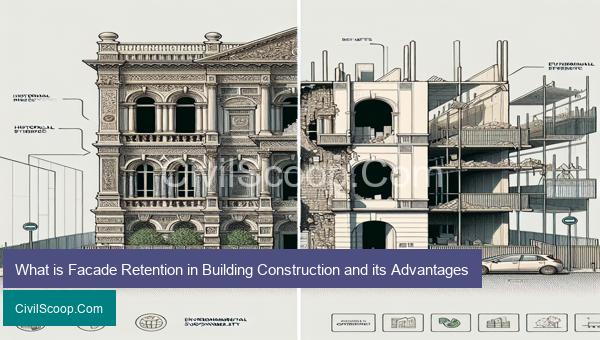
Facade retention is a commonly used term in building construction, especially in urban areas where space is limited. It refers to the practice of preserving and incorporating the existing facade of a building into a new construction project. This technique has gained popularity in recent years due to its numerous advantages, both practical and aesthetic. In this article, we will explore what facade retention is and why it is a valuable method in the world of construction. From cost savings to historical preservation, understanding the benefits of facade retention can bring a new perspective to the ever-changing landscape of urban development.
Table of Contents
Historic Buildings Redevelopment using Facade Retention
Historic buildings are an essential part of our cultural and architectural heritage. They tell a story of the past and reflect the craftsmanship and design of a bygone era. However, as cities grow and expand, the need for modern buildings increases and this often results in the demolition of historic structures. To preserve these buildings, many developers are now opting for a technique called “facade retention,” which involves keeping the front or exterior facade of a historic building while completely renovating or rebuilding its interior.
Facade retention is a cost-effective and sustainable approach to redeveloping historic buildings because it offers both economic and environmental benefits. This method allows builders to retain the unique character and charm of the structure while creating more usable space for modern purposes.
The process of facade retention begins with a detailed survey of the existing building, including its structural integrity and the condition of the facade. The retained facade is then carefully dismantled with each element being cataloged and stored for later use. In some cases, the facade may need to be stabilized with temporary supports during the renovation process.
After the facade has been secured, the interior of the building is demolished, leaving only the support structure intact. This structure is then used as the foundation for the new building, which is constructed within the space left by the old structure. The facade is then re-attached to the new building, and any missing or damaged elements are restored using the cataloged pieces.
One of the biggest advantages of facade retention is that it allows for the preservation of the historic façade while modernizing the building to comply with current building codes and regulations. This is especially important for buildings that are listed as historic landmarks or are located in historical districts where demolition is not permitted.
Additionally, facade retention helps to reduce construction waste, as only the interior of the building needs to be demolished. This is a more sustainable approach compared to completely demolishing and rebuilding a structure.
In terms of cost, facade retention can be more economical than building a new structure from scratch. The saved cost of materials and labor for building a new facade can offset the additional expenses involved in the preservation and restoration of the existing facade. Furthermore, since the exterior of the building is not being altered significantly, the overall construction time is reduced, leading to shorter project timelines and cost savings.
However, facade retention does come with its own challenges. Builders must ensure that the old and new structures are properly integrated and that the restored elements match the original design. This requires a high level of expertise and attention to detail. Additionally, the building’s structural integrity must be carefully evaluated and addressed to ensure that it can support the new structure.
In conclusion, facade retention is an effective solution for redeveloping historic buildings. It allows for the preservation of important architectural landmarks while meeting the needs for modernization and development. With proper planning and execution, facade retention can breathe new life into old structures, maintaining their historic value and contributing to the overall aesthetic of a city. As a civil engineer, it is our responsibility to promote and implement sustainable and cost-effective solutions like facade retention to preserve our rich architectural heritage for future generations.
What is Facade Retention
Facade retention is a construction technique used to preserve the external facade or face of a building during renovation or redevelopment projects. It involves the temporary support and stabilization of the existing structure while the internal structure is dismantled and rebuilt or renovated.
The need for facade retention arises when a building’s facade holds a significant historical, cultural, or architectural value and needs to be preserved. It can also be necessary when the structural integrity of the facade is compromised due to aging, deterioration, or damage.
The facade retention process typically involves four main steps: survey and assessment, structural design and support, temporary works installation, and facade reconstruction.
Survey and Assessment: Before any work can begin, a detailed survey and assessment of the building’s facade is carried out. This includes a thorough examination of the external structure, materials, and condition. It also involves identifying any areas of weakness or deterioration that could potentially impact the facade retention process.
Structural Design and Support: Based on the survey and assessment, a team of structural engineers and architects will design a support system to hold the facade in place during the renovation or redevelopment works. This involves determining the type of support needed, such as scaffolding, trusses, or cantilever beams, and the load capacity required to hold the facade securely.
Temporary Works Installation: Once the design is finalized, temporary supports are installed to hold the facade in place. This could involve attaching beams, brackets, or hydraulic jacks to the facade and anchoring them to the ground or nearby structures. The temporary works are carefully planned and installed to minimize any potential impact on the existing structure.
Facade Reconstruction: After the facade is supported and stabilized, the internal structure can be safely dismantled, and the renovation or construction work can begin. Once completed, the facade is reconstructed using the same or similar materials, maintaining its original appearance and heritage value.
Facade retention is a challenging and delicate process that requires a high level of expertise and precision. It is crucial to ensure the safety of workers and the public while preserving the facade’s integrity. Therefore, it is essential to hire experienced and licensed professionals for facade retention projects.
In conclusion, facade retention is a vital technique for preserving the architectural and historical significance of buildings while allowing for modernization and renovation. By carefully planning and implementing this process, developers and engineers can ensure the preservation of a building’s exterior while transforming its interior to meet modern needs.
Facade Retention and Low Key Rehabilitation
Facade retention and low key rehabilitation are two commonly used methods in the construction and renovation of buildings. These techniques are often employed when a building’s exterior or facade has significant historical, cultural, or architectural value that must be preserved, while the interior undergoes major reconstruction or renovation.
Facade retention is the process of preserving an existing building’s exterior facade while demolishing and rebuilding the interior. This approach is typically chosen when the exterior has significant heritage or aesthetic value, and its demolition would negatively impact the character or historic significance of the building.
The facade retention process involves carefully removing and propping up the facade, often using steel frames or brackets, while the interior is demolished and rebuilt. This method requires careful coordination between the design team, engineers, and contractors to ensure the stability and safety of the retained facade throughout the construction process. Once the interior is reconstructed, the facade is reattached and restored to its original or improved condition.
Facade retention is a cost-effective and sustainable solution, as it preserves the embodied energy and materials of the existing building. It also allows for flexibility in the redesign of the building’s interior, without compromising its exterior appearance.
Low key rehabilitation, also known as exterior restoration, is a similar method to facade retention in that it preserves and repairs the existing facade of a building. This approach is commonly used for buildings with significant historical or architectural value, where major reconstruction or demolition is not necessary.
Low key rehabilitation involves cleaning, repairing, and restoring the exterior facade to its original condition. This may include repairing or replacing damaged masonry, restoring decorative elements, and repainting or cleaning the facade. The goal is to retain the building’s historical and aesthetic integrity while also improving its durability and functionality.
Similar to facade retention, low key rehabilitation is a sustainable approach as it minimizes the use of new materials and maintains the building’s original character. It also preserves the building’s cultural and historical significance, contributing to the overall heritage and identity of a city or community.
Both facade retention and low key rehabilitation require careful planning and expertise to ensure the successful preservation of a building’s exterior. As a civil engineer, it is essential to understand these techniques and their implementation to ensure the structural integrity and safety of a building throughout the construction process. By utilizing these methods, we can protect and enhance the character and value of our built environment for future generations.
Advantages of Facade Retention in Building Construction
Facade retention is a construction method that involves preserving and incorporating the existing facade of a building into a new structure. It is commonly used in building construction when the existing building’s facade holds historical, architectural, or cultural significance. This technique is gaining popularity in the construction industry due to several advantages it offers. In this article, we will discuss the advantages of facade retention in building construction.
1. Preserves the Historical and Architectural Significance
The facade of a building is often an integral part of its historical and architectural value. By using the facade retention technique, the original character and charm of the building can be maintained, even if the interior structure is completely renovated or replaced. This is particularly important in cities and towns with a rich architectural heritage, where the preservation of historic buildings is crucial.
2. Reduces Environmental Impact
Facade retention is a sustainable construction method as it minimizes the environmental impact of new developments. By preserving the existing facade, there is less waste generated during the construction process, and less energy is consumed in the production of new materials. This helps in reducing the overall carbon footprint of the new building.
3. Cost-Effective
Facade retention is a cost-effective option compared to completely demolishing and rebuilding a new structure. It eliminates the need to construct a new facade, which can be quite expensive, especially if the building has intricate architectural detailing. Facade retention can save up to 60% of the cost of a new facade, making it a more financially feasible option for building owners.
4. Enables Construction in Limited Space
In urban areas, where space is limited, facade retention enables new construction within the existing building footprint. This method allows for the creation of new usable space without the need for additional land. It is particularly beneficial in densely populated cities where land is scarce.
5. Shorter Construction Time
The facade retention technique can significantly reduce the construction time of a new building. As the existing facade is preserved, there is no need to demolish and rebuild the entire structure, saving time and effort. This is especially beneficial for commercial or residential buildings, where timely completion is critical.
6. Safe for Surrounding Structures
Unlike traditional demolition, facade retention ensures that the neighboring buildings are not affected by the construction process. The existing facade acts as a protective shield during the construction, reducing the risk of damage to adjacent structures. This is essential in urban areas where buildings are close to each other.
7. Flexibility in Design
With facade retention, there is room for creativity and flexibility in the design of the new building. The preserved facade can be incorporated into the new structure in various ways, creating unique and aesthetically pleasing buildings. It allows for the preservation of architectural features while also incorporating modern elements.
In conclusion, facade retention is a construction method that offers many benefits, including preservation of historical and architectural value, sustainability, cost-effectiveness, and flexibility in design. It is a technique that allows for the construction of new, modern buildings while preserving the charm and character of the past. With the increasing need for sustainable construction practices and the desire to preserve our architectural heritage, facade retention is becoming an increasingly popular choice in building construction.
Conclusion
In conclusion, facade retention is an essential technique in building construction that allows for the preservation of a building’s historical or desirable facade while undergoing major renovations or construction. This method offers many advantages, including cost-effectiveness, sustainability, and preserving the architectural heritage of a building. It also allows for flexibility in design and construction, minimizing disruption to the surrounding area. With proper planning and execution, facade retention can be a valuable option for developers, architects, and construction companies. As our cities continue to evolve and grow, facade retention is a crucial tool for balancing progress and preservation in building construction.