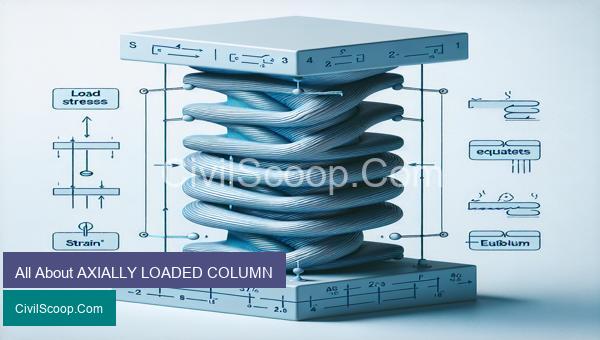
When it comes to structural engineering, one of the fundamental elements that is often encountered is the axially loaded column. This crucial component is present in numerous structures such as buildings, bridges, and even furniture. In this article, we will delve into everything there is to know about axially loaded columns, including its definition, types, behavior under different loads, and important design considerations. By the end of this article, readers will have a comprehensive understanding of this vital structural element and its importance in the field of engineering.
Table of Contents
DESIGN OF AXIALLY LOADED COLUMN

Design of axially loaded column is an important aspect of structural engineering, particularly in the design of buildings and other structures. It is a critical element in creating a strong and stable structure that can withstand various forces and loads.
Axially loaded columns are designed to primarily carry axial loads, which are loads that pass through the center of the column. This type of loading can be compressive or tensile in nature, depending on the direction of the load. The main goal in the design of axially loaded columns is to ensure that they can withstand the applied loads without excessive deflection or failure.
The process of designing an axially loaded column involves several steps, which are briefly described below:
1. Determining the applied loads: The first step in the design process is to determine the magnitude and direction of the applied loads, such as dead and live loads, wind loads, and earthquake loads. These loads are usually specified by building codes and standards, and they are essential in determining the size and strength of the column required for the structure.
2. Material selection: The next step is to select an appropriate material for the column based on the type of structure, loading conditions, and other factors. Commonly used materials for axially loaded columns include steel, reinforced concrete, and timber.
3. Calculating the column dimensions: The dimensions of the column, such as length, cross-sectional area, and shape, are calculated using various equations and formulas. These calculations are based on the material properties, loading conditions, and design constraints.
4. Strength and stability checks: Once the column dimensions are determined, the next step is to check the strength and stability of the column. This involves calculating the buckling load, which is the maximum axial load that the column can withstand without buckling, and comparing it with the applied loads. If the buckling load is lower than the applied loads, the column will need to be redesigned.
5. Providing reinforcement: In the case of reinforced concrete columns, steel reinforcement is provided to enhance the strength and ductility of the column. The amount and spacing of reinforcement are determined based on the design code requirements and the calculated loads.
6. Detailing: Detailing is the process of providing construction and fabrication details of the column, such as the spacing and diameter of steel reinforcement, location of steel bars, and the dimensions of the column base and top. Proper detailing is crucial to ensure that the column can be constructed accurately and efficiently.
7. Construction and maintenance: Finally, the designed axially loaded columns are constructed according to the provided details. It is essential to follow the design and construction specifications to ensure the successful completion of the column. Also, proper maintenance practices should be employed to ensure the longevity and safety of the column throughout its service life.
In conclusion, proper design of axially loaded columns is critical to create a safe and stable structure. Engineers must follow the established design codes and standards to ensure that the columns can withstand various loading conditions and provide long-term structural stability. Additionally, periodic inspections and maintenance are required to ensure the column’s integrity over time.
Conclusion
In conclusion, axially loaded columns play a crucial role in the structural integrity of buildings and structures. Understanding the behavior and design principles of these columns is essential for engineers and architects to ensure the safety and stability of their designs. By considering factors such as material properties, slenderness ratio, and column stability, the appropriate column size and reinforcement can be determined to withstand the expected axial loads. Careful consideration and proper design of axially loaded columns can help prevent structural failures and ensure the longevity of buildings and structures. It is imperative for professionals in the industry to continuously educate themselves on the latest research and advancements in column design to uphold the highest standards in structural safety.