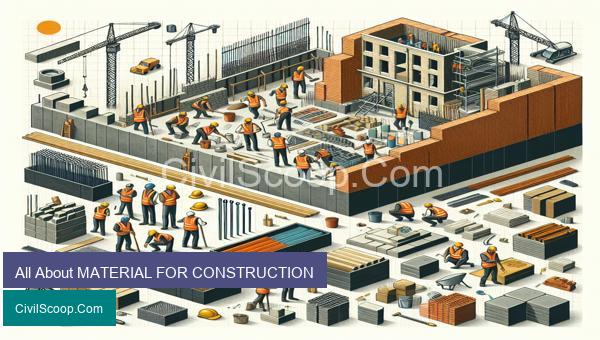
MATERIAL FOR CONSTRUCTION plays a vital role in the development and advancement of societies worldwide. From ancient civilizations to modern-day structures, construction materials have been the backbone of architectural and engineering feats. With technological developments and the ever-evolving demand for sustainable and durable materials, the construction industry has been constantly in pursuit of innovative solutions. In this article, we will delve into the world of materials for construction, exploring their types, properties, and applications and how they have shaped and continue to shape the built environment. Let’s take a deeper look at the various materials that have built the world we live in today.
Table of Contents
MOST SUITABLE MATERIAL FOR CONSTRUCTION
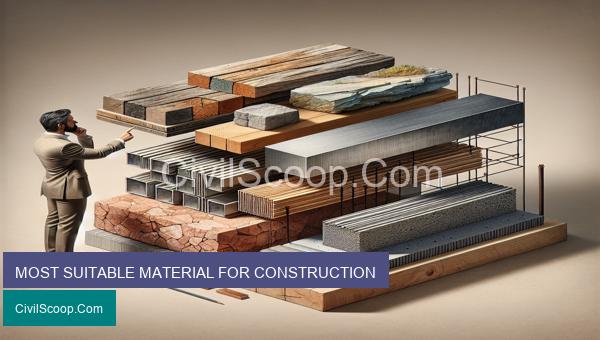
Choosing the most suitable material for construction is crucial for the success of any project. The material must be strong, durable, and cost-effective to ensure the safety and longevity of the structure. With so many options to choose from, it can be overwhelming to determine the most suitable material. However, after careful evaluation of various factors such as structural requirements, environmental conditions, cost, and availability, it is evident that reinforced concrete is the most suitable material for construction.
Strength and Durability
Reinforced concrete, also known as RCC, is a mixture of concrete and steel reinforcing bars. This combination makes it an extremely strong and durable material, capable of withstanding high compression and tension forces. The compressive strength of concrete can range from 17-50 MPa, depending on the mix design, while the tensile strength of steel can reach up to 500 MPa. The bond between concrete and steel makes the material resistant to cracking and corrosion, ensuring a longer lifespan for the structure.
Versatility
Reinforced concrete is a versatile material that can be molded and shaped to fit any structural design. It can be used for different construction elements such as slabs, columns, beams, walls, and foundations. Its flexibility allows for creative and innovative designs without compromising on strength and stability. Additionally, reinforced concrete can be used in various climates and weather conditions, making it suitable for construction in different parts of the world.
Cost-effective
In comparison to other construction materials such as steel, reinforced concrete is relatively affordable. Concrete is made from locally available materials, reducing transportation costs. Its longevity also makes it a cost-effective option in the long run as it requires minimal maintenance and has a longer lifespan than other materials. Furthermore, the use of precast concrete in construction reduces labor and time costs, making it an attractive option for large-scale projects.
Fire Resistance
One of the key advantages of reinforced concrete is its high fire resistance. Concrete has a slow rate of heat transfer, and when combined with steel, it forms a protective layer that prevents the steel from reaching its melting point. This property makes reinforced concrete suitable for structures where fire safety is a primary concern, such as high-rise buildings and industrial facilities.
Availability
Concrete is the most widely used construction material globally, and its components, such as aggregates, water, and cement, are widely available. The production of concrete can be easily scaled up or down, making it suitable for projects of any size. Additionally, with new techniques such as self-healing concrete and 3D printing, the use of reinforced concrete is constantly evolving, making it a sustainable and reliable choice for construction.
In conclusion, reinforced concrete is the most suitable material for construction due to its strength, versatility, availability, cost-effectiveness, and fire resistance. Its superior properties make it a prevalent choice in the construction industry and will continue to be the material of choice for many projects in the future. As a civil engineer, it is crucial to understand the strengths and limitations of different materials and select the most suitable one for each project to ensure its success.
Conclusion
In conclusion, understanding the materials used in construction is crucial for building safe, durable, and sustainable structures. From ancient civilizations to modern skyscrapers, the use of various materials has evolved, constantly shaping the landscape of the construction industry. Each material has its own unique properties and strengths, and it is important for builders and architects to carefully consider their choices. With innovative advancements in material science, we can expect to see even more exciting additions to the already vast array of options available for construction. By staying informed and utilizing the most suitable materials, we can continue to push the boundaries of what is possible in the world of construction.