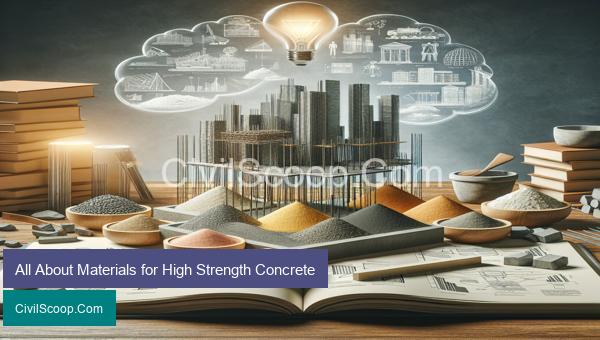
High strength concrete has emerged as a vital construction material in recent years, owing to its superior compressive strength, durability and low maintenance costs. It has revolutionized the building industry, enabling architects and engineers to design tall and complex structures that were once impossible to construct. This remarkable feat is possible due to the use of advanced materials in the production of high strength concrete. In this article, we will explore the different materials used in the manufacturing process of high strength concrete, their properties, benefits, and applications. With an in-depth understanding of these materials, we can better appreciate the capabilities and potential of high strength concrete in shaping the future of construction.
Table of Contents
Tips for Selection of Materials for High Strength Concrete
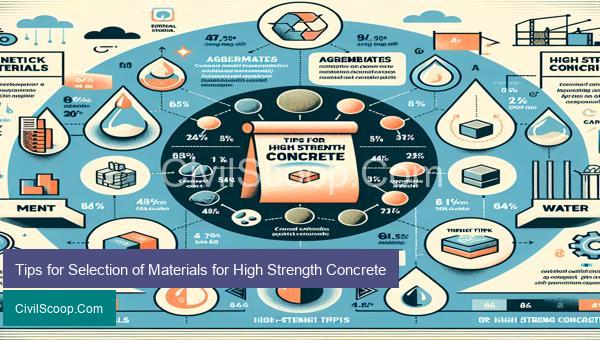
High strength concrete (HSC) is a type of concrete that has a compressive strength greater than 40 N/mm2. It is commonly used in the construction of high-rise buildings, bridges, and other structures that require a high load-bearing capacity. The selection of materials for HSC is crucial as it can greatly impact the strength and durability of the concrete. Here are some tips for selecting materials for high strength concrete:
1. Cement: Portland cement is the most commonly used cement in HSC. It is important to select a high-quality cement with a low water demand and high early strength to achieve the desired strength of the concrete. Other types of cement, such as blended cements or supplementary cementitious materials (SCMs) can also be used to improve the properties of HSC.
2. Aggregates: The quality and grading of aggregates have a significant influence on the strength and workability of HSC. Coarse aggregates should be well-graded and free from impurities such as clay, silt, and organic materials. Fine aggregates should be natural or manufactured sand with a low moisture content. It is recommended to use rounded aggregates to reduce the potential for segregation and improve workability.
3. Admixtures: Admixtures are commonly used in HSC to enhance its properties. Superplasticizers can be used to improve workability and reduce the water-cement ratio, resulting in higher strength. Viscosity-modifying agents can also be used to decrease the bleeding and segregation of concrete, leading to more uniform strength distribution.
4. Water: The water used in the mix should be clean and free from harmful impurities such as chloride, sulfate, and organic matter. It is recommended to use potable water or water from a known source to prevent any adverse effects on the properties of HSC.
5. Fibers: Fiber-reinforced concrete can also be used to increase the strength and durability of HSC. Fibers such as steel, glass, polypropylene, or carbon can be added to the mix to improve the tensile strength and reduce cracking in the concrete.
6. Testing and Quality Control: It is crucial to have a rigorous quality control and testing program in place to ensure the selected materials meet the required specifications. Regular testing of materials such as cement, aggregates, and water can help identify any potential issues that may affect the strength and durability of HSC.
In conclusion, selecting the right materials for high strength concrete is essential to achieve the desired properties. It is essential to carefully consider the quality, grading, and compatibility of materials to ensure the production of high-quality HSC. Working with a qualified engineer and conducting regular quality control tests can help in the selection and usage of materials for high strength concrete.
Conclusion
In conclusion, high strength concrete has become an essential material in modern construction projects due to its superior strength and durability. Its diverse range of compositions, including admixtures and aggregates, allows for customized strength and performance. With ongoing research and advancements in material science, the potential for high strength concrete to revolutionize the construction industry is endless. By understanding the components and properties of high strength concrete, engineers and builders can utilize this material to create strong, sustainable, and cost-effective structures. Overall, the versatility and longevity of high strength concrete make it a crucial material for any infrastructure project.