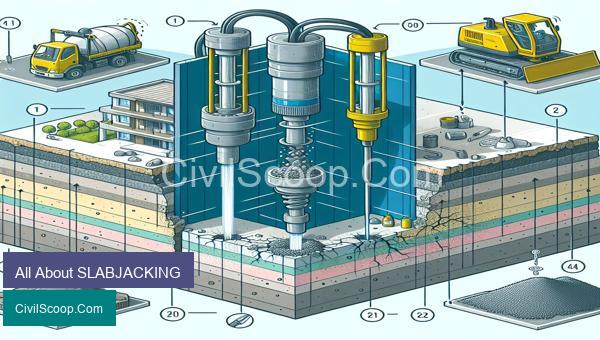
SLABJACKING, also known as mudjacking or concrete leveling, is a cost-effective and efficient method for repairing sunken or uneven concrete surfaces. This technique involves injecting a mixture of sand, water, and cement beneath the sunken concrete to lift and level the slab. This article will delve into the details of SLABJACKING, discussing its process, benefits, and applications. Whether you are a homeowner dealing with a cracked driveway or a business owner with sunken sidewalks, understanding SLABJACKING can help you make an informed decision on repairing your concrete surfaces.
Table of Contents
SLABJACKING
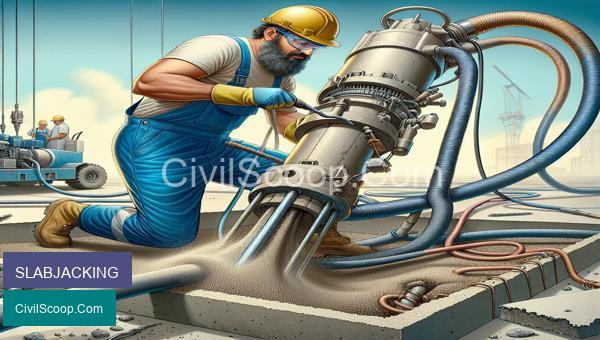
Slabjacking, also known as mudjacking or concrete leveling, is a method used to repair and raise sunken or uneven concrete slabs. It involves injecting a mixture of sand, cement, and water, also known as slurry, beneath the sunken slab through drilled holes. This process restores the slab to its original level and provides a stable base for the concrete.
The process of slabjacking starts with drilling small holes into the sunken concrete slab. The size and location of these holes are determined by the location and severity of the sunken area. Once the holes are drilled, a pump is used to inject the slurry mixture into the holes. As the slurry fills the voids beneath the slab, it exerts pressure and lifts the slab to its original position. The holes are then sealed with cement and the excess slurry is cleaned off the surface.
Slabjacking is a cost-effective and durable solution to repair sunken concrete slabs. It is often used for sidewalks, driveways, patios, and other concrete surfaces. Some of the benefits of slabjacking include:
1. Cost-effective: Slabjacking is a more affordable solution compared to completely replacing a sunken slab. It requires less labor and materials, making it a cost-effective option for repairing concrete surfaces.
2. Quick and efficient: Slabjacking can be completed within a day, depending on the size and complexity of the project. This makes it a convenient option for homeowners or businesses as the affected area can be used again shortly after the repair.
3. Minimally invasive: The drilling of small holes and injection of slurry does minimal damage to the surrounding area. This means there is less disruption to the landscape, and the repair process is less invasive compared to other methods.
4. Long-lasting: The slurry used in slabjacking is a mixture of sand, cement, and water, which creates a strong and stable base. This makes the repaired slab more durable and able to withstand heavy loads and harsh weather conditions.
In addition to repairing sunken or uneven concrete slabs, slabjacking can also be used to fill voids beneath concrete structures, such as foundations. This helps to prevent further sinking or settling of the structure, providing stability and ensuring safety.
In conclusion, slabjacking is an effective and economical method to repair sunken or uneven concrete slabs. Its quick and efficient process, minimal disruption, and long-lasting results make it a popular choice among homeowners and businesses. If you are facing issues with sunken concrete slabs, consult a professional civil engineer to determine if slabjacking is the right solution for your project.
Conclusion
In conclusion, SLABJACKING is a highly effective method for repairing sunken or uneven concrete surfaces. It offers a cost-effective, long-lasting solution that is environmentally friendly and minimally invasive. With the use of specialized equipment and techniques, SLABJACKING can quickly restore the functionality and aesthetics of damaged concrete, saving both time and money for homeowners and businesses. Whether it’s for a driveway, sidewalk, or patio, SLABJACKING is a proven technique that continues to evolve and improve, making it a top choice for concrete repair. So if you’re facing any sunken concrete issues, consider SLABJACKING as a reliable and efficient solution.