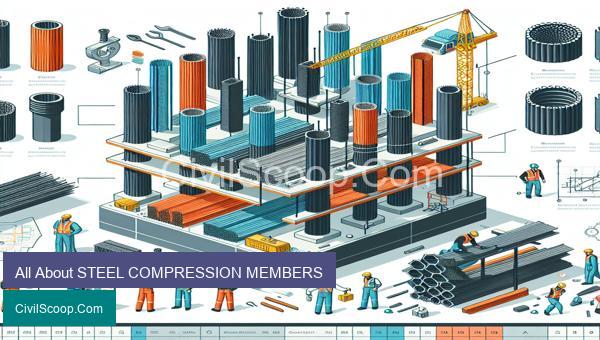
Steel compression members are an essential part of the structural design in modern construction. From tall skyscrapers to simple bridges, these members play a crucial role in supporting and transferring loads. With advancements in technology and design, the use of steel compression members has become increasingly common due to its strength, durability, and cost-effectiveness. In this article, we will delve into the world of steel compression members, exploring their significance, properties, and various types commonly used in construction. Whether you are a construction professional or simply have a curious mind, this article will provide you with a comprehensive understanding of all things steel compression members.
Table of Contents
DESIGN OF STEEL COMPRESSION MEMBERS
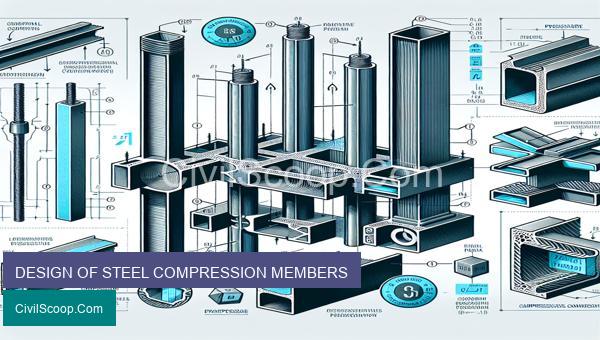
Steel compression members are structural elements used in building and bridge construction to resist compressive forces. They are designed to support vertical loads and provide stability to structures. The design of these members is crucial to ensure the overall integrity and safety of a structure.
The first step in the design process of steel compression members is to determine the service loads and the loading conditions that the member will be subjected to. This includes dead loads, such as the weight of the structure itself, and live loads, such as wind or snow loads. The loading conditions also include the direction and magnitude of the forces acting on the member.
Next, the effective length of the member must be determined. This is the length of the member between its points of lateral support. The effective length is crucial in calculating the buckling load of the member, which is the load at which the member will fail due to buckling.
The next step is to select a suitable section for the compression member based on its size and shape. This includes selecting the type of steel, such as A36 or A992, as well as the section shape, such as a W shape, HSS, or Pipe. The section must have sufficient strength to resist the applied loads and must also meet the requirements for stability and serviceability.
Once the section is selected, the design engineer calculates the required slenderness ratio of the member. This is the ratio of the member’s length to its least radius of gyration (k) and is used to determine the appropriate design method for the steel compression member.
There are two main design methods for steel compression members: the Euler’s buckling formula and the effective length method. The Euler’s formula is used for members with a slenderness ratio less than the critical slenderness ratio, while the effective length method is used for members with a higher slenderness ratio. The design engineer must also consider any other factors that may affect the member’s performance, such as local buckling, residual stresses, and material properties.
Once the design calculations are completed, the design engineer must check the member’s stability and serviceability. Stability checks ensure that the member has sufficient resistance to buckling and lateral torsional buckling. Serviceability checks ensure that the member meets deflection, vibration, and fatigue requirements.
Finally, the design engineer must detail the steel compression member to ensure proper fabrication and construction. This includes specifying the size and spacing of the connections, as well as any additional stiffeners or bracing that may be required.
In conclusion, the design of steel compression members is a complex process that requires careful consideration of loads, section selection, design methods, stability, serviceability, and detailing. It is essential to follow all relevant codes and standards to ensure the safe and efficient design and construction of steel compression members.
Conclusion
In conclusion, steel compression members are crucial components used in many structural systems. They provide strength, stability, and durability to structures and play a vital role in ensuring their safety and stability. Understanding the basics of steel compression members, such as their different types, design considerations, and failure modes, is essential for engineers and designers. By applying proper design techniques and considering potential failure modes, these members can withstand significant loads and maintain their integrity. Furthermore, with the continuous advancements in technology and research, steel compression members are becoming more efficient and versatile, making them a preferred choice for structural systems. Thus, it is evident that steel compression members are integral elements in the construction industry, and a thorough understanding of their properties and behavior is crucial for successful and safe