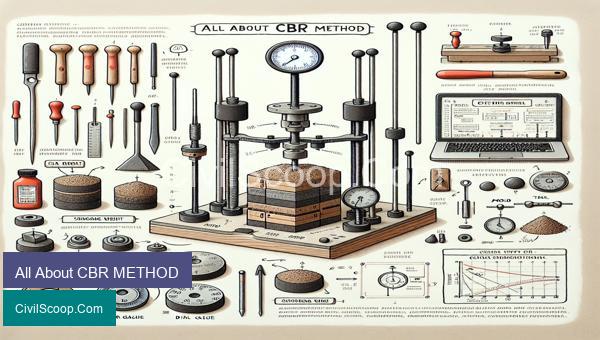
CBR (Case-Based Reasoning) Method is a popular approach used in artificial intelligence and machine learning that has gained significant attention in recent years. It is a problem-solving methodology that involves learning from past experiences or cases to guide decision-making in new situations. By using a database of past cases, CBR can provide a more effective and efficient solution to complex problems. In this article, we will delve into the details of the CBR method, its principles, and applications in various fields. This will provide a comprehensive understanding of how CBR works and its potential to revolutionize problem-solving in various industries.
Table of Contents
CBR METHOD I R C RECOMMENDATIONS

The California Bearing Ratio (CBR) method is a widely used testing procedure in the field of civil engineering to determine the strength and load-bearing capacity of a soil sample. This method was developed by the California Department of Transportation and is commonly referred to as the CBR test method. The results of this test are used to design flexible and rigid pavement structures, as well as to assess the suitability of a soil for road construction.
The CBR method follows the recommendations of the Indian Roads Congress (IRC), which is a professional organization dedicated to the development of India’s road infrastructure. The IRC recommendations provide detailed guidelines for conducting the CBR test and interpreting the results. These recommendations are based on extensive research and experience, making them a vital resource for civil engineers in the country.
The following are the key recommendations of the IRC for the CBR method:
1. Sampling and preparation of test specimens: The IRC recommends using a 150mm diameter and 127.5mm height mold to obtain undisturbed soil samples for testing. The soil sample should be compacted at the appropriate moisture content and density, as determined by the standard proctor test.
2. Loading and soaking procedure: The CBR test is carried out by subjecting the soil sample to a standard load of 2.5mm/min. The IRC recommends applying the load to the specimen in increments of 1kN and recording the corresponding penetration. The specimen is also required to be soaked in water for a minimum of 4 days to simulate the effect of moisture on the soil.
3. CBR calculation and interpretation: After the test is completed, the CBR value is calculated by dividing the load required to penetrate the soil by 2.5mm by the load required to achieve the same penetration in a standard material. The IRC recommends using a load penetration curve to interpret the results and determine the CBR value for different penetrations.
4. Reporting of results: The IRC recommends that the results of the CBR test should be reported as a percentage ranging from 0 to 100. A higher CBR value indicates a stronger soil that can bear heavier loads.
In conclusion, the CBR method is an essential tool for civil engineers to assess the strength of a soil sample for road construction projects. The recommendations of the IRC provide engineers with a standardized and reliable procedure for conducting the CBR test and interpreting the results. Adhering to these recommendations can help ensure the safety and stability of roads in India.
Conclusion
In conclusion, the CBR method, or California Bearing Ratio method, is an important tool for evaluating the strength of soil for construction projects. It takes into account various factors such as moisture content, density, and level of compaction to determine the load-bearing capacity of soil. By understanding the basics of CBR testing and its applications, construction professionals can make informed decisions about the suitability and stability of soil for building projects. With proper implementation, the CBR method can greatly contribute to efficient and safe construction practices. As we continue to advance in engineering and construction technology, the CBR method remains a reliable and fundamental technique for soil evaluation.