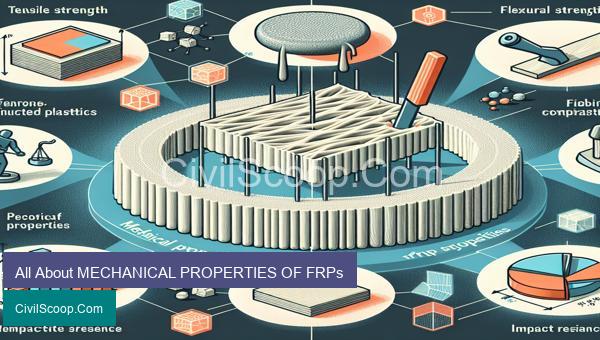
Fiber-reinforced polymers (FRPs) have gained significant attention in various industries due to their exceptional mechanical properties. These advanced composite materials offer high strength, stiffness, and lightweight properties, making them suitable for a wide range of applications. In this article, we will delve into the world of FRPs and explore their mechanical properties, including tensile strength, flexural strength, and impact resistance. We will also discuss the various factors that affect these properties and how they can be optimized for specific uses. By understanding the mechanical properties of FRPs, we can unlock their full potential and harness them for innovative and efficient designs in various fields.
Table of Contents
MECHANICAL PROPERTIES OF FRPs
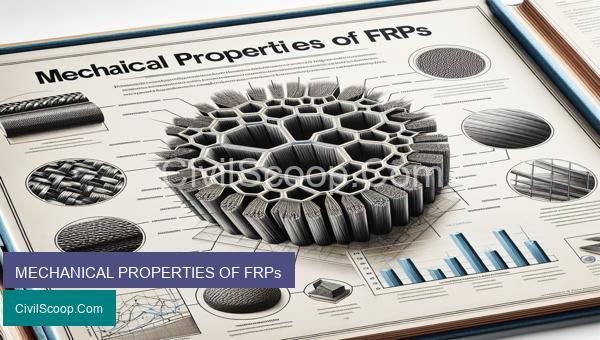
Fiber reinforced polymers (FRPs) are composite materials made by combining high-strength fibers, such as carbon or glass, with a polymer matrix, such as epoxy or polyester resin. These materials have gained popularity in the construction industry due to their lightweight, high-strength, and corrosion-resistant properties. In this article, we will discuss the mechanical properties of FRPs and their significance in structural engineering.
1. Tensile Strength
One of the major benefits of using FRPs in construction is their high tensile strength. The fibers in FRPs are aligned in a specific direction to maximize their resistance to tensile forces. This makes FRPs stronger than traditional building materials like steel and concrete. The tensile strength of FRPs can range from 500 MPa to 3000 MPa, depending on the type and orientation of the fiber used.
2. Flexural Strength
FRPs also exhibit high flexural strength, making them suitable for structural elements that are subjected to bending, such as beams and columns. The fibers in FRPs act as reinforcement, providing resistance against bending forces. This makes FRPs an ideal material for constructing long-span structures, such as bridges and roof systems.
3. Compressive Strength
FRPs also have good compressive strength, making them suitable for load-bearing applications. The polymer matrix in FRPs distributes the load evenly, preventing local failure and improving the compressive strength of the material. FRPs can withstand compressive loads up to 1000 MPa, which is higher than some traditional building materials.
4. Impact Resistance
One of the unique properties of FRPs is their ability to absorb energy and resist impact loads. This is due to the viscoelastic nature of the polymer matrix, which has the ability to deform under high impact loads. This makes FRPs suitable for structures that are prone to impact, such as bridges and offshore platforms.
5. Fatigue Resistance
FRPs have excellent fatigue resistance, which means they can withstand repeated cyclic loads without experiencing significant damage. This makes them ideal for structures that are subjected to dynamic loading, such as wind turbines and high-rise buildings. FRPs have a higher fatigue life compared to traditional building materials, which makes them a cost-effective option in the long term.
6. Durability
Unlike traditional building materials that are prone to corrosion and degradation, FRPs have excellent durability. They are resistant to environmental factors, such as moisture, chemicals, and UV radiation, making them suitable for use in harsh environments. This extends the service life of structures built with FRPs and reduces the need for frequent repairs and maintenance.
In conclusion, FRPs possess unique mechanical properties that make them a preferred choice in construction projects. Their high strength-to-weight ratio, impact resistance, and durability make them a cost-effective and sustainable alternative to traditional building materials. With ongoing research and development, it is expected that FRPs will continue to play a significant role in the advancement of structural engineering.
Conclusion
In conclusion, understanding the mechanical properties of FRPs is crucial for engineers and designers in utilizing these materials effectively in various applications. From the strength and stiffness to the durability and fatigue resistance, every aspect of FRPs’ mechanical behavior must be taken into consideration. Through advancements in research and technology, FRPs are continuously evolving and becoming more reliable, lightweight, and cost-effective. With their superior properties such as corrosion resistance, impact resistance, and high strength-to-weight ratio, FRPs have the potential to replace traditional materials in many industries. As we continue to uncover more about the mechanical properties of FRPs, it is evident that they have a bright future in the world of engineering and construction.