
When it comes to excavation work, traditional methods such as digging and trenching have long been the go-to options. However, these methods often come with risks such as damaging existing infrastructure, disrupting traffic flow, and causing safety hazards. This is where the game-changing technology of suction excavation comes in. This innovative method uses high-powered vacuums to suck up soil and debris rather than digging it out manually. In this article, we will take a closer look at suction excavation work, its benefits, and its various applications in the construction and utility industries.
Table of Contents
How does Suction Excavation Work?
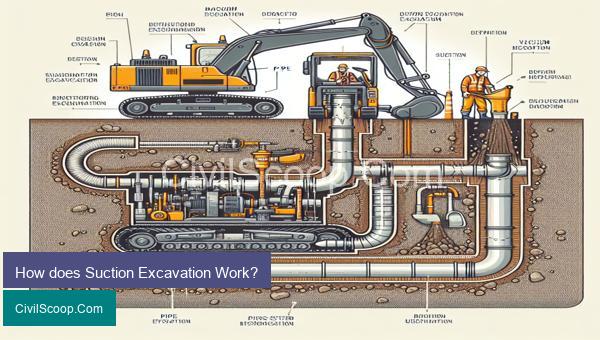
Suction excavation, also known as vacuum excavation, is a non-destructive digging technique used to excavate underground utilities or other sensitive areas. It is a modern and efficient method that is widely used in construction, oil and gas, and utility industries.
The process of suction excavation involves using a high-powered vacuum to remove soil or debris from the ground. This vacuum is achieved by a truck-mounted or trailer-mounted system, which utilizes a large fan or blower to create a powerful suction force.
The first step in suction excavation is locating the area to be excavated. This can be done with the help of ground-penetrating radar (GPR), electromagnetic locators (EML), or other similar techniques. Once the location is determined, the suction equipment is positioned over the site.
The operator then uses a high-pressure water jet to break up the soil and create a slurry. The slurry is then suctioned up into the tank through a large diameter hose. This process is repeated until the desired depth is reached.
One key advantage of suction excavation is that it is a non-destructive method, meaning it does not damage any underground utilities or surrounding structures. This makes it a safe and preferred option for sensitive areas such as gas pipelines, telecommunications cables, or electrical wires.
Another advantage of suction excavation is its versatility. It can be used for a variety of soil types, including wet or dry soil, sand, gravel, and even clay. It can also be used in areas with high water table levels, as the vacuum system removes water along with the soil.
Moreover, suction excavation is faster and more efficient than traditional excavation methods such as manual digging or using heavy machinery. It can significantly reduce the time and cost of a project, as well as minimize the risk of accidents and property damage.
After the excavation is complete, the slurry is filtered through a separator system, separating the soil from the water. The soil can then be reused for backfilling the excavation site, reducing waste and saving costs.
In conclusion, suction excavation is an innovative and environmentally friendly method of digging that offers numerous benefits. It is a safer, faster, and more cost-effective alternative to traditional excavation methods, making it an increasingly popular choice in the construction industry.
Working of Suction Excavation

Suction excavation, also known as vacuum excavation or air excavation, is a non-destructive digging technique used in construction and civil engineering projects to safely and efficiently excavate and remove soil and debris. It involves the use of high-powered vacuum equipment to create suction and extract material from the ground, eliminating the need for manual digging with heavy machinery.
The working process of suction excavation involves three main steps: preparation, excavation, and backfilling.
1. Preparation: The first step in suction excavation is to prepare the site for excavation. This includes identifying the area to be excavated, marking the boundaries and locating any underground utilities or obstacles that may be present. The use of underground utility mapping or ground penetrating radar can assist in this process. These precautions are necessary to prevent damage to any existing underground infrastructure and ensure safety during excavation.
2. Excavation: Once the site is prepared, the suction excavator is positioned near the excavation area. The equipment consists of a large container or tank mounted on a truck, with a long hose attached to it. The hose is inserted into the ground and directed to the desired location. The excavator generates high-pressure air or water flow at the end of the hose, creating a vacuum that sucks up soil and debris into the tank. This process is less invasive compared to traditional excavation methods, as the vacuum equipment removes the material without disturbing the surrounding area.
3. Backfilling: After the excavation is complete, the extracted soil and debris are stored in the tank and transported to a designated disposal area. Once the excavated area is empty, the backfilling process begins. The excavator can switch from suction mode to blowing mode, using the same hose to fill the void with backfill material, such as gravel or crushed stone. The backfill material is compacted as it is being placed to ensure stability and support of the excavated area.
Benefits of Suction Excavation:
1. Safety: Suction excavation eliminates the risk of damage to underground utilities, as well as the potential hazards associated with traditional excavation methods, such as cave-ins and collapses.
2. Non-destructive: Suction excavation is non-destructive as it does not require heavy machinery to dig and therefore minimizes damage to the surrounding structures and environment.
3. Time and Cost-Efficient: The use of suction excavation can save time and money compared to traditional excavation methods. It requires fewer laborers, and the backfilling process can be completed at the same time as excavation, reducing the overall time for the project.
4. Environmentally friendly: This method reduces the impact on the environment as it does not involve the use of chemicals or produce excess noise or dust.
In summary, suction excavation is a safe, cost-effective, and environmentally friendly way to excavate and remove material from the ground. Its non-destructive nature makes it ideal for projects that require precision and care, such as the installation of underground utilities or excavation in sensitive areas.
Application of Suction Excavation

Suction excavation, also known as vacuum excavation, is a process used in civil engineering for the safe and efficient excavation of underground utilities, pipelines, and other buried structures. This method utilizes the power of suction to remove soil and debris, creating a non-destructive and precise digging technique.
The application of suction excavation is beneficial in various civil engineering projects, such as:
1. Utility Mapping and Location
Before any construction or excavation work, it is crucial to map and locate all underground utilities to avoid damage. Traditional methods like manual digging or using a backhoe can be risky and time-consuming. Suction excavation provides a non-destructive way to expose underground utilities accurately, preventing any costly damage.
2. Pipeline Installation and Repair
Suction excavation is a popular method for installing or repairing pipelines. The vacuum truck can remove the soil from around the pipeline without damaging it, making it a safe and efficient option. The suction also allows for precise control, making it easier to work on the pipeline without any disturbances.
3. Trenching and Potholing
Trenching and potholing are essential steps in the construction of roads, highways, and railways. Suction excavation can dig precise and shallow trenches, making it ideal for installing drainage systems, fiber optic cables, and other underground infrastructure. It also minimizes the risk of damage to existing underground utilities.
4. Environmental Projects
Suction excavation is also utilized in environmental projects such as removing contaminated soil. The vacuum truck can remove the contaminated soil, and it can also separate any debris or polluted materials, making the cleanup process more efficient and effective.
5. Archaeological Excavations
Archaeological excavations require delicate and precise digging methods to preserve artifacts and historical discoveries. Suction excavation provides a gentle and non-destructive approach, allowing archaeologists to excavate the site with minimal disruption.
6. Debris and Waste Cleanup
After a natural disaster or an accident, debris and hazardous waste must be removed quickly and safely. Suction excavation is an effective method for clearing debris and waste without causing any harm to the surrounding environment.
7. Cost and Time Savings
Compared to traditional excavation methods, suction excavation is faster, cleaner, and more precise. It eliminates the need for multiple machines, and the vacuum truck can work in tight and limited spaces, reducing the time and cost of a project. It also reduces the risk of damages and accidents, saving money in the long run.
In conclusion, suction excavation has various applications in civil engineering, making it an invaluable technique in the construction industry. It offers a safe, non-destructive, and efficient way to excavate underground structures, leading to cost and time savings. With the ever-increasing demand for infrastructure, suction excavation is becoming an essential tool for civil engineers.
Need for Suction Excavation

Suction excavation, also known as vacuum excavation, is a method of excavating soil and other materials using powerful suction capabilities. This technology has been rapidly gaining popularity in the construction industry due to its various benefits and advantages over traditional excavation methods.
The need for suction excavation arises from the limitations of conventional techniques such as mechanical excavators and manual digging. These methods can often cause damage to buried utilities and underground structures, leading to delays, costly repairs, and safety hazards. This is a major concern, especially in urban areas where there are numerous underground utilities and a high risk of damaging them.
In contrast, suction excavation is a non-destructive and safe method of excavation that greatly reduces the risk of damaging utilities and underground structures. It operates by creating a powerful vacuum that sucks up soil and debris into a tank mounted on a truck. This allows for precise and controlled excavation, avoiding any potential damage to existing infrastructure.
Moreover, suction excavation is a more efficient and cost-effective method of excavation. It requires fewer personnel and equipment, reducing labor costs and increasing productivity. Its accuracy and speed also lead to quicker completion of projects, resulting in cost savings for clients. Additionally, since it does not require backfilling, it minimizes the need for material and disposal costs.
Suction excavation is also an environmentally friendly method of excavation. With no digging or churning of soil, it reduces the release of harmful dust and particles into the air, preserving air quality. It also minimizes the disposal of excess soil, reducing the carbon footprint of the project.
Furthermore, suction excavation is suitable for a wide range of soil types and conditions. It is effective in both wet and dry soil, as well as cohesive and non-cohesive soils. Since it does not use mechanical force, it does not cause vibrations, making it suitable for sensitive sites such as near buildings or historic structures.
Given its numerous benefits, suction excavation is becoming increasingly popular in various construction projects. From utility installations and repairs to building foundations and landscaping, it has proven to be a versatile and efficient method of excavation. In areas with strict regulations and restrictions on digging, such as in urban or sensitive environments, suction excavation is often the only viable option for excavation.
In conclusion, the need for suction excavation is evident in the limitations of conventional excavation methods and the numerous benefits it offers. Its non-destructive, safe, and efficient approach to excavation has made it an increasingly essential tool for civil engineers, allowing them to complete projects effectively and with minimal disruption to the environment.
Suction Excavators and Normal Excavation Methods

Excavation is an essential process in the construction industry, used for digging and removing materials from the ground to create foundations, trenches, and other structures. Various excavation methods are employed for different types of soil and project requirements. One of the latest and most advanced methods of excavation is suction excavation, also known as vacuum excavation. In this article, we will discuss suction excavators and compare them with traditional excavation methods.
Suction Excavators:
Suction excavators, also known as air vacuum excavators or suction shovels, are used to dig and remove materials from the ground using a high-powered vacuum system. This method involves creating a vacuum to suck up the soil, gravel, or debris from the ground while a water or air stream is simultaneously sprayed to separate and loosen the materials. The materials are then suctioned through a hose and stored in a container for later disposal.
This method is highly efficient and accurate, especially when working around sensitive underground utilities or in tight spaces. Suction excavators can dig at a depth of up to 120 feet and can remove up to 12 cubic yards of material per hour. They can also be used for precision excavations, such as potholing, slot trenching, and daylighting, without causing any damage to the surrounding area.
One of the major advantages of suction excavators is their non-destructive nature. This method reduces the risk of damage to underground utilities and cables, which can lead to costly repairs and safety hazards. Suction excavators are also eco-friendly as they use little water and do not emit harmful fumes.
Normal Excavation Methods:
Normal excavation methods, also known as conventional excavation, involve using heavy machinery, such as excavators, bulldozers, and backhoes, to remove materials from the ground. This method is typically used for large-scale projects, such as constructing roads, foundations, or underground structures. The excavation process begins with the removal of the topsoil, followed by the excavation of the necessary depth and width of the site.
However, normal excavation methods may be challenging to execute in certain situations, such as working near existing structures or underground utilities. The use of heavy machinery can also cause damage to the surrounding area and may require additional repairs.
Comparison:
Both suction excavators and normal excavation methods have their advantages and disadvantages, making them suitable for different types of projects. Suction excavators are ideal for small-scale and precise excavations, while normal excavation methods are more suitable for large-scale projects.
Suction excavators are quicker, more efficient, and less destructive compared to normal excavation methods. They are also more environmentally friendly, making them a preferred choice for sensitive areas. On the other hand, normal excavation methods may be more cost-effective for long-term or large-scale projects.
In conclusion, suction excavators and normal excavation methods are both important tools in the construction industry. While suction excavators offer advanced technology and precision, normal excavation methods provide a cost-effective and traditional approach to excavation. It is up to the engineer to assess the project requirements and choose the most suitable method for the job at hand.
Conclusion
In conclusion, suction excavation is a revolutionary technique that has transformed the way underground works are carried out. It offers numerous benefits such as increased safety, efficiency, and cost-effectiveness, making it a valuable tool for various industries. With the continual advancements in technology, suction excavation is only expected to become more efficient and widely used in the future. With its ability to safely and effectively excavate in challenging environments, it has become the go-to method for many construction and utility companies. As we continue to explore alternative methods for excavation, suction excavation will undoubtedly play a crucial role in the future of underground works.