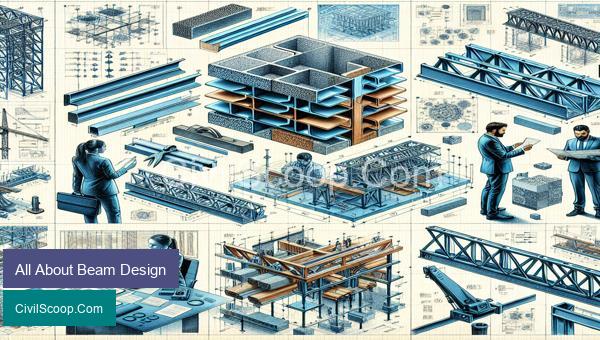
Beam design is a crucial aspect of structural engineering as it determines the strength, stability, and overall performance of a building or structure. It involves the calculation and selection of the appropriate materials and dimensions for load-bearing beams, taking into consideration various factors such as the type of structure, the expected loads, and the local building codes. In this article, we will delve into the fundamentals of beam design, exploring the different types of beams, their design considerations, and the methods used for analysis and optimization. Understanding the principles of beam design is essential for any structural engineer, as it impacts the safety, functionality, and cost-efficiency of a structure. So let us dive into the world of beam design and uncover all there is to know about it.
Table of Contents
Fundamentals of Beam Design
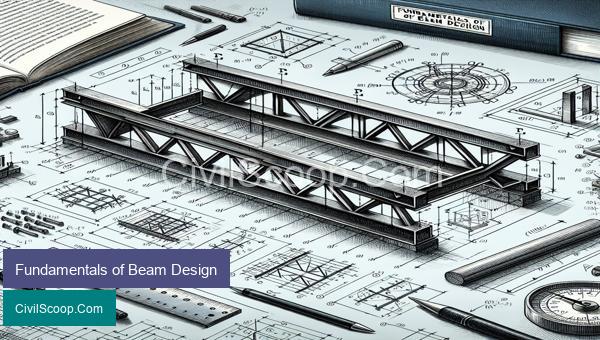
Fundamentals of Beam Design refers to the principles and techniques used in designing beams for different types of structures such as buildings, bridges, and other civil engineering projects. Beams are horizontal or inclined structural elements that support vertical loads and transfer them to the foundations. The design of beams is crucial in ensuring the structural integrity and safety of a building or structure.
The following are the key fundamentals of beam design:
1. Understanding the Loading Conditions: Before designing a beam, it is essential to understand the types of forces and loads that the beam will be subjected to. These include dead loads (self-weight of the beam and the structure it supports), live loads (occupational and environmental loads such as wind or snow), and lateral loads (earthquake or wind forces). The type and magnitude of these loads greatly influence the design of beams.
2. Material Selection: The material selected for the beam must have sufficient strength and stiffness to resist the applied loads. Common materials used for beams include concrete, steel, and timber. Some factors to consider in material selection include strength, durability, cost, and availability.
3. Determining Beam Arrangement: Beams can be arranged in various configurations, such as simply supported beams, cantilever beams, or continuous beams. The arrangement of beams is determined by the geometry of the structure, the loading conditions, and the available materials.
4. Calculation of Reactions and Bending Moments: Beams are designed to resist bending moments, which are caused by the external loads. The magnitude of these moments can be determined by calculating the reactions at the supports and using the equations of equilibrium. Knowing the magnitude of the bending moments is crucial in selecting appropriate beam sizes and determining the required reinforcement, if any.
5. Beam Cross-Sectional Design: The cross-sectional shape and size of a beam play a significant role in its strength and stiffness. The shape and size of a beam are determined by considering the bending moment, shear forces, and deflection requirements. Various parameters, such as section modulus, moment of inertia, and area, are used in selecting the appropriate beam cross-section.
6. Check for Shear and Deflection: Besides resisting bending moments, beams must also be designed to resist shear forces and deflections. Shear forces can cause beam failure, and deflections can result in serviceability issues. The maximum shear force and deflection for a beam can be calculated using the appropriate equations and checked against the design requirements.
7. Reinforcement Design: If the applied loads or beam dimensions require additional reinforcement, it is essential to design this reinforcement to ensure the beam’s strength and durability. The arrangement, size, and spacing of reinforcement must be carefully considered to provide sufficient resistance to the applied loads.
In conclusion, the fundamentals of beam design are crucial in ensuring safe and efficient structural design. These include understanding loading conditions, material selection, beam arrangement, calculation of reactions and bending moments, selection of beam cross-section, checking for shear and deflection, and designing reinforcement if necessary. Applying these fundamentals properly will result in structurally sound and durable beams for various civil engineering projects.
Choice of material in Beam Design
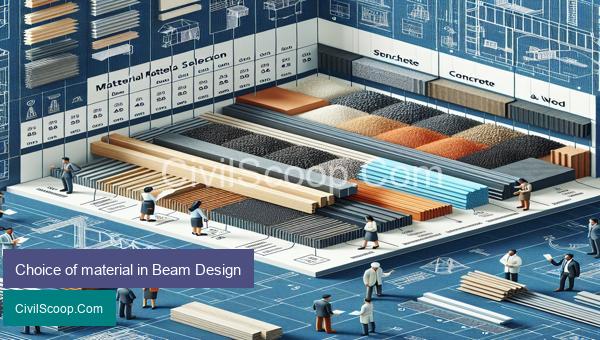
The choice of material in beam design is a critical factor in ensuring the overall structural integrity and long-term durability of a building or structure. As a civil engineer, it is important to understand the properties and characteristics of different materials to make informed decisions on which material is best suited for a specific project.
Some of the key factors that influence the choice of material in beam design include the structural requirements, environmental conditions, cost, and availability. Here are some of the commonly used materials in beam design and their advantages and disadvantages:
1. Wood
Wood has been used as a building material for centuries and is still considered a popular choice for beams in construction projects. It is readily available, lightweight, and easy to work with, making it a cost-effective choice. Wood also has good strength-to-weight ratio and is more flexible than other materials, making it suitable for structures that require some level of movement. However, wood is susceptible to decay, shrinkage, and fire, which can affect its strength and durability.
2. Reinforced Concrete
Reinforced concrete is a composite material made of concrete and steel reinforcement bars. It is widely used in construction due to its high compressive strength, good fire resistance, and low maintenance requirements. The addition of steel reinforcement bars greatly improves the tensile strength of the concrete, making it suitable for supporting heavy loads. However, reinforced concrete is heavy and requires skilled labor for construction, making it more expensive than other materials.
3. Steel
Steel is a versatile material that is commonly used in beam design due to its high strength and durability. It is lightweight, easy to fabricate, and has a high strength-to-weight ratio, making it a popular choice for skyscrapers, bridges, and other large structures. Steel is also fire-resistant and has good ductility, which allows it to bend without breaking under heavy loads. However, steel is prone to corrosion, which can weaken its strength and reduce its lifespan.
4. Composite Materials
Composite materials, such as fiber-reinforced polymers (FRP), are becoming increasingly popular in beam design due to their high strength-to-weight ratio, stiffness, and corrosion resistance. These materials are made of a combination of two or more materials, such as carbon fibers and resin, to create a stronger and more lightweight beam. However, composite materials can be expensive, and their long-term durability is still being studied.
In conclusion, the choice of material in beam design depends on various factors and requires a careful evaluation of the project’s specific needs. A combination of different materials can also be used to achieve the desired structural performance. As a civil engineer, it is important to continuously research and stay updated on the latest materials and their properties to make informed decisions in beam design.
Cast Iron in Beam Design
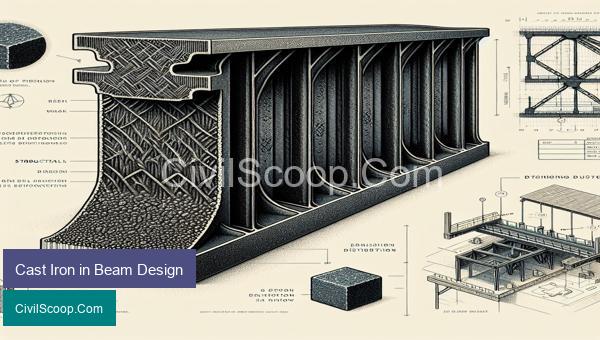
Cast iron, a strong and versatile building material, has been used in various structural applications throughout history. In beam design, cast iron offers important advantages such as high compressive strength, good durability, and resistance to fire and corrosion. These properties make cast iron a suitable material for supporting heavy loads and spanning long distances.
One of the key benefits of cast iron in beam design is its high compressive strength. Cast iron has a compressive strength of up to 200 to 400 MPa, making it one of the strongest materials used in construction. This is particularly advantageous in beam design, where the beam is subjected to compressive forces from the weight of the structure above it. The high compressive strength of cast iron allows for the design of slimmer and longer beams, reducing the amount of material needed and providing more flexibility in design.
Another important factor in beam design is durability. Cast iron is a durable material that can withstand the test of time and adverse environmental conditions. It has a good resistance to corrosion, meaning that it can be used in structures exposed to moisture and harsh chemicals without the risk of degradation. In addition, cast iron has excellent fire resistance, making it suitable for use in high-rise buildings and other fire-resistant structures.
One of the unique characteristics of cast iron is its ability to be molded and shaped into complex forms. This malleability allows for the creation of intricate designs and details in beam construction, providing both structural and aesthetic benefits. It also allows for the fabrication of large, continuous beams that can span significant distances without the need for intermediate supports, making it an ideal material for long-span structures.
In beam design, cast iron is used in two main forms – cast iron beams and cast iron columns. Cast iron beams, also known as H-sections, are commonly used in multi-story buildings and bridges. They are highly efficient in supporting heavy loads and providing long spans while maintaining their structural integrity. Cast iron columns, on the other hand, are used in both single and multi-story buildings to support the weight of the structure above. The combination of cast iron beams and columns allows for the creation of open and spacious interior spaces with minimal interference from structural elements.
In conclusion, cast iron offers several advantages in beam design, including high compressive strength, durability, and versatility in shaping and fabrication. Its use in beam design has been proven successful in many historical and modern structures, making it a reliable and popular choice among civil engineers. With its unique properties and characteristics, cast iron will continue to play a significant role in the construction of resilient and durable structures.
Steel in Beam Design

Steel is a widely used material in the design of beams in civil engineering structures. It is a strong, durable and ductile material, making it a preferred choice for various structural applications.
In beam design, the main function of steel is to resist bending and shear forces acting on the beam. It is known for its high strength-to-weight ratio, which allows for lighter and more efficient designs. This is particularly advantageous in tall and large span structures, where minimizing dead load is critical.
One of the key properties of steel that makes it suitable for beam design is its high tensile strength. This means that it is able to withstand large amounts of tensile stress before failure. This is crucial in resisting bending forces in beams. Additionally, steel has a high yield strength, which is the level of stress at which it starts to deform permanently. This ensures that the beam maintains its shape and does not undergo excessive deflection under load.
Another important factor in beam design is the material’s elasticity, also known as its modulus of elasticity. Steel has a high modulus of elasticity, which means it is a stiff material and has a low tendency to deform under load. This property is essential in maintaining the structural integrity and stability of beams.
Steel is also a ductile material, which means it has the ability to undergo significant deformation before failure. In beam design, this is a desirable property as it allows beams to withstand sudden and unpredictable loads, such as wind or seismic events.
In addition to its mechanical properties, steel in beam design also offers versatility and ease of construction. It is a readily available material in various sizes, shapes, and grades, making it suitable for a wide range of structural designs. It also has good welding and fabrication characteristics, allowing for efficient and cost-effective construction.
However, steel is not without its limitations in beam design. It is susceptible to corrosion, especially in harsh environments, which can weaken the material and affect its load-bearing capacity. This is often mitigated through proper protective coatings and maintenance. Steel also has a high thermal conductivity, which can result in significant thermal expansion and contraction in extreme temperatures. Therefore, proper allowance should be made to accommodate these effects in beam design.
In conclusion, steel is a vital material in beam design due to its high strength, stiffness, and ductility, making it a reliable and efficient choice for various structural applications. However, proper consideration should be given to its limitations in order to ensure safe and effective designs.
Conclusion
In conclusion, beam design is a crucial aspect of structural engineering that involves the careful selection of materials, calculations, and analysis to ensure the safety and durability of structures. Whether it is for residential or commercial buildings, bridges, or other structures, understanding the principles of beam design is essential. By considering factors such as load, support conditions, and structural materials, engineers can create efficient and effective beams that can withstand the forces and stresses placed upon them. With advancements in technology and software, the process of beam design continues to evolve, allowing for more complex and innovative structures to be constructed. By staying knowledgeable about the latest techniques and methods, engineers can continue to push the boundaries of beam design and create structures that are safe, sustainable, and impressive.