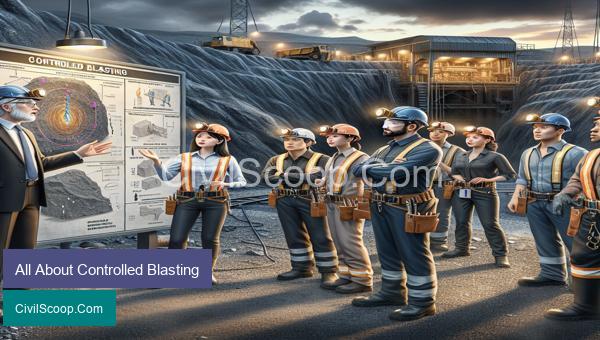
Controlled blasting is a crucial process in many industries, particularly in mining, quarrying, and construction. It involves the use of explosives to break apart rock formations or other materials in a controlled and precise manner. This technique has been refined and perfected over the years, making it safer, more efficient, and more environmentally friendly. In this article, we will delve into the world of controlled blasting, exploring its importance, techniques, and applications. Whether you are a professional in the field or simply curious about the science behind this powerful method, this article will provide a comprehensive overview of all things controlled blasting.
Table of Contents
How to Carry out Controlled Blasting of Rocks?
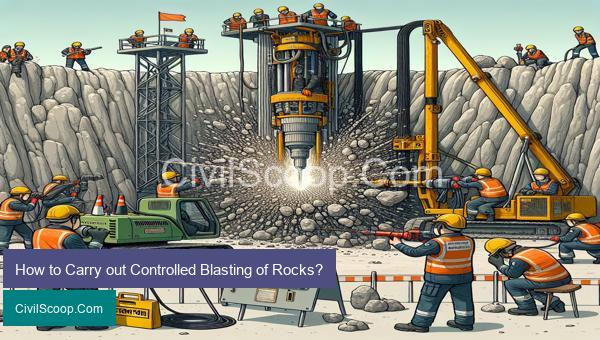
Controlled blasting is a technique used in civil engineering to break large masses of rocks into smaller and manageable pieces. It is a complex process that requires careful planning and precise execution to ensure the safety of the surrounding environment and the workers involved. Blasting is commonly used in construction projects such as road building, mining, and building foundations.
Here is a step-by-step guide on how to carry out controlled blasting of rocks:
1. Site Assessment and Planning:
The first step in any blasting project is to conduct a thorough site assessment. This involves gathering information about the geology of the area, type of rocks present, and the proximity of any structures or buildings. A detailed map of the site is also created, marking the exact location of the blast area, nearby roads, and other potential hazards.
The next step is to develop a blast plan, which outlines the drilling pattern, the amount of explosives needed, and the timing of the blast. This plan must adhere to local laws and regulations and must be approved by the relevant authorities.
2. Preparing the Blast Area:
Before any blasting can take place, the blast area must be cleared of any obstructions and debris. This includes removing loose rocks, vegetation, and any other potentially hazardous materials. It is also essential to establish a safe zone around the blast site, restricting access to only authorized personnel.
3. Drilling:
Once the blast area is prepared, drilling equipment is used to bore holes into the rocks. The spacing and depth of the holes are predetermined in the blast plan to ensure the desired fragmentation of the rocks. The drilling process must also be closely monitored to ensure that the holes are straight and accurately positioned.
4. Loading the Explosives:
After the holes are drilled, explosives are placed inside and covered with stemming material to contain the explosion. The amount of explosives used depends on the size and type of rocks, but it is typically around 1-2 kg per cubic meter of rock. The type of explosives used also varies, with common options being dynamite, ANFO (ammonium nitrate-fuel oil), and slurries.
5. Blast Initiation:
The final step is to initiate the blast. This is done by connecting a detonator or a blasting cap to each hole and linking them to a main fuse or an electronic detonator. The timing of the blast is controlled to ensure that the maximum force is exerted on the rocks, resulting in a more efficient and controlled break.
6. Post-Blast Inspection and Clean-up:
Once the blast is complete, the blast area is inspected for any potential hazards or remaining fragments. The rocks are then cleared and transported to the desired location for further processing or disposal. The surrounding area is also checked for any damage, and necessary repairs or safety measures are taken.
In conclusion, controlled blasting is a crucial aspect of many civil engineering projects involving rocks. It requires careful planning, skilled execution, and adherence to safety protocols to ensure the success of the project. With proper methods and equipment, controlled blasting can be a safe and effective way to break large masses of rocks into smaller and manageable pieces.
Types of Controlled Blasting of Rocks
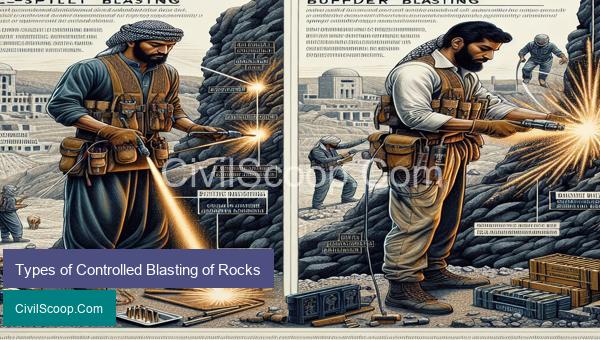
Controlled blasting is an essential technique in the field of civil engineering that is used for the excavation of rocks and other hard materials. This method involves strategically placing and detonating explosives to break apart large masses of rock into smaller, manageable pieces. The controlled nature of blasting reduces the impact on the surrounding environment and structures, making it a preferred choice for construction projects in areas where traditional excavation methods are not feasible or cost-effective. There are several types of controlled blasting techniques used in civil engineering, which are described below:
1. Pre-splitting blasting: This type of blasting is used to create a fracture in the rock mass before the main blast is initiated. It involves drilling a line of closely spaced holes along the desired fracture line, and then detonating them in a specific sequence to create a controlled split. This technique is commonly used in areas where there is a risk of overbreak or when the rock formation is highly fractured.
2. Line drilling blasting: In this technique, a series of closely spaced holes are drilled on a specific line to create a weakening plane in the rock mass. This is particularly useful for blasting large boulders or masses of hard rocks that cannot be easily broken using other methods. The line drilling technique is also beneficial in minimizing vibration and airblast levels.
3. Cushion blasting: This method involves placing a layer of soft material, such as sand or crushed stone, on top of the rock surface before blasting. The cushion layer acts as a barrier and absorbs the energy released by the explosive, reducing its impact on the surrounding environment and limiting the propagation of vibrations and flyrock.
4. Smooth blasting: In this technique, the explosive charge is distributed evenly across the area to be blasted, resulting in a smooth excavation surface. It is used in areas where the primary objective is to achieve uniform fragmentation of the rock mass without excessive vibrations.
5. Presplitting and smooth blasting: As the name suggests, this type of controlled blasting involves combining pre-splitting and smooth blasting techniques to achieve precise and controlled excavation of the rock mass. The presplitting creates a fracture line, while the smooth blasting breaks the remaining rock into smaller, manageable pieces.
6. Trim or perimeter blasting: This technique is often used in urban areas, where there is limited space for controlled blasting. It involves blasting the outer edges of the rock mass in a controlled manner to break it into smaller blocks and facilitate excavation.
In conclusion, controlled blasting is an integral part of civil engineering, and each type has its unique advantages and applications. The selection of the appropriate technique depends on several factors, such as the rock formation, type of project, availability of space, and environmental concerns. The use of controlled blasting techniques ensures safer, more efficient and cost-effective excavation of rocks, contributing to the success of civil engineering projects.
Ground Vibration in Controlled Blasting of Rocks

Ground vibration in controlled blasting of rocks is a crucial aspect that needs to be carefully considered by civil engineers. Controlled blasting of rocks is a common practice in civil engineering projects, such as road construction, foundation excavation, quarrying, and mining. It involves the use of explosives to break and remove large quantities of rocks in a confined and controlled manner.
When blasting, the detonation of explosives produces a significant amount of energy in the form of shock waves. These shock waves travel through the ground and can cause vibration, which can potentially affect the surrounding structures, equipment, and even people. Thus, it is essential to carefully monitor and control the ground vibration to avoid any detrimental effects.
Several factors influence ground vibration, which includes the explosive properties, type of rock, distance from the blasting site, and geological conditions. The vibrations can vary in intensity, frequency, and duration depending on these factors. It is vital to note that these vibrations can exceed safe levels and cause damage to nearby structures.
To mitigate the damaging effects of ground vibration, engineers use specialized techniques to control and monitor the vibrations. One of the most common methods is the use of blast mats or mats made of tires or rubber that absorb and reduce the energy produced by the shock waves. These mats are placed in strategic locations around the blasting site and can effectively reduce ground vibrations.
Another technique used to control ground vibration is through the use of explosives with lower energy levels. By carefully selecting and designing the blasting pattern and using smaller quantities of explosives, engineers can significantly reduce the impact of ground vibration. The blasting sequence and timing of detonations can also help minimize the ground vibrations.
To ensure the safety of nearby structures and people, engineers use specialized instruments such as seismographs to monitor ground vibration levels. These instruments measure the intensity and frequency of ground vibrations and provide real-time data. This data is essential in adjusting and fine-tuning blasting parameters to meet safety standards.
In addition to the above methods, engineers also conduct pre-blast surveys to assess the condition of surrounding structures and identify potential points of weakness. Post-blast surveys are also carried out to monitor any changes in structures’ condition and take necessary actions if needed.
In conclusion, ground vibration in controlled blasting is a crucial consideration in civil engineering projects. By carefully selecting and designing blasting techniques, using specialized equipment, and monitoring ground vibrations, engineers can successfully carry out controlled blasting without causing any damage to the surrounding structures, equipment, and people. It is essential to prioritize safety and use responsible blasting practices to minimize any potential risks.
Conclusion
In conclusion, controlled blasting is a necessary technique in construction and mining operations that involves the use of carefully calculated explosives to break rocks and move large quantities of earth. When done properly, it can be a safe, efficient, and cost-effective method for excavation and demolition work. However, it requires extensive planning, expertise, and adherence to strict safety protocols to minimize potential risks and impacts on the environment and nearby structures. Additionally, advancements in technology and techniques continue to improve the precision and effectiveness of controlled blasting. Overall, this technique plays a crucial role in modern construction and mining industries and its proper implementation is essential for the successful completion of complex projects.