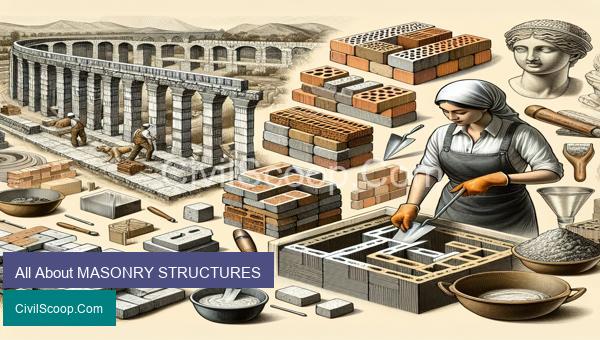
Masonry structures have been used for centuries to create enduring and impressive buildings. From ancient Greek temples to modern skyscrapers, masonry has proven to be a reliable and versatile building material. This article will provide a comprehensive guide to all things masonry, exploring its history, materials, methods, and benefits. Whether you are a student of architecture, a builder, or simply fascinated by the process of construction, this article will provide valuable insights into the world of masonry structures. So let’s dive deeper into this timeless building technique and learn all about the art and science of masonry.
Table of Contents
DESIGN METHODS OF MASONRY STRUCTURES
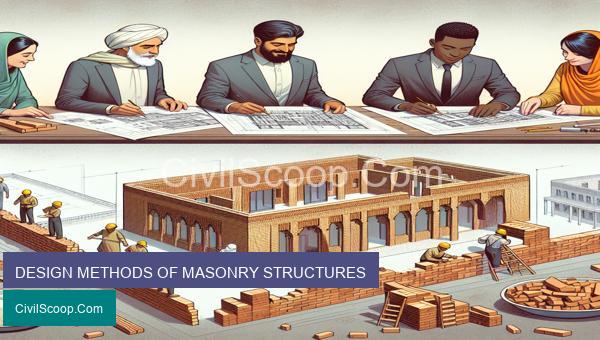
Designing masonry structures requires careful consideration of various design methods to ensure structural integrity, functionality, and safety. Masonry structures, which are made of materials such as bricks, stones, concrete blocks, and mortar, have been used for centuries and continue to be a popular choice for construction due to their durability and cost-effectiveness. Here are some of the common design methods used for masonry structures.
1. Limit State Design: This method is based on the concept of limiting the deflection of the structure or the maximum stress it can withstand. It takes into account the ultimate load that the structure can bear before failure and the service load that the structure will be subjected to during its lifetime. Designers use various codes and standards, such as the American Concrete Institute (ACI) and the British Standards (BS), to determine the allowable stresses and deflections for different masonry elements.
2. Working Stress Design: This method uses the assumption that the stresses in the masonry should not exceed the elastic limit of the material. In this approach, the designer calculates the stress in each element of the structure and ensures that it does not exceed the allowable stress. While this method is simpler and more straightforward than the limit state design, it does not take into account the long-term behavior of the structure, which can lead to issues such as cracking and permanent deformation.
3. Load and Resistance Factor Design: This method is a more advanced version of the limit state design and is widely used in modern masonry structure design. It considers the uncertainties in materials, construction, and loading conditions and assigns load and resistance factors accordingly. This method accounts for both the ultimate and service loading conditions and helps in determining the appropriate safety factors for different elements of the structure.
4. Working Stress Design with Strength Reduction Factor: This method combines the working stress design with the strength reduction factor, which is a safety measure used to account for uncertainties and assumptions made in the design process. The designer determines the stress in each element of the structure and then applies a strength reduction factor to ensure that the material can withstand the expected load without failure.
5. Empirical Design: In this method, designers use empirical rules based on their experience and observations from past performance of masonry structures. It relies on rules of thumb and does not take into account detailed calculations or analysis. This method is often used for simple and small-scale structures, but it is not suitable for complex or large-scale projects.
In conclusion, the design methods of masonry structures combine engineering principles, construction materials, and safety factors to create a safe and efficient structure. Designers must carefully consider the loading conditions, material properties, and uncertainties in the construction process to ensure the stability and longevity of the masonry structure. Implementation of these design methods in accordance with the appropriate codes and standards is crucial to achieve a successful masonry structure design.
Conclusion
In conclusion, masonry structures have stood the test of time and remain a popular choice for construction today. With its many benefits including strength, durability, and aesthetic appeal, it is a reliable and versatile building material. From ancient civilizations to modern cities, masonry structures have proven to be a vital part of our architectural heritage. With continuous advancements in technology and techniques, masonry continues to evolve and adapt to meet the changing needs of our society. Whether it is a grand historical monument or a simple residential building, masonry structures continue to stand tall, serving as a reminder of our past and a foundation for our future.