
Project management is a crucial aspect of any successful business or organization. It involves planning, organizing, and overseeing the execution of a specific project with the goal of achieving the desired outcome. From large-scale construction projects to small business initiatives, project management plays a crucial role in ensuring efficient resource allocation, effective communication, and timely delivery. In this article, we will delve into the world of project management, exploring its core concepts, methodologies, and best practices. Whether you are a seasoned project manager or just starting in the field, this article aims to provide valuable insights and practical tips to help you excel in your project management endeavors.
Table of Contents
FOUR PHASES OF PROJECT MANAGEMENT
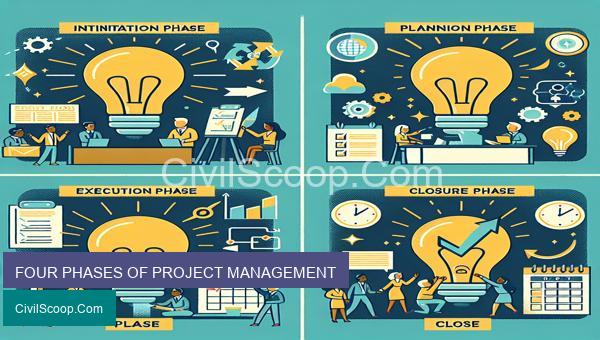
Project management is the process of planning, organizing, and overseeing the completion of a project within a specific timeframe and budget. In civil engineering, project management is crucial to ensure that construction projects are completed efficiently and successfully. There are four phases of project management in civil engineering, namely initiation, planning, execution, and closure. Let’s take a closer look at each phase and its importance in the overall project management process.
1. Initiation:
This is the first phase of project management and involves defining the project and its objectives. The goal of this phase is to identify the purpose and scope of the project, assess its feasibility, and determine whether it aligns with the organization’s goals and objectives. It involves identifying the stakeholders, understanding their requirements, and conducting a thorough analysis of the project’s potential risks and challenges. This phase lays the foundation for the entire project and sets the direction for the subsequent phases.
2. Planning:
The planning phase is where the project details are fleshed out. It involves developing a roadmap to achieve the project’s objectives and determining the necessary resources, budget, and timeline. Plans for risk management, quality control, communication, and procurement are also created during this phase. The project manager works closely with the team, stakeholders, and other relevant parties to gather inputs and develop a detailed project plan that serves as a guide throughout the project’s duration.
3. Execution:
The execution phase is where all the planning and preparations come into action. It is the longest phase and involves the actual construction and implementation of the project. The project manager must effectively coordinate and supervise the work of the project team and ensure that the project is progressing according to the plan. This phase is critical as any deviations from the plan can lead to delays, cost overruns, and a decrease in project quality. Regular monitoring and reporting take place during this phase to keep the project on track.
4. Closure:
The closure phase marks the end of the project. It involves completing all the remaining tasks, obtaining necessary approvals and permits, and handing over the completed project to the stakeholders. The project manager conducts a final review to ensure that all project objectives have been met, and all deliverables have been completed as per the plan. A project closure report is prepared, documenting the project’s success, key learnings, and recommendations for future projects. This phase also includes conducting a post-project evaluation to identify any areas for improvement.
In conclusion, project management is a complex and dynamic process that requires careful planning and execution to achieve success. The four phases of initiation, planning, execution, and closure provide a structured approach to manage construction projects effectively. Each phase is essential, and a project manager must have strong leadership and management skills to navigate through each phase and deliver a successful project.
Conclusion
In conclusion, project management plays a crucial role in ensuring the success of any project by providing a structured approach to planning, organizing, and executing tasks. It involves various techniques, tools, and skills to effectively manage resources, time, and risks. Through effective project management, organizations can achieve their desired objectives within the allocated budget and timeline. As such, it is an essential aspect of any business or industry and requires constant evaluation and adaptation to changing environments. With the growing demand for efficient project management, it is crucial for individuals and organizations to continuously invest in developing and enhancing their project management skills. By understanding the fundamentals of project management, one can effectively lead and deliver successful projects, ultimately contributing to the growth and success of the organization.