Reactive powder concrete (RPC) is a relatively new and highly specialized form of concrete that has gained attention due to its exceptional strength, durability, and unique properties. Developed in the early 1990s, RPC has been gaining significant momentum in construction industries worldwide, revolutionizing traditional concrete applications. With its high compressive strength, low permeability, and unique composition, RPC offers a wide range of practical applications across various sectors, from infrastructure to architectural designs. In this article, we will delve into the world of RPC, exploring its composition, properties, and potential applications, and how it is changing the landscape of modern construction.
Table of Contents
PROPERTIES OF REACTIVE POWDER CONCRETE
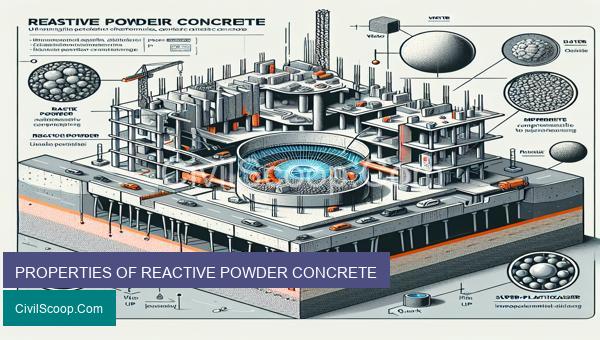
Reactive powder concrete (RPC) is a type of ultra-high-performance concrete that has gained popularity in recent years due to its superior strength, durability, and resistance to cracking. It is made up of a combination of Portland cement, silica fume, quartz powder, and steel fibers, which gives it unique properties when compared to traditional concrete.
Here are some key properties of reactive powder concrete:
1. High compressive strength: RPC has a compressive strength of up to 200 MPa, which is significantly higher than traditional concrete. This makes it suitable for applications where high strength is required, such as in bridges, high-rise buildings, and nuclear facilities.
2. Low permeability: The use of silica fume and quartz powder in RPC results in a densely packed matrix with reduced pore size, making it highly impermeable. This helps to prevent the penetration of water, chemicals, and other substances that can cause corrosion or damage.
3. Durability: RPC has excellent durability due to its low permeability and high strength. It is able to resist the corrosive effects of chemicals, saltwater, and harsh environmental conditions, making it suitable for use in marine structures, offshore platforms, and other harsh environments.
4. Crack resistance: The addition of steel fibers in RPC helps to improve its tensile and flexural strength, making it highly resistant to cracking. This property is especially beneficial in seismic zones where structures are subjected to significant stress and movement.
5. Reduced shrinkage: RPC has a low water-cement ratio, which results in reduced shrinkage compared to traditional concrete. This is because the low water content allows for a more compact and dense mix, minimizing the potential for shrinkage cracks to develop.
6. Fire resistance: The use of steel fibers in RPC also makes it highly resistant to fire. It can withstand high temperatures and does not spall, which is the explosive fracturing of concrete due to heat.
7. Improved workability: Despite its high strength, RPC has good workability, which allows for easy placement and consolidation. This is due to the use of superplasticizers, which improve its flowability and reduce the need for excessive vibration.
8. Eco-friendly: RPC’s composition, which includes a high percentage of industrial by-products such as silica fume and fly ash, makes it a more sustainable and environmentally friendly option compared to traditional concrete.
In conclusion, reactive powder concrete has a unique combination of properties that make it a highly desirable material for use in a wide range of applications. Its high strength, durability, and crack resistance make it a cost-effective and long-lasting solution for demanding engineering projects. With ongoing research and development, it is expected that RPC will continue to evolve and become even more widely used in the construction industry.
Mixture design of RPC and HPC:

Mixture design is a crucial aspect of civil engineering, especially when it comes to designing high-performance concrete. Two types of concrete that are becoming increasingly popular in the industry are Reactive Powder Concrete (RPC) and High-Performance Concrete (HPC). Both RPC and HPC have superior strength and durability compared to traditional concrete, making them ideal for use in various civil engineering structures such as high-rise buildings, bridges, and infrastructure projects. In this article, we will delve deeper into the mixture design of RPC and HPC and understand how they are formulated.
Reactive Powder Concrete (RPC) is a type of ultra-high-performance concrete that is known for its remarkable strength and durability. The mixture design of RPC involves using finely ground materials such as cement, silica fume, and fine sand, along with steel and polyethylene fibers. These materials are mixed with a low water-to-cement ratio, typically ranging from 0.08 to 0.25, resulting in a highly dense and compact concrete mixture.
The mixture design of RPC utilizes a special blend of materials that undergo a highly reactive process, known as hydration, to form a dense and impermeable microstructure. This microstructure is responsible for the exceptional strength and durability of RPC. The steel and polyethylene fibers used in the mixture design also play a significant role in improving the tensile and flexural strength of RPC, making it suitable for high-stress applications.
On the other hand, High-Performance Concrete (HPC) is a type of concrete with enhanced mechanical properties, higher durability, and improved workability compared to conventional concrete. The mixture design of HPC comprises Portland cement, silica fume, high-range water reducers, and superplasticizers to achieve a dense and compact concrete mix. The use of these materials helps in reducing the water-to-cement ratio, resulting in a stronger and more durable concrete compared to traditional concrete.
The mixture design of RPC and HPC requires precise proportions and meticulous planning to achieve the desired strength and durability. Factors such as the type of materials used, their fineness, and the water-to-cement ratio play a crucial role in determining the final properties of these high-performance concretes. Special care must also be taken to consider the environmental factors, such as temperature and humidity, during the mixing and curing process. Any deviation from the recommended mixture design can significantly impact the final strength and durability of RPC and HPC.
In conclusion, the mixture design of RPC and HPC is a complex process that requires a thorough understanding of materials, their properties, and their interactions. These high-performance concretes are revolutionizing the field of civil engineering and opening up opportunities for building taller and more durable structures. As a civil engineer, it is essential to stay updated with the latest advancements in RPC and HPC mixture design to ensure the success of construction projects and contribute to the growth of the industry.
Conclusion
In conclusion, it is evident that reactive powder concrete (RPC) is a cutting-edge material in the field of construction. Its exceptional mechanical properties, such as high compressive strength and durability, have the potential to revolutionize traditional concrete structures. RPC also offers a wide range of applications, from small-scale residential buildings to large-scale infrastructure projects. However, like any new technology, RPC comes with its own set of challenges and limitations that need to be carefully addressed. With further research and development, it is likely that RPC will continue to gain popularity and become a staple in the construction industry. It is an exciting time for the world of concrete and with RPC, the possibilities for innovative and sustainable construction are endless.