
Construction materials are essential components in the building and renovation industries. From bricks and lumber to steel and concrete, these materials are what make our homes, offices, and infrastructure structures sturdy and durable. However, with a wide range of options available in the market, it can be overwhelming to decide which materials to choose for a construction project. In this article, we will dive into the world of store, stack, and handle construction materials, exploring their importance, characteristics, and how to properly manage them for efficient building projects. Whether you are a homeowner, contractor, or DIY enthusiast, understanding these materials is crucial to ensure a successful and cost-effective construction project. So, let’s explore all there is to know about store, stack, and handle construction materials
Table of Contents
How to Store, Stack, and Handle Construction Materials?

As a civil engineer, it is essential to understand the proper methods of storing, stacking, and handling construction materials on a job site. Improper management of materials can lead to project delays, increased costs, and safety hazards. In this article, we will discuss the best practices for storing, stacking, and handling construction materials.
1. Proper Storage of Construction Materials
The first step in managing construction materials is to store them properly. Materials should be stored in designated areas that are clean, dry, and well-ventilated. They should be protected from weather elements such as rain, snow, and extreme temperatures, which can cause damage and reduce their lifespan.
Moreover, certain materials require specific storage conditions. For example, cement should be stored in airtight containers and kept off the ground to prevent moisture absorption. Steel should be stored in a covered area to avoid corrosion.
It is also crucial to keep an inventory of all materials in storage to prevent over or under-ordering, which can lead to project delays and increased costs.
2. Safe Stacking of Construction Materials
Stacking materials is an efficient way to save space on a job site. However, it is crucial to follow safe stacking practices to prevent accidents and injuries. The following guidelines should be followed when stacking materials:
- Stack materials on flat, level surfaces to prevent them from tipping over.
- Do not stack heavy materials on top of light ones.
- Do not stack materials too high, as this can make them unstable.
- Use protective materials, such as wooden pallets or cardboard sheets, between layers to prevent damage.
- Use appropriate equipment, such as forklifts or cranes, to safely stack materials that are too heavy or bulky to handle manually.
3. Handling Construction Materials
The handling of construction materials requires proper planning and trained personnel to ensure safety and prevent damage to the materials. The following safety measures should be taken when handling materials:
- Wear appropriate personal protective equipment (PPE) such as hard hats, gloves, and safety glasses.
- Do not rush when moving materials and avoid sudden movements to prevent accidents.
- Use the correct equipment for the type and weight of materials being handled.
- Do not overload equipment or vehicles with materials.
- Plan the path of material transfer to avoid obstacles and ensure safe movement.
4. Labeling and Organization
Another essential aspect of storing, stacking, and handling materials is proper labeling and organization. All materials should be labeled clearly with their name, quantity, and any other relevant information. This ensures easy identification and prevents confusion. Moreover, materials should be organized in a way that prevents mix-ups and makes them easily accessible.
5. Regular Inspections
Regular inspections of materials and storage areas are necessary to identify any issues early on and prevent further damage. Any damaged materials should be removed from the site, and necessary repairs or replacements should be made promptly.
In conclusion, proper storage, stacking, and handling of construction materials play a crucial role in the success of a construction project. Following these best practices will not only ensure the safety of workers but also prevent material wastage and minimize project delays. As a civil engineer, it is your responsibility to oversee and implement these practices to maintain a well-organized and efficient job site.
1. Cement

Cement is a common construction material that is used to bind different materials together and create a strong, solid structure. It is a fine powder, usually gray in color, that is made from a mixture of limestone, clay, and other minerals.
The use of cement dates back to ancient civilizations, with evidence of its use found in structures such as the Great Pyramids of Giza and the Roman Colosseum. However, the cement that is used today is much different from its early forms.
There are various types of cement available in the market, each with its own specific properties and uses. The most commonly used type is Portland cement, which is a combination of calcium, silicon, aluminum, iron, and other ingredients. It is named after the Portland stone, a type of limestone found in England, from which it was first made.
The manufacturing process of cement begins with the extraction and crushing of raw materials, which are then ground into a fine powder. This powder is heated in a kiln to a temperature of around 1400-1500 degrees Celsius, which causes a chemical reaction that converts it into clinker. The clinker is then ground with a small amount of gypsum to form a fine powder, which is the final product that is sold as cement.
One of the main properties of cement is its ability to harden and bind with other materials, making it a crucial component in the construction of buildings, roads, bridges, and other infrastructure. When mixed with water, cement forms a paste that binds with sand, gravel, or other aggregates to create concrete. This concrete is used to make foundations, walls, floors, and other structural elements of buildings.
In addition to its binding properties, cement also provides strength and durability to structures. It forms a strong concrete matrix that can resist compressive forces and protect against environmental factors such as water, chemicals, and extreme temperatures. Moreover, cement can also be enhanced with additives to provide specific properties, such as quick setting or increased strength.
However, the production and use of cement also have environmental implications. The manufacturing process requires a high amount of energy and produces significant carbon emissions, contributing to the greenhouse effect and climate change. To address these concerns, sustainable methods of producing cement are being developed, such as using alternative fuels and implementing carbon capture technologies.
In conclusion, cement is a fundamental material in modern construction and plays a crucial role in infrastructure development. With the constantly evolving construction industry, the demand for high-quality and sustainable cement continues to increase. As a civil engineer, it is important to have a thorough understanding of cement and its properties to ensure the safe and efficient use of this essential construction material.
2. Masonry Units Bricks

Masonry units, also known as bricks, are one of the most commonly used building materials in civil engineering projects. Brick masonry has been around for thousands of years and has stood the test of time due to its durability, strength, and versatility. In this article, we will discuss the basics of masonry units, particularly bricks, and their importance in civil engineering.
Masonry units are building materials that are used to construct walls, pavements, and other structures. They are manufactured from various materials such as stone, clay, concrete, and sand-lime mixtures. Among these materials, bricks are the most commonly used masonry units in civil engineering.
Bricks are rectangular blocks made from clay or other suitable materials, which are then fired at high temperatures to make them strong and durable. They come in different sizes and types, such as solid bricks, hollow bricks, and perforated bricks, to suit different construction needs. These bricks are then laid in different patterns using mortar to create different types of structures.
One of the primary reasons for the widespread use of bricks in civil engineering projects is their strength and durability. Bricks have high compressive strength, which means they can withstand heavy loads without breaking. This makes them suitable for building load-bearing walls, foundations, and other structural elements. Bricks are also resistant to fire, water, and weathering, making them ideal for building structures that need to withstand harsh environmental conditions.
Another advantage of using bricks as masonry units is their versatility. Bricks can be easily cut, shaped, and molded to fit different construction needs. This flexibility in design allows for various creative patterns and structures to be made with bricks. Moreover, bricks are also available in a wide range of colors, textures, and finishes, giving architects and engineers the freedom to create aesthetically pleasing and unique structures.
Brick masonry also has excellent thermal properties, providing insulation against heat and cold. This helps in reducing the energy consumption of buildings and promoting sustainable construction practices. Additionally, bricks have a high sound insulation capacity, making them ideal for soundproofing walls in buildings located in noisy environments.
In conclusion, masonry units, especially bricks, play a crucial role in civil engineering projects. Their strength, durability, versatility, and excellent thermal and sound insulation properties make them an ideal building material. Their timeless appeal and ease of use have made them a go-to choice for engineers and architects, and they will continue to be a vital component of construction in the years to come.
3. Aggregate
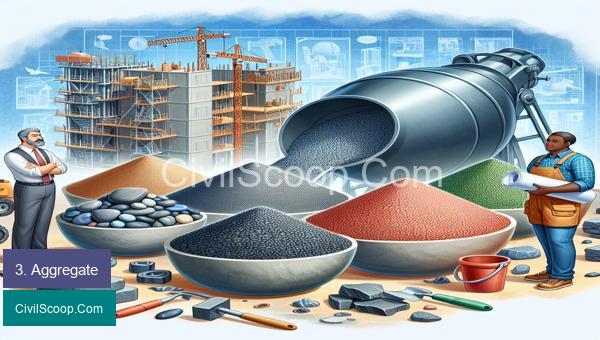
Aggregate is a crucial component in the construction industry and is defined as a granular material used in construction, including sand, gravel, crushed stone, and recycled concrete. It serves as a filler material in construction projects, providing stability, strength, and durability to the overall structure.
The process of aggregate production involves extracting and crushing rocks, boulders, or gravel from natural deposits. Depending on the intended use, the size, shape, and cleanliness of the aggregate can be modified through crushing, screening, and washing. These processes help to remove any impurities and result in a consistent and uniform material.
There are three main types of aggregate used in construction – coarse, fine, and lightweight. Coarse aggregate consists of particles larger than 4.75mm, such as crushed stone and gravel. It is primarily used in the production of concrete, as it provides bulk to the mix and helps to reduce shrinkage and cracking. Fine aggregate, with particle sizes between 0.15mm and 4.75mm, includes natural sand and manufactured sand produced as a by-product of crushing rocks. It is also used in the production of concrete and helps to fill voids between coarse aggregate particles. Lightweight aggregate, made from industrial by-products such as expanded clay, shale, or slate, is used in the production of structural concrete to reduce the overall weight of the structure.
One of the main benefits of using aggregate in construction is its ability to provide strength and stability to the structure. When compacted together, aggregate creates a strong base for roads and foundations, reducing the risk of settling, sinking, and structural damage. Additionally, aggregate also helps to control drainage by promoting water flow away from the structure, which prevents water-related damage.
Another advantage of using aggregate in construction is its cost-effectiveness. Being readily available and relatively inexpensive, aggregate is a popular choice in construction projects, providing significant cost savings in comparison to other materials. Furthermore, the use of recycled aggregate in construction helps to reduce waste and promote sustainability.
However, there are also some challenges associated with aggregate use. One of the main concerns is the depletion of natural sources of aggregate due to excessive extraction. This can lead to environmental impacts such as habitat destruction, erosion, and air and water pollution. To combat depletion, many construction projects are now using alternative materials or incorporating a high percentage of recycled aggregate in their mix.
In conclusion, aggregate plays a critical role in the construction industry, providing strength, stability, and cost-effectiveness to various projects. As a civil engineer, it is essential to understand the properties of different types of aggregate and their potential impacts on the environment to make informed decisions in the design and construction processes.
4. Steel
Steel is a popular construction material widely used in civil engineering for its incredible strength, durability, and versatility. It is an alloy of iron and carbon, with small amounts of other elements such as manganese, silicon, and phosphorus. It is one of the most widely used materials in the world, with a wide range of applications in various industries. In this article, we will explore the properties and uses of steel in civil engineering.
Properties of Steel:
- High tensile strength: Steel is known for its high strength-to-weight ratio, which makes it a popular choice for structural components.
- Durability: Steel is highly resistant to corrosion and can withstand extreme weather conditions, making it a durable choice for construction.
- Ductility: Steel has the ability to bend without breaking, making it suitable for various structures that need to withstand heavy loads and seismic forces.
- Machinability: Steel can be easily cut, drilled, and welded, making it a versatile material for various construction applications.
- Cost-effective: Despite its many desirable properties, steel is relatively inexpensive compared to other construction materials, making it a cost-effective option.
Uses of Steel in Civil Engineering:
- Structural elements: Steel is commonly used to build various structural elements such as beams, columns, and trusses in buildings, bridges, and other structures.
- Reinforcing bars: Steel reinforcement is used in concrete structures to increase their tensile strength and prevent cracking.
- Piles: Steel piles are often used to support bridge piers and foundation systems in civil engineering projects.
- Pre-engineered buildings: Steel is the go-to material for pre-engineered buildings such as warehouses and industrial buildings due to its strength, durability, and ease of fabrication.
- Transportation infrastructure: Steel is an essential material in the construction of transportation infrastructure such as roads, railways, and airports.
Advantages of Steel in Civil Engineering:
- High strength and durability: Steel is one of the strongest construction materials, making it ideal for structures that need to withstand heavy loads and harsh environmental conditions.
- Speed of construction: Steel structures can be prefabricated off-site, which significantly reduces construction time and labor costs.
- Sustainable choice: Steel is a recyclable material, with a high scrap value, making it an eco-friendly choice for construction.
- Design flexibility: Steel’s malleability and machinability make it a versatile material that can be molded into various shapes and sizes, giving architects and engineers the freedom to create innovative designs.
In conclusion, steel is an indispensable material in civil engineering due to its exceptional properties and wide range of applications. Its strength, durability, versatility, and cost-effectiveness make it a popular choice for a wide variety of construction projects. It is a material that has stood the test of time and will continue to play a crucial role in shaping our built environment for years to come.
5. PVC Pipes
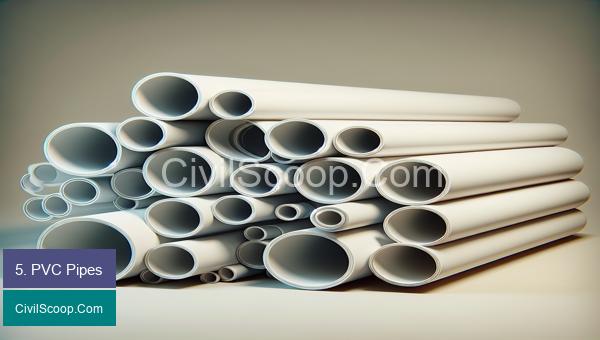
PVC pipes, short for Polyvinyl Chloride pipes, are one of the most commonly used types of pipes in the construction industry. They are popular for their durability, cost-effectiveness, and versatility, making them an essential component in many civil engineering projects. In this article, we will discuss five key points about PVC pipes.
1. Composition and Properties
PVC pipes are made of a combination of vinyl chloride monomer and a variety of additives such as plasticizers, lubricants, and stabilizers. This results in a strong, rigid material that is resistant to corrosion, chemicals, and extreme temperatures. PVC pipes have a smooth surface, making them less prone to scaling and allowing for efficient flow of fluids. They also have a low thermal conductivity, which helps in conserving energy.
2. Types
PVC pipes come in a variety of types, each designed for a specific application. The most common types are:
- Pressure pipes: These are used for conveying pressurized liquids such as water and are ideal for water supply systems.
- Drainage pipes: These are used for carrying wastewater and are designed to have a smooth interior that prevents clogging.
- Electrical conduits: PVC pipes are also used for electrical wiring and are popular for their non-conductive nature.
- Irrigation pipes: These pipes are designed for transporting water to agricultural fields and come in different sizes and thicknesses.
3. Advantages
One of the major advantages of PVC pipes is their cost-effectiveness. They are relatively cheaper than other materials such as metal pipes, making them a popular choice for budget-conscious projects. PVC pipes are also lightweight, making them easy to transport and install. They have a long lifespan of more than 50 years, making them a durable choice for underground applications. Additionally, they are easy to cut, connect, and join, allowing for quick and efficient assembly.
4. Installation
The installation of PVC pipes is relatively simple and does not require any specialized equipment or skills. The pipes can be cut to any desired length using a handsaw or a PVC cutter. They can also be easily connected using solvent cement or rubber gaskets. PVC pipes are also compatible with a wide range of fittings, allowing for flexibility in design and installation.
5. Applications
PVC pipes are used in a variety of civil engineering applications, some of which include:
- Water supply and distribution systems: PVC pipes are widely used for carrying potable water from the source to homes and industries.
- Drainage systems: These pipes are used for collecting and transporting wastewater and stormwater.
- Underground utilities: PVC pipes are commonly used for underground gas and electrical distribution networks.
- Road construction: They are used for culverts, storm sewers, and other drainage systems in road construction projects.
- Irrigation: PVC pipes are used for transporting water to agricultural fields for irrigation purposes.
In conclusion, PVC pipes have become an integral part of civil engineering due to their various advantages and applications. With continuous advancements and technological developments, PVC pipes are expected to continue playing a significant role in the construction industry.
6. Paints, Varnishes, and Thinners

Paints, varnishes, and thinners are critical materials used in the construction and maintenance of buildings and infrastructure. These materials not only provide aesthetic value but also protect surfaces from corrosion, weathering, and wear and tear. As a civil engineer, it is important to have a thorough understanding of paints, varnishes, and thinners, their properties, and their applications.
1. Paints:
Paint is a liquid composition that contains pigments, binders, solvents, and additives. The pigments give paint its color and hiding power, while binders hold the pigments together and bind them to the surface. Solvents are used to keep the paint in liquid form, and additives improve its performance and durability. Paints are available in different types, such as latex paint, oil-based paint, and water-based paint. Each type has its own advantages and is used for specific purposes.
2. Varnishes:
Varnish is a clear or colored liquid that dries to form a hard and transparent layer. Unlike paint, varnish does not contain pigments and is used to enhance and protect the natural color and grain of wood surfaces. It is also used on other surfaces like metal and plastic to protect them from UV radiation, moisture, and abrasion. Varnishes are available in different finishes, including glossy, semi-gloss, and matte.
3. Thinners:
Thinners are solvents that are added to paints and varnishes to reduce their viscosity and make them easier to apply. They also help in controlling the drying time of the coating. The type of thinner used depends on the type of paint or varnish being used. For example, oil-based paints require mineral spirits as thinners, while water-based paints require water or acrylic-based thinners.
4. Applications:
Paints, varnishes, and thinners are used in various applications in civil engineering. In construction, they are used to protect and decorate surfaces of buildings and structures, such as walls, ceilings, floors, and columns. They are also used for waterproofing and corrosion protection of concrete and steel structures. In maintenance and renovation projects, these materials are used to refresh and protect old surfaces. In addition, specialized coatings are used for specific purposes, such as anti-graffiti coatings, fire-resistant coatings, and chemical-resistant coatings for industrial structures.
5. Environmental Considerations:
With increasing awareness about environmental sustainability, the use of paints, varnishes, and thinners has also been under scrutiny. These materials contain volatile organic compounds (VOCs) that contribute to air pollution and have adverse health effects. However, many manufacturers are now producing low and zero VOC paints, varnishes, and thinners that are eco-friendly and safer for human health.
6. Maintenance:
Proper maintenance of paints, varnishes, and thinners is crucial for their longevity and performance. This includes regular cleaning, touch-ups, and timely recoating. In addition, proper storage and disposal of these materials are important to avoid hazardous situations.
In conclusion, paints, varnishes, and thinners are important materials in the construction industry, and as a civil engineer, it is essential to have knowledge about their properties, applications, and maintenance. With advancements in technology, we can expect to see more eco-friendly and innovative options in the market, making these materials even more essential for the construction and maintenance of buildings and infrastructure.
7. Tiles

Tiles are one of the most commonly used building materials in civil engineering. They have been used for thousands of years and are still widely used in construction today. Tiles are thin, flat pieces of ceramic or stone material that are commonly used to cover floors, walls, and roofs.
There are many different types of tiles available in the market, each with its own properties and characteristics. Some of the most commonly used tiles in civil engineering are ceramic tiles, porcelain tiles, terracotta tiles, and natural stone tiles.
Ceramic tiles are made from a mixture of clay, sand, and other natural materials. They are known for their durability, easy maintenance, and wide variety of designs and colors. Ceramic tiles are often used in kitchens, bathrooms, and other areas that are prone to moisture as they are highly water-resistant.
Porcelain tiles are similar to ceramic tiles but are denser and less porous, making them highly durable and suitable for both indoor and outdoor use. They are also available in a wide range of designs and are commonly used in high-traffic areas such as commercial buildings.
Terracotta tiles, also known as clay tiles, are made from fired natural clay and are known for their rustic and earthy appearance. They are commonly used in outdoor areas such as patios and gardens and are relatively low maintenance.
Natural stone tiles are made from natural stones such as granite, marble, limestone, and slate. They are highly durable, unique in appearance, and add a touch of elegance to any space. However, they can be more expensive and require more maintenance compared to other types of tiles.
Apart from these commonly used tiles, there are also specialized tiles such as mosaic tiles, glass tiles, and vinyl tiles. Mosaic tiles are small tiles made from glass, stone, or ceramic, and are used to create intricate designs on walls and floors. Glass tiles are highly durable and have a modern and sleek appearance, making them popular in modern architecture. Vinyl tiles, also known as linoleum tiles, are synthetic tiles made from PVC and are commonly used in areas that require a high level of resistance to water and chemicals.
In civil engineering, tiles serve both functional and aesthetic purposes. They are used to protect surfaces from wear and tear, as well as to enhance the overall appearance of structures. Tiles are also relatively easy to install and can be customized to fit any space, making them a popular choice among engineers, architects, and contractors.
In conclusion, tiles are a fundamental element in civil engineering and have been a staple in construction for thousands of years. They offer a wide range of benefits such as durability, low maintenance, and versatility in design, making them an essential material for any construction project. With advancements in technology, new and innovative tiles continue to be developed, providing engineers with even more options to create sustainable and aesthetically pleasing structures.
Conclusion
In conclusion, understanding the different aspects of store, stack, and handle construction materials is crucial for any construction project. From selecting the proper materials to efficiently organizing and handling them, these elements play a significant role in the success and safety of a construction site. By following the guidelines and best practices outlined in this article, contractors and workers can ensure that materials are stored, stacked, and handled in the proper manner, leading to a successful and efficient project completion. Overall, a thorough knowledge and implementation of these techniques can enhance the overall quality of the construction process and ultimately result in a durable and sustainable project.