Table of Contents
All About Construct a Concrete Building
Constructing a concrete building is no simple task. It requires a myriad of knowledge, expertise, and skill to successfully build a structure that is not only strong and durable, but also functional and aesthetically pleasing. From the initial planning and design stages to the actual construction process and beyond, there are various factors that need to be considered in order to create a successful concrete building. In this article, we will delve into the world of constructing concrete buildings and explore the various aspects that go into making them the strong and reliable structures that they are known to be. So let’s take a deeper look and discover all there is to know about constructing a concrete building.
How to Construct a Concrete Building: A Step-by-Step Guide
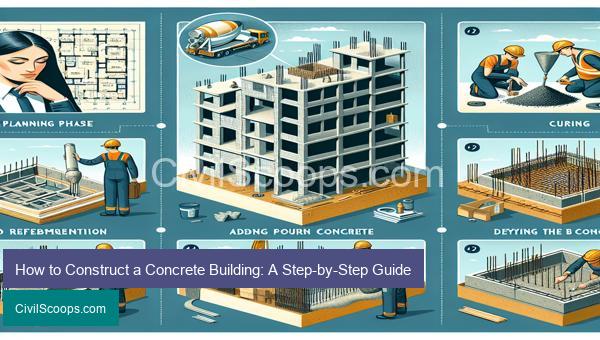
Constructing a concrete building requires careful planning and execution to ensure a strong and durable structure that will stand the test of time. As a civil engineer, your role is crucial in overseeing every step of the construction process to ensure quality and safety. In this guide, we will outline the step-by-step process of constructing a concrete building.
Step 1: Site Preparation
The first step in constructing a concrete building is to prepare the site. This involves clearing the site of any debris, vegetation, and other obstacles. The site should be leveled, compacted, and graded to ensure a stable foundation. Any underground utilities should also be marked and protected.
Step 2: Excavation
The next step is to excavate the foundation for the building. The excavation should be done according to the building plans and specifications. It is important to ensure the depth and dimensions of the excavation are accurate to avoid any issues during construction.
Step 3: Foundation
The foundation is the most crucial part of a concrete building. It provides support for the entire structure and must be designed and constructed to withstand the weight of the building and any external forces such as wind and earthquakes. The type of foundation used will depend on the type of soil, local building codes, and the size and structure of the building.
Step 4: Formwork
Formwork is the temporary structure used to contain and shape the concrete as it cures. It is usually made of wood, steel, or aluminum and must be strong enough to hold the weight of the concrete. The formwork should be installed according to the building plans and must be secured properly to prevent any movement during the pouring and curing of the concrete.
Step 5: Reinforcement
Before pouring the concrete, reinforcements such as rebar or steel mesh must be placed within the formwork. These reinforcements add tensile strength to the concrete, making it more resistant to bending and cracking. The placement and spacing of the reinforcements should be according to the building plans and specifications.
Step 6: Concrete Pouring
Once the formwork and reinforcements are in place, the concrete can be poured. It is important to use quality concrete with the correct mix and strength for the specific project. The concrete should be evenly spread and compacted to remove any air pockets. Vibrators may also be used to further compact the concrete and ensure a strong bond with the reinforcements.
Step 7: Curing
After the concrete is poured, it needs to be cured to achieve its full strength and durability. Curing involves keeping the concrete moist and at a consistent temperature, usually for 7 to 14 days. This can be done by covering the concrete with plastic sheets or using a curing compound. Curing is essential to prevent cracking and ensure the longevity of the building.
Step 8: Stripping Formwork
Once the concrete is cured, the formwork can be removed. This should be done carefully to avoid any damage to the concrete. Any marks or lines left by the formwork should be smoothed out using a trowel.
Step 9: Finishing
The final step is to finish the concrete surface. This involves using tools such as floats, trowels, and brooms to create the desired texture and finish. Finishing should be done within a day or two of pouring to prevent any inconsistencies in color and texture.
In conclusion, constructing a concrete building involves multiple steps and requires careful planning, coordination, and execution. As a civil engineer, it is
Preconstruction Activities For Construct a Concrete Building
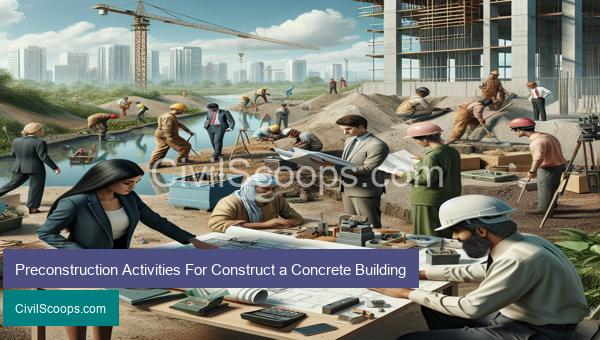
Preconstruction activities are a crucial part of the construction process for any building, especially for concrete structures. These activities are carried out to ensure that the construction process runs smoothly and efficiently, leading to a strong and durable concrete building. They involve planning, organizing, and preparing all the necessary resources and materials before the actual construction begins.
The following are some of the key preconstruction activities that need to be carried out when constructing a concrete building.
1. Site Preparation: The first step in any construction project is preparing the site for the building. This involves clearing the land, leveling the ground, and removing any obstructions that may hinder the construction process. The site should also be inspected for any potential hazards, such as underground utilities or poor soil conditions.
2. Surveying and Excavation: Once the site is ready, a land surveyor will mark out the dimensions and boundaries of the building. This is essential to ensure that the building is constructed in accordance with the construction plans and local regulations. Excavation is then carried out to create a foundation for the building. This includes digging trenches, leveling the ground, and compacting the soil.
3. Soil Testing: Before any concrete is poured, it is essential to test the soil to determine its load-bearing capacity. This is crucial in determining the type and depth of the foundation needed to support the building. The soil also needs to be tested for its moisture content, as too much moisture can impact the strength and durability of the concrete.
4. Design and Engineering: The design and engineering of a concrete building are critical to its strength and stability. This involves creating detailed plans and drawings that specify the exact dimensions, materials, and construction methods to be used. The design and engineering phase also includes structural calculations and analysis to ensure that the building can withstand its intended use and environmental conditions.
5. Material Selection and Procurement: Once the design and engineering are completed, the necessary materials are selected and procured. This includes sourcing high-quality concrete, reinforcement, and other materials required for the construction process. Quality control measures should be in place to ensure that the materials meet the necessary standards and specifications.
6. Formwork and Shoring: Before the concrete can be poured, formwork and shoring need to be installed. This involves constructing temporary molds that will provide the desired shape and support to the concrete until it cures. Shoring is also used to support the formwork and ensure that it can withstand the weight of the wet concrete.
7. Concrete Pumping and Placement: Once the formwork and shoring are in place, the concrete is pumped into the molds and placed. This requires skilled workers who have experience handling concrete to ensure that it is properly poured and leveled. Monitoring the placement process is essential to ensure that the concrete is being poured at the right consistency and that there are no air pockets or segregation.
Carrying out these preconstruction activities diligently and efficiently is crucial to the success of constructing a concrete building. They lay the foundation for a strong and durable structure that can withstand its intended use and environmental conditions. It is important to have an experienced and knowledgeable team overseeing these activities to ensure that they are carried out with the highest level of quality and precision.
Post-contract Activities For Construct a Concrete Building
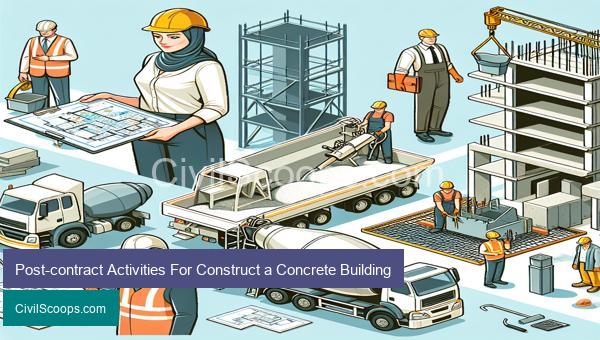
Post-contract activities refer to the tasks that need to be completed after the contract for constructing a concrete building has been signed. These activities are vital for the successful completion of a construction project and ensuring that the building is constructed according to the specifications and standards set by the client.
1. Project Coordination: The first step after the contract is signed is to coordinate with the project team, including architects, engineers, contractors, and suppliers. This involves setting up regular meetings, establishing timelines, and discussing any potential issues or changes to the project. Effective project coordination is crucial for completing the project within the specified timeline and budget.
2. Procurement of Materials: The procurement of construction materials is a critical task that needs to be carried out post-contract. This involves identifying the materials required, sourcing them from reputable suppliers, and ensuring timely delivery to the construction site. The quality and timely delivery of materials can significantly impact the project’s progress and must be closely monitored.
3. Permits and Approvals: Depending on the location and size of the project, various permits and approvals may be required from local authorities. This includes obtaining building permits, environmental clearances, and safety approvals. The responsibility of securing these permits usually lies with the contractor, and it is essential to ensure that all necessary permits and approvals are in place before beginning construction.
4. Project Schedule: The construction schedule must be continuously monitored and updated to track progress and to ensure that the project is on track. Delays can occur due to various reasons such as weather conditions or unavailability of materials, and it is crucial to address these and adjust the schedule accordingly to avoid any delays in the project’s completion.
5. Quality Control: Post-contract activities also involve ensuring that the construction quality meets the required standards. This includes conducting regular inspections and tests on materials and workmanship to ensure that they meet the project’s specifications and relevant building codes and regulations.
6. Change Management: During the construction process, there may be unforeseen changes required by the client or the contractor due to various reasons. It is essential to manage these changes effectively by discussing them with the project team and assessing their impact on the project’s timeline and budget. Changes must be implemented only after obtaining the necessary approvals.
7. Project Documentation: Proper documentation of all aspects of the construction project is crucial for post-contract activities. This includes keeping records of all contracts, change orders, permits, approvals, schedules, and project progress reports. These documents also serve as evidence for any potential claims or disputes that may arise during or after the project.
8. Inspections and Handover: Once the construction work is completed, a final inspection is carried out to ensure that the building meets all the required standards and specifications. Any necessary repairs or changes are made before the final handover of the building to the client. This also involves obtaining occupancy permits and finalizing all documentation, including transfer of payment and warranties.
In conclusion, post-contract activities are crucial for constructing a concrete building to ensure that the project is completed on time, within budget, and according to the required quality standards. Effective project coordination, procurement, quality control, change management, and proper documentation are key factors that should be closely monitored to ensure a successful construction project.
Conclusion
In conclusion, constructing a concrete building involves several crucial steps and considerations. From site preparation to excavation, formwork, and pouring the concrete, every aspect must be carefully planned and executed to ensure a strong and durable structure. Using the right materials, following proper guidelines, and utilizing skilled labor are all essential for a successful concrete building construction. With its numerous advantages, such as strength, durability, and fire resistance, concrete continues to be a popular choice for building construction. However, it is crucial to follow safety protocols and regulations to ensure the safety of workers and the longevity of the building. With proper planning and execution, a concrete building can provide a long-lasting and safe environment for future generations.