
Construction equipment plays a crucial role in the smooth and efficient execution of any construction project. From excavators and bulldozers to cranes and loaders, these heavy machinery are essential in completing tasks that would otherwise be impossible for human labor alone. However, with the high costs of purchasing and maintaining construction equipment, it is imperative for construction companies and contractors to have a thorough understanding of how to properly maintain and care for these valuable assets. In this article, we will delve into all aspects of maintaining construction equipment, from routine maintenance procedures to troubleshooting common issues, in order to ensure the longevity and maximum performance of these essential tools.
Table of Contents
How to Maintain Construction Equipment?

Maintenance of construction equipment is crucial for any construction project to run smoothly and efficiently. Construction equipment includes a wide range of machines, tools, and vehicles used for various construction activities such as earthmoving, concrete mixing, material handling, and more. These equipment are expensive investments and need to be properly maintained to ensure their longevity and optimal performance. In this article, we will discuss the key steps to maintain construction equipment.
1. Regular Inspection and Cleaning: The first step in maintaining construction equipment is to inspect it regularly and clean it after each use. This will help identify any wear and tear or potential issues that need to be addressed. Cleaning will also prevent the accumulation of dirt, dust, and debris, which can cause damage to the equipment.
2. Follow Manufacturer’s Maintenance Schedule: Every equipment comes with a maintenance schedule provided by the manufacturer. It is essential to follow this schedule and perform maintenance tasks as recommended. This will help in detecting any minor issues before they turn into major problems.
3. Lubrication and Fluid Checks: Lubrication is vital to keep the moving parts of the equipment running smoothly. Regularly check and top-up oil, hydraulic fluid, and other fluids as per the manufacturer’s instructions.
4. Replace Worn-out Parts: With regular use, certain parts of the equipment are bound to wear out. It is crucial to identify these parts and replace them with new ones to prevent any further damage. Keep a stock of spare parts to reduce downtime.
5. Store Equipment Properly: When not in use, equipment should be stored in a covered space to protect it from weather elements. Direct sunlight, rain, and extreme temperatures can cause damage to the equipment. It is also essential to store different equipment separately to prevent any damage due to collisions.
6. Train Operators: The operators of construction equipment should be trained to use the machines correctly. They should be aware of the safety procedures and have a good understanding of how to operate and maintain the equipment.
7. Monitor Equipment Performance: Regular monitoring of equipment performance can help identify any issues that need to be addressed. Keep a log of any equipment breakdowns or malfunctions so that they can be addressed immediately.
8. Use Quality Fuel and Parts: The quality of fuel and spare parts used in the equipment can significantly impact its performance and longevity. Always use high-quality fuel and genuine spare parts recommended by the manufacturer.
9. Conduct Annual Inspections: Annual inspections by certified mechanics can help in detecting any potential issues and prevent them from turning into major problems. This will also ensure that the equipment is up to date with the latest safety regulations.
10. Dispose of Old Equipment Properly: Equipment that has reached the end of its useful life should be disposed of properly. This includes recycling or selling it to a reputable dealer.
In conclusion, regular maintenance and proper care of construction equipment are essential for its safe and efficient operation. By following these steps, you can ensure that your equipment lasts longer, performs optimally, and provides a high return on investment.
1. Proper Operation of the Machinery Construction Equipment

Proper operation of machinery and construction equipment is essential for the success of any construction project. As a civil engineer, it is important to know how to operate these machines safely and effectively to achieve the desired results. In this article, we will discuss the key aspects of proper operation of machinery and construction equipment.
1. Familiarize yourself with the equipment: Before operating any machinery, it is crucial to familiarize yourself with the equipment. This includes understanding its features, controls, and safety mechanisms. Reading the manufacturer’s manual and attending training sessions can help you gain a thorough understanding of the equipment.
2. Conduct pre-operation checks: It is important to perform pre-operation checks on the equipment before starting any work. Check for any damages, leaks, or malfunctions, and ensure that all safety guards and features are in place and working correctly. This will prevent accidents and ensure the equipment is in good working condition.
3. Wear appropriate personal protective equipment (PPE): PPE such as hard hats, safety glasses, and steel-toed boots should always be worn while operating machinery. This will protect you from potential hazards on the construction site.
4. Observe safe working practices: Make sure to follow all safety protocols while operating the equipment. This includes always wearing a seatbelt when operating machinery, keeping your hands and feet inside the operator’s cabin, and never carrying any passengers on the equipment.
5. Be mindful of the environment: Before starting the equipment, survey the area and ensure that there are no hazards such as underground utilities, slopes, or debris. Also, be aware of your surroundings and watch out for other workers and vehicles on the construction site.
6. Use the equipment for its intended purpose: Each type of machinery and equipment is designed for a specific purpose. It is essential to use the equipment only for its intended purpose to avoid damaging it or putting yourself and others at risk.
7. Follow the recommended maintenance schedule: Regular maintenance is crucial for the proper functioning of machinery. Make sure to follow the recommended maintenance schedule provided by the manufacturer. This will help prolong the lifespan of the equipment and keep it in good working condition.
8. Notify others before starting and stopping the equipment: Before starting or stopping the equipment, make sure to inform other workers on the site. This will ensure their safety and prevent any accidents.
9. Take breaks and stay alert: Operating machinery and construction equipment can be physically and mentally demanding. It is important to take regular breaks to avoid fatigue and stay focused while operating the equipment.
In conclusion, proper operation of machinery and construction equipment is crucial for the safety and success of any construction project. By following these best practices, civil engineers can ensure the equipment is operated safely and efficiently, resulting in a successful project completion.
2. Perform Regular Cleaning Construction Equipment

As a civil engineer, I understand the importance of regularly cleaning construction equipment on job sites. The heavy machinery used in construction projects can accumulate dirt, debris, and other types of buildup that can affect its efficiency, safety, and lifespan. In this article, I will discuss the importance of performing regular cleaning of construction equipment and the steps involved in this process.
Importance of Regular Cleaning:
There are several reasons why it is essential to perform regular cleaning of construction equipment:
1. Increase Efficiency: Construction equipment, such as excavators, bulldozers, cranes, and dump trucks, are designed to withstand rough working conditions. However, as they are constantly exposed to dirt, mud, and other materials, their performance can be affected. Regular cleaning removes buildup, allowing the equipment to function at its optimal capacity, thus increasing its efficiency.
2. Promote Safety: Construction sites can be hazardous, and properly maintained equipment is crucial to ensuring the safety of workers and the general public. Failure to clean equipment regularly can lead to safety hazards, such as slippery surfaces, blocked sensors, or malfunctioning parts. This can result in accidents, injuries, or even fatalities.
3. Extend Lifespan: Construction equipment represents a significant investment for construction companies. Regular cleaning not only helps to maintain the equipment’s efficiency and safety, but it also extends its lifespan. Dirt and debris can cause wear and tear on the equipment, leading to expensive repairs or replacements. By keeping them clean, their overall lifespan can be prolonged.
4. Improve Appearance: Apart from functionality, clean equipment also improves the overall appearance of a job site. This can create a positive impression for clients, stakeholders, and the general public, as well as boost the reputation of the construction company.
Steps Involved in Regular Cleaning:
Now that we understand the importance of regular cleaning, let’s discuss the steps involved in the process:
1. Inspection: The first step in cleaning construction equipment is to perform a thorough inspection to identify any buildup or damage. This will help determine the appropriate cleaning methods and products needed.
2. Remove Debris: Use a shovel, brush, or compressed air to remove any loose dirt, dust, or debris from the equipment. This step will make the cleaning process more manageable and prevent debris from getting wet and clogging drainage systems.
3. Pressure Wash: Using a pressure washer, thoroughly clean all exterior surfaces of the equipment, including the body, tires, tracks, and undercarriage. This will remove stubborn dirt, grease, and other materials that may be stuck on the equipment.
4. Clean Interior: It is important to also clean the interior of the equipment, such as the operator’s cabin, engine compartment, and hydraulic systems. This will remove any buildup that can affect the equipment’s performance. Care should be taken to use the appropriate cleaning products to avoid damage to electronic components.
5. Dry and Inspect: After washing, the equipment must be thoroughly dried to avoid the risk of rust formation. A high-pressure air compressor can be used to remove water from hard-to-reach areas. Once dry, perform another inspection to ensure all areas have been properly cleaned.
6. Grease and Lubricate: As a final step, all movable parts, such as joints, hinges, and bearings, should be greased and lubricated to prevent corrosion and ensure smooth operation.
In conclusion, regular cleaning of construction equipment is crucial for maintaining efficiency, safety, and longevity. By following these steps, we can
3. Perform Check of Lubricants Construction Equipment
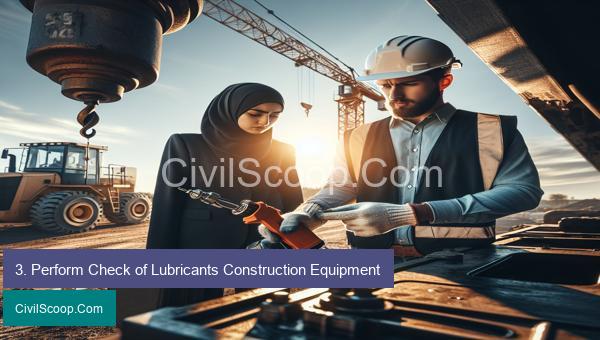
Lubricants play an important role in the performance and maintenance of construction equipment. They provide lubrication and protection to moving parts, increase the lifespan of equipment, and prevent breakdowns. Therefore, it is crucial to perform regular checks on lubricants to ensure they are functioning properly. In this article, we will discuss the importance of performing checks on lubricants for construction equipment and the steps involved in this process.
Importance of Checking Lubricants for Construction Equipment:
1. Ensure Proper Lubrication: Lubricants reduce friction between the moving parts of equipment, preventing wear and tear. When equipment is not properly lubricated, it can lead to increased friction, heat, and damage to the parts. Regular checks of lubricants can help to identify any deficiencies or malfunctions, ensuring proper lubrication at all times.
2. Prevent Equipment Breakdowns: Construction equipment is subjected to heavy and continuous use, which can lead to a build-up of debris and contaminants in the lubricant. This can result in reduced performance and even breakdowns if not detected and addressed promptly. By checking lubricants regularly, any contamination can be identified and cleaned, preventing equipment breakdown and costly repairs.
3. Extend Equipment Lifespan: Regular maintenance, including checking lubricants, can significantly extend the lifespan of construction equipment. Timely replacement of old or contaminated lubricants can prevent premature wear and damage to vital components, increasing the equipment’s overall longevity.
Steps to Perform a Check on Lubricants for Construction Equipment:
1. Read the Equipment Manual: Before starting the lubricant check, it is crucial to familiarize yourself with the brand and model of construction equipment in use. This will help you understand the specific lubrication requirements of each equipment and the type of lubricant to use.
2. Inspect the Visual Condition: Start off by visually inspecting the lubricant in the equipment. Look for any signs of discoloration or contamination, such as water or debris. The presence of sediment or milky color in the lubricant indicates a problem with the equipment.
3. Check the Level of the Lubricant: Ensure that the lubricant is at a suitable level according to the equipment’s manual. If the level is low, it can lead to insufficient lubrication, causing friction and damage to parts.
4. Test the Consistency: The consistency of lubricants can change over time due to exposure to heat and moisture. Perform a consistency test using a testing device or your fingers to determine if the lubricant is still within the recommended range.
5. Monitor the Change Interval: Lubricants have a recommended change interval, which varies depending on the type of equipment and its usage. Keep a record of the change interval and perform checks accordingly, ensuring timely replacements to maintain the equipment’s optimal performance.
6. Consult with a Professional: If you notice any abnormalities during the lubricant check, it is essential to consult with a professional technician. They can provide a thorough assessment of the equipment and perform any necessary repairs or replacements.
In conclusion, the regular check of lubricants is a crucial aspect of maintaining construction equipment. It ensures proper lubrication, prevents breakdowns, and extends the equipment’s lifespan. By following the steps outlined above, civil engineers can effectively monitor and maintain the performance of construction equipment through proper lubrication.
4. Record the Fluid Levels of the Machine Construction Equipment

As a civil engineer, one of my responsibilities is to oversee and manage the construction equipment used on site. Apart from ensuring their proper maintenance and functionality, it is also crucial to closely monitor their fluid levels.
Construction equipment is powered by different types of fluids such as hydraulic oil, engine oil, coolant, and brake fluid. These fluids play a vital role in the smooth operation and efficiency of the equipment. Therefore, monitoring their levels is essential to prevent any potential issues or breakdowns.
The first step in recording the fluid levels is to create a tracking system. This can be as simple as a logbook or a spreadsheet, where all the equipment and their respective fluid types are listed. In this tracking system, the date, time, and current fluid levels should be documented regularly.
In larger construction sites, it is common to have multiple equipment running simultaneously. Hence, it is crucial to assign a designated person or team to check and record the fluid levels, ensuring consistency and accuracy.
The fluid levels should be checked before and after each use, as well as at regular intervals throughout the day. Any sudden decrease in the fluid levels could be a sign of leakage or a potential malfunction. In such cases, the equipment should be immediately inspected and necessary repairs or replacements should be made.
Furthermore, proper procedures should be followed when refilling or topping off fluid levels. Each equipment is designed to operate with a specific type and amount of fluid, and exceeding or mixing different types can potentially damage the equipment.
In addition to recording the fluid levels, it is also important to keep track of the fluid usage. This can help determine if there are any abnormalities or discrepancies, and identify if any preventative maintenance is required.
In conclusion, as a civil engineer, it is crucial to record the fluid levels of construction equipment to ensure their efficient and safe operation. By regularly monitoring and documenting the fluid levels, we can prevent any potential issues and keep the construction site running smoothly.
5. Perform Check for Wear in Construction Machines

Construction machines, such as cranes, excavators, bulldozers, and dump trucks, are essential for any construction project. These heavy-duty equipment are subjected to harsh working conditions and are expected to perform efficiently and effectively. Over time, constant use and exposure to various environmental factors can cause wear and tear, which can lead to equipment failure and potentially dangerous situations on the construction site. Therefore, it is crucial to regularly perform checks for wear on these machines to ensure safe and smooth operation.
Here are the five steps to perform a thorough check for wear in construction machines:
1. Conduct a Visual Inspection:
The first step in checking for wear in construction machines is to conduct a visual inspection. This involves going around the equipment and examining the exterior for any signs of damage or wear. Look for cracks, dents, and rust on the body and components of the machine. Also, check for any missing bolts or loose parts. Ensure that all safety features, such as lights, mirrors, and alarms, are intact and functional.
2. Inspect the Fluid Levels:
Next, check the fluid levels of the machine, including engine oil, coolant, hydraulic fluid, and fuel. Low fluid levels can indicate leaks or potential issues with the machine. Also, check the condition of the fluids for any signs of contamination, such as water or debris. Contaminated fluids can cause damage to the equipment’s internal components and affect its performance.
3. Inspect the Tires or Tracks:
Construction machines that operate on tires or tracks should have their condition checked regularly. Look for signs of wear on the tires, such as cuts, bulges, or uneven tread wear. For track-based equipment, check for loose or damaged tracks and any signs of wear on the chain links or sprockets. Replace any worn-out tires or tracks to ensure safe and stable operation of the equipment.
4. Check the Operating Controls:
It is crucial to ensure that all the operating controls of the construction machine are functioning correctly. This includes the brakes, steering, and hydraulic controls. Test each control and observe for any delays or malfunctions. If there are any issues with the operating controls, they should be addressed immediately to prevent accidents on the job site.
5. Inspect the Components:
Lastly, check the critical components of the machine, such as the engine, transmission, and drivetrain. Look for any signs of wear or damage, such as worn belts, cracked hoses, or loose connections. Also, check the filters and replace them if necessary to maintain the machine’s optimal performance. In addition, it is essential to regularly inspect and clean the air and fuel filters to prevent any clogs that can affect the equipment’s performance.
Regular checks for wear in construction machines are vital for the safety of workers and the efficient completion of any construction project. If any issues are found during the inspection, they should be addressed immediately to prevent downtime and costly repairs. By following these five steps, civil engineers can ensure the proper functioning and longevity of the construction machines on their project site.
6. Perform Misalignment Checks for Construction Machinery

Misalignment checks are an essential aspect of ensuring the proper functioning and efficiency of construction machinery. As a civil engineer, it is your responsibility to actively monitor and perform these checks to prevent any potential accidents or breakdowns on site.
Here are six steps to perform misalignment checks for construction machinery:
1. Identify the Machinery: The first step is to select the machinery that requires a misalignment check. This could include heavy equipment such as cranes, excavators, bulldozers, and even smaller tools like concrete mixers and jackhammers.
2. Understand the Manufacturer’s Guidelines: Before carrying out the misalignment check, it is crucial to understand the manufacturer’s guidelines for each specific machinery. This will provide you with a clear understanding of the proper alignment requirements and tolerance levels.
3. Check for Visual Alignment: Start by performing a visual inspection of the machinery. Look for any apparent signs of wear and tear, such as bent or damaged components, loose bolts, or worn-out parts. These irregularities can be indications of misalignment and require further investigation.
4. Use Alignment Tools: To perform a more accurate and precise misalignment check, utilize alignment tools such as laser systems or straightedges. These tools help to verify if the machinery components are in alignment with each other and with the designated axis points.
5. Measure the Misalignment: Using the alignment tools, measure the amount of misalignment in each component. This could be in the form of angular or parallel misalignment, depending on the type of machinery. Note down these measurements for future reference.
6. Take Corrective Action: Based on the measurements, determine the corrective action required. This could include adjusting or replacing the damaged components, tightening loose bolts, or realigning the machinery using specialized tools.
By regularly performing misalignment checks, you can identify and address any potential issues before they escalate and result in costly repairs or accidents. As a civil engineer, it is your duty to ensure the safe and efficient operation of construction machinery to maintain the integrity of the project and the safety of all on-site personnel.
7. Prepare Maintenance and repair schedule for the Construction Machine

As a civil engineer, one of the most important tasks you will have is to prepare a comprehensive maintenance and repair schedule for construction machines. These machines play a crucial role in the construction process and are essential for the timely completion of projects. A well-maintained and regularly serviced machine not only increases its lifespan but also ensures safety and efficiency on the construction site.
Here are the steps to prepare a maintenance and repair schedule for construction machines:
1. Identify the Required Machines: The first step is to identify all the machines that are required for the construction project. This can include excavators, bulldozers, cranes, loaders, etc. Make a list of all the machines and their respective manufacturers.
2. Understand the Maintenance Requirements: The next step is to understand the maintenance requirements of each machine. This can be done by referring to the manufacturer’s manual or consulting with an expert in machine maintenance. You should be aware of the frequency of maintenance, the specific parts that need to be checked, and any safety precautions that need to be taken.
3. Create a Schedule: Based on the maintenance requirements, create a schedule that outlines when each machine needs to be serviced. This can include daily, weekly, monthly, and annual maintenance tasks. Also, consider the usage of each machine to determine if it needs more frequent maintenance.
4. Determine the Repair Plan: In addition to regular maintenance, construction machines can also require repairs due to wear and tear or unexpected breakdowns. Create a repair plan that specifies the steps to be taken in case of a breakdown, the spare parts needed, and the estimated time for repair.
5. Allocate Resources: Once the schedule and repair plan are finalized, allocate resources for the maintenance and repair tasks. This can include trained personnel, spare parts, and tools required for servicing and repair.
6. Review and Update: It is essential to regularly review and update the maintenance and repair schedule as the project progresses. This can help to identify any changes in the usage of machines or any potential issues that may arise.
7. Monitor and Document: Finally, it is crucial to monitor the maintenance and repair activities and document them. This can help to keep track of the frequency of maintenance and the cost incurred, which can be useful for future projects.
In conclusion, a well-planned maintenance and repair schedule for construction machines is vital for the smooth functioning of a construction project. It not only ensures the longevity of the machines but also helps to avoid costly and time-consuming breakdowns. As a civil engineer, it is your responsibility to create and oversee this schedule to ensure the success of the project.
Conclusion
Maintaining construction equipment is vital to the success of any construction project. Not only does it ensure safety and efficiency on the job site, but it also saves time and money in the long run. By following proper maintenance protocols and investing in quality equipment, construction companies can increase the longevity and performance of their machinery. Regular inspections, cleanings, and repairs should be a top priority for all construction professionals. With the right maintenance plan in place, construction equipment can continue to operate at its fullest potential, leading to successful and timely completion of projects.