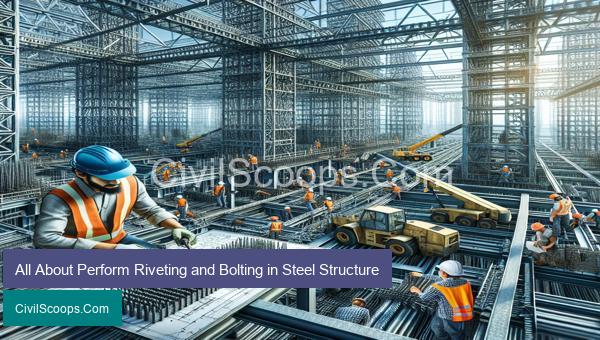
Steel structures are a commonly used construction method for buildings, bridges, and other large-scale projects. One crucial aspect of steel structure construction is the joining of various components to create a stable and durable framework. This is where perform riveting and bolting come into play. These two techniques provide crucial support and reinforcement to steel structures, ensuring their strength and stability. In this article, we will dive into all aspects of perform riveting and bolting in steel structures, discussing their importance, the different methods, and best practices for their implementation. This information will be valuable for construction professionals, engineers, and anyone interested in learning more about the integral role of perform riveting and bolting in steel structure construction.
Table of Contents
How to Perform Riveting and Bolting in Steel Structure?
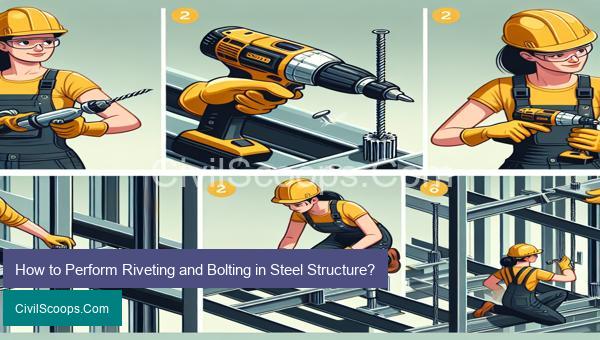
Riveting and bolting are two common methods used in steel structure construction to join structural members together. These methods provide a strong and durable connection between the steel members, ensuring the stability and integrity of the overall structure. In this article, we will discuss the steps involved in performing riveting and bolting in steel structure.
1. Preparation of Steel Members
Before the actual riveting or bolting process, the steel members that are to be connected must be prepared. This involves cleaning the surfaces that will be in contact with each other to remove any debris, dirt, or oil. It is important to have a clean surface to ensure a tight and secure connection.
2. Marking the Location for Rivet Holes
For riveting, the first step is to mark the location of the rivet holes. This can be done by using a template or by measuring and marking the locations with a center punch. The distance between the rivet holes should be in accordance with the design and specifications of the steel structure.
3. Drilling Holes for Rivets
Once the locations of the rivet holes are marked, the next step is to drill them. The size of the hole must be slightly larger than the diameter of the rivet to allow for easy insertion. The diameter of the hole should be as per the specifications provided by the engineer.
4. Inserting the Rivet
After all the holes have been drilled, the next step is to insert the rivets. The rivets are typically heated before insertion to make them softer and easier to work with. The rivet is placed into the hole, and a rivet gun is used to deform the end of the rivet to form a “head”. This creates a strong and permanent connection between the steel members.
5. Tightening Bolts
Bolting, on the other hand, involves using bolts and nuts to join the steel members together. The bolts are inserted through the holes and then tightened with a wrench or a torque wrench to the specified torque value. It is important to tighten the bolts evenly and to the correct torque to ensure a secure connection.
6. Check for Alignment
After the rivets are in place or the bolts are tightened, it is essential to check the alignment of the joined steel members. Any misalignments must be corrected before finalizing the connection.
7. Finishing Touches
The final step involves trimming any protruding ends of the rivets or bolts and painting the connection to prevent corrosion.
In conclusion, riveting and bolting are essential processes in steel structure construction. Proper execution of these methods is crucial for the safety and durability of the structure. Therefore, it is important to follow the design and specifications provided by the engineer and to use high-quality materials for a successful joint connection.
Preliminaries Before Riveting in Steel Structure

Before riveting takes place in a steel structure, certain preliminary steps need to be taken to ensure the success and safety of the process. These preliminaries involve the preparation of the steel members and the setting up of the riveting equipment.
1. Cleaning and inspection of steel members:
Before riveting can begin, it is important to clean the steel members that are going to be joined. Any debris, dirt, or rust must be removed to ensure a proper connection between the members. Additionally, these members must also be inspected for any defects or damages that could affect the integrity of the joint.
2. Preparation of rivets:
Rivets are the fasteners used to join steel members in a structure. They must be prepared before riveting can take place. This involves heating them to a specific temperature, based on the type of rivet being used, to make them malleable. This heating process is known as “hot working,” and it makes the rivets easier to hammer into place.
3. Setting up riveting equipment:
The riveting process requires specialized equipment such as rivet guns, bucking bars, and air compressors. These must be set up on the site before the actual riveting process can begin. The rivet guns and bucking bars must be properly calibrated to ensure that the correct amount of force is applied when hammering the rivets into place.
4. Marking and aligning steel members:
Proper alignment and positioning of steel members are crucial for a successful riveting process. Before riveting, the members must be marked according to the joint layout and then aligned accurately with each other. This ensures that the rivets are driven into the correct positions.
5. Drilling pilot holes:
Pilot holes are small holes drilled into the steel members to guide the rivet during insertion. These holes are created using a drilling machine and must be perfectly aligned to ensure a tight and secure connection between the members.
6. Temporary clamping of members:
To keep the steel members in position while the rivets are being driven into place, temporary clamps may be used. This prevents any movements or misalignments that could affect the accuracy of the joint.
In conclusion, the preliminary steps before riveting in a steel structure play a critical role in ensuring that the final joint is strong and durable. Any negligence or improper execution of these steps can result in a weak connection, compromising the safety and stability of the structure. Therefore, it is essential to follow these preliminaries carefully to achieve a successful riveting process.
Process of Riveting in Steel Structure

Riveting is a commonly used method for joining steel structural components in construction projects. It involves fastening two or more steel pieces together using a rivet, which is a cylindrical metal shaft with a head at one end. Riveting offers a strong and reliable connection, making it suitable for use in high-stress applications such as building frames, bridges, and other steel structures.
The process of riveting involves several steps and requires precision and expertise to ensure a proper and secure connection. The following is a step-by-step guide to the process of riveting in steel structures:
1. Preparation of the Steel Components:
Before the riveting process can begin, the steel components must be prepared. This usually involves shearing or cutting the steel pieces to the required size and shape and drilling holes at specific locations for the rivets to pass through.
2. Selection of the Rivets:
The type and size of the rivet to be used depend on the thickness and type of the steel components being joined. Common types of rivets include solid, semi-tubular, and blind rivets. The diameter and length of the rivets are also chosen based on the thickness of the steel pieces to be joined.
3. Heating the Rivet:
In traditional riveting methods, the rivet is heated to a red-hot temperature using a furnace or a portable gas torch. The heating softens the rivet’s metal, making it easier to form and drive into the holes of the steel pieces.
4. Inserting the Rivet:
The heated rivet is quickly inserted into the pre-drilled holes of the steel components while it is still hot. The head of the rivet is placed on the underside of the steel pieces while the protruding end is on the top.
5. Driving the Rivet:
A rivet gun or pneumatic hammer is used to drive the rivet into the holes and flatten the protruding end. This process creates a mushroom-shaped head on the exposed end, and the excess metal is trimmed off using a chisel.
6. Cooling and Locking the Rivet:
After the rivet is driven into place, it is allowed to cool down and contract. As the rivet cools, it creates a tight and secure connection between the steel pieces. The contraction also locks the rivet in place and prevents it from loosening over time.
7. Finishing:
Once all the rivets are in place, the finished connection is inspected for any defects or loose rivets. Any excess metal is trimmed off, and the connection is smoothed using a chisel or electric grinder.
8. Inspecting the Connection:
After the riveting process is complete, a thorough inspection of the connection is carried out to ensure it meets the required specifications. This includes checking for any misaligned components, loose rivets, or cracks, which could compromise the structural integrity of the steel structure.
In conclusion, the process of riveting is an essential step in the construction of steel structures. It provides a strong and durable connection between steel components, ensuring the stability and safety of the structure. The accuracy and precision in each step of the riveting process are crucial to achieving a successful and long-lasting connection.
Process of Bolting in Steel Structure

Bolting is a commonly used method of fastening structural steel members together in steel structures. It involves using bolts, nuts, and washers to create a strong and rigid connection between two or more steel members. This process is essential for ensuring the stability, durability, and strength of the structure.
The process of bolting in steel structures involves several steps which are outlined below:
1. Preparation of steel members: Before bolting, the steel members that are to be joined must be prepared for the process. This includes making sure that the surfaces to be bolted are clean and free of any debris, rust, or paint. It is also important to make sure that the edges of the steel members are straight and square.
2. Selection of bolts: The type of bolts to be used depends on the type and size of the steel members being joined, as well as the load that the structure will be subjected to. Commonly used bolts in steel structures include A325 and A490 high-strength bolts, which are designed to resist high tension and shear forces.
3. Drilling and punching: If the steel members do not have pre-drilled holes, they must be drilled or punched to create holes for the bolts. This is typically done using specialized drilling machines or hydraulic punches, ensuring that the holes are accurately positioned and have the correct size and shape.
4. Inserting bolts: Once the holes have been drilled or punched, the bolts are inserted through the holes in the steel members. The bolt should extend at least two threads above the nut to ensure proper engagement and avoid stripping of the threads.
5. Placing washers and nuts: Before tightening the bolts, a washer is placed under the nut to distribute the clamping force evenly on the steel member. The nut is then hand-tightened, leaving a small gap between the washer and the steel member.
6. Tightening the bolts: The bolts are then tightened using a torque wrench or an impact wrench. The torque value used should be in accordance with the specifications provided by the manufacturer. Tightening the bolts too much can cause them to break, while insufficient tightening may lead to joints that are not strong enough.
7. Applying paint or protective coating: After the bolts have been tightened, it is recommended to apply paint or a protective coating over the bolted connections to prevent corrosion and rust. This will ensure the longevity of the structure and maintain its structural integrity.
Overall, bolting is a critical process in steel structure construction, and it requires precision, careful planning, and adherence to industry standards and specifications. Properly executed bolting ensures that the structure is safe, stable, and able to withstand the loads it is designed for. It is important to regularly inspect and maintain bolted connections to ensure their integrity and prevent any structural failures.
Erection of Bolted and Riveted Member in Steel Structure
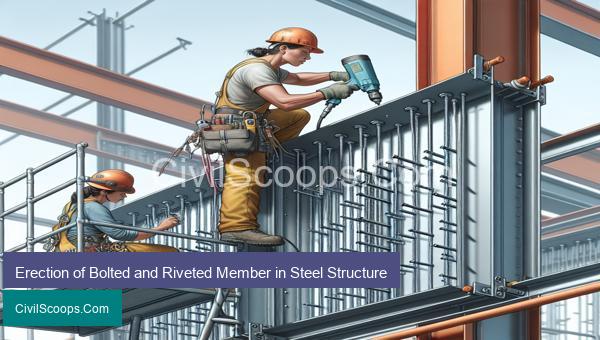
Erection of bolted and riveted members is a crucial step in the construction of steel structures. This process involves the joining of individual steel members using bolts or rivets to create a cohesive and strong structural framework. Bolted and riveted connections allow for the quick and efficient assembly of steel structures, making them a popular choice in the construction industry.
The process of erecting bolted and riveted members begins with the placement of the steel columns and beams according to the structural design. These members are typically delivered to the construction site in pre-fabricated sections, making the erection process more streamlined.
Firstly, the column and beam members are placed in their designated positions, and temporary supports are used to hold them in place. This ensures stability during the erection process.
Next, the columns and beams are aligned and welded together to create connections at the base and top of each column. These connections are critical as they provide stability and load transfer between the members.
Once the columns and beams are in place and secured, the bolted and riveted connections are installed. Holes are first drilled into the steel members, and then bolts or rivets are inserted and tightened or smashed into place. These connections are designed to withstand a specific amount of force and are critical in ensuring the structural stability and safety of the building.
Bolted connections are generally preferred over riveted connections as they offer more flexibility during construction. Bolts can be easily removed and replaced if needed, while rivets require more time and effort to be removed.
During the erection process, it is essential to ensure that all bolts and rivets are tightened to the specified torque to ensure the structural integrity of the connections. This is usually done using a torque wrench, and an inspection is done to ensure all connections are correctly installed.
After all the bolts and rivets are in place, the temporary supports can be removed, and the structure should stand on its own. The final step is to conduct a thorough inspection of all connections to ensure they meet the design specifications and are free from any defects.
In conclusion, the erection of bolted and riveted members is a crucial process in the construction of steel structures. It requires careful planning, precise installation, and thorough inspection to ensure the structural stability and safety of the building. The use of bolted and riveted connections allows for a cost-effective and efficient construction process, making steel structures a popular choice in the construction industry.
Conclusion
In conclusion, understanding the methods of perform riveting and bolting in steel structure is crucial for efficient and safe construction processes. While both techniques have their advantages and disadvantages, they are both essential for creating strong and durable steel structures. It is important for engineers and construction workers to be well-versed in the proper methods and techniques of riveting and bolting in order to ensure the success and longevity of their projects. By following industry standards and guidelines, we can continue to improve and perfect these methods and ultimately create more efficient and resilient steel structures.