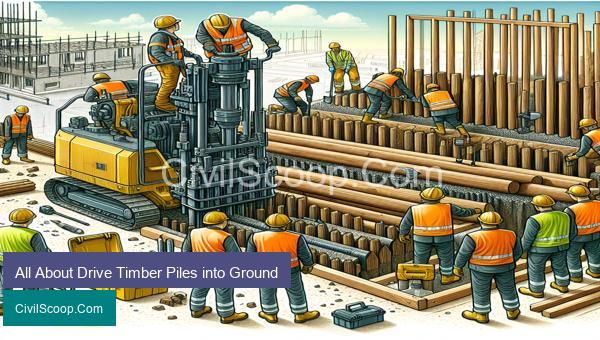
Drive timber piles are a key component in the construction of many types of structures, such as bridges, docks, and foundations. These piles provide a strong and stable support system for these structures, helping them withstand heavy loads and adverse weather conditions. In this article, we will explore all aspects of drive timber piles, from their composition and installation techniques to their advantages and potential limitations. Whether you are a construction professional or simply interested in understanding the fundamentals of drive timber piles, this article will provide you with a comprehensive overview of this crucial building material.
Table of Contents
How to Drive Timber Piles into Ground?

Timber piles are widely used in civil engineering projects for their easy availability and affordability. They are long cylindrical wooden columns that are driven into the ground to provide support for structures such as bridges, buildings, and retaining walls. Driving timber piles into the ground can be a simple and effective method of creating a stable foundation, as long as the proper techniques and equipment are used. Here are the general steps involved in driving timber piles into the ground:
1. Site Preparation
Before starting the pile driving process, the site needs to be properly prepared. This includes clearing the area of any debris or obstructions that could interfere with the driving operation. The ground should also be leveled and compacted to provide a stable base for the pile.
2. Selecting the right type of pile
There are two main types of timber piles: precast and driven-in. Precast piles are manufactured offsite and then driven into the ground using heavy machinery, while driven-in piles are installed using a pile driver machine. The choice of the pile type depends on factors such as the soil conditions, load-bearing capacity, and the depth of the pile required.
3. Pile Driving Equipment
The equipment used for driving timber piles into the ground includes a pile driver machine, a hammer or a ram, and other accessories such as a helmet, pile sleeve, and cushion block. The pile driver machine can be either mounted on a crane or a boom, depending on the size and weight of the piles.
4. Positioning the Pile
The pile needs to be positioned correctly before driving it into the ground. It should be aligned vertically and in the correct position according to the building or structure’s design.
5. Driving the Pile
The pile driver machine is used to drive the timber pile into the ground. The hammer or ram is lifted and released repeatedly to pound the pile into the ground. As the pile is driven, the hammer or ram must strike the pile’s head squarely and evenly to avoid damage. The pile driver operator should constantly monitor the progress to ensure that the pile is being driven straight and to the required depth.
6. Checking the Pile Resistance
As the pile is being driven into the ground, the resistance of the soil is monitored to ensure that it can support the required load. This is done by measuring the penetration rate of the pile under a certain hammer blow and comparing it to the resistance predicted by the pile driving formula.
7. Finishing the Pile
Once the desired depth and resistance have been achieved, the pile is trimmed at the top to the required level. A cap or pile cap is then added to provide a level surface for the structure’s foundation to rest on.
8. Protecting the Pile
Timber piles are vulnerable to damage from moisture, insects, and rotting. To prevent this, they should be treated with preservatives and protected with a concrete or steel cap.
In conclusion, driving timber piles into the ground is a straightforward process that requires careful planning, proper equipment, and skilled operation to ensure a stable and durable foundation for any structure. It is essential to follow all safety precautions and guidelines during the pile driving process to avoid accidents and ensure a successful project.
Class of Piles

Pile foundations are an essential component of any civil engineering project that involves constructing a structure on a soft or unstable ground. They are deep vertical structural elements that are used to transfer the loads of the structure to deeper, more competent layers of soil or rock. The classification of piles depends on several factors, such as the material used, the method of installation, and the type of load the pile can sustain. In this article, we will discuss the different classes of piles based on their material and installation method.
1. Based on Material Used:
a. Timber Piles: These are the oldest type of piles used in construction and are made from tree trunks or large logs. They are most suitable for soft and wet soil conditions and have good resistance against water, making them ideal for marine structures.
b. Concrete Piles: These are precast piles made of high-strength concrete. They are commonly used in projects that require high load-bearing capacity, such as bridges and high-rise buildings. Concrete piles are available in various shapes and sizes, including circular, square, or octagonal.
c. Steel Piles: Steel piles have high strength and are suitable for a wide range of soil conditions. They are either driven or screw piles and can be used in both tension and compression loads. Steel piles are often used in areas where concrete piles are not suitable, such as rocky terrain and areas with corrosive soil conditions.
d. Composite Piles: These are piles made of two or more different materials, such as steel and concrete or steel and timber. They offer the advantages of both materials and are suitable for different soil conditions.
2. Based on Installation Method:
a. Driven Piles: These are piles that are driven into the ground using a pile driver or a similar device. They are either cast-in-place or precast piles. Driven piles are most suitable for cohesive soils and can achieve a higher bearing capacity compared to other types of piles.
b. Bored Piles: Bored piles are created by drilling or excavating a hole in the ground and then filling it with concrete. They are commonly used in areas where soil conditions are not suitable for driven piles, such as rocky terrain or heavy boulder areas.
c. Screw Piles: These are piles that are screwed into the ground using a rotating torque machine. They are best suited for areas with soft or loose ground and are an ideal choice for temporary structures, such as electrical substations and wind turbines.
d. Vibro Piles: Vibro piles are created by vibrating a steel casing into the ground and then filling it with concrete. They are suitable for soft and loose soil conditions and are commonly used for low-rise residential buildings and warehouses.
In conclusion, the class of piles used in a project depends on various factors, including the type of structure, soil conditions, and load-bearing requirements. It is essential to carefully select the appropriate type of pile to ensure the stability and durability of the structure. Civil engineers must consider all these factors before making a decision, and it is vital to regularly monitor and inspect the piles during the construction process to ensure their proper functioning.
Timber Piles Specfication
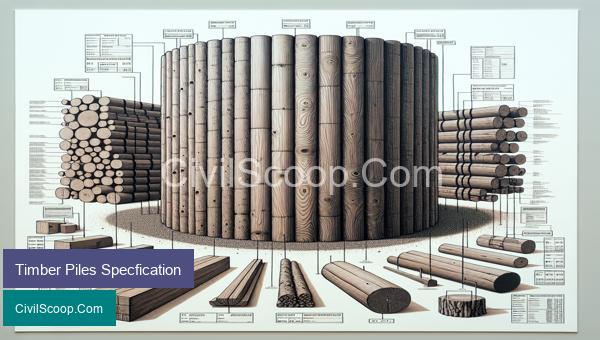
Timber piles are a type of deep foundation used to support buildings, bridges, and other structures in areas with soft or weak soils. They are long, slender cylindrical members made from pressure-treated wood, such as Douglas fir or southern pine, which have been impregnated with preservatives to protect against rot and decay. Timber piles are a popular choice in construction due to their low cost, availability, and ease of installation.
When it comes to specifying timber piles for a project, certain key factors must be taken into consideration. These include the type and pressure-treating quality of wood, size and spacing of piles, and the method of installation.
Type and Pressure-Treating Quality of Wood:
Timber piles are typically made from softwood species like Douglas fir, larch, or southern pine. These species are selected for their high strength and durable characteristics. The quality of the timber used is directly linked to the pressure treatment process. The most commonly used preservatives are chromated copper arsenate (CCA), creosote, and pentachlorophenol (PCP). CCA is the most widely used and offers the best protection against rot, insects, and marine organisms. Creosote and PCP are also effective but have certain limitations on their use and disposal due to their toxic nature.
Size and Spacing of Piles:
The size and spacing of timber piles must be determined based on the load requirements and soil conditions at the project site. Typically, the diameter of a timber pile ranges from 8 to 14 inches, and the length can vary from 10 to 50 feet. The spacing between piles is also critical and is dependent on the load-bearing capacity of the soil. A geotechnical engineer must perform soil tests and analysis to determine the necessary spacing and embedment depth of the piles.
Method of Installation:
Timber piles can be installed either by driving or jetting. Piles can be driven into the ground using a drop hammer or by using a pile driver machine. Jetting involves using a jet of water to loosen the soil around the pile and then pushing it into the ground. This method is suitable for soft soil conditions and helps in reducing the soil resistance during installation.
In addition to these main specifications, there are also other important factors to consider when using timber piles. These include pile alignment, connection details, and handling and storage requirements. It is essential to strictly follow the manufacturer’s instructions and industry standards for handling and storing timber piles to ensure their quality and performance.
In conclusion, the specification of timber piles is a critical part of any construction project. Proper selection of the type and quality of wood, sizing and spacing of piles, and method of installation are vital to ensure the stability and longevity of the structure. It is crucial to work closely with experienced engineers and adhere to industry standards when using timber piles to ensure the safety and success of the project.
Driving Timber Piles into Ground
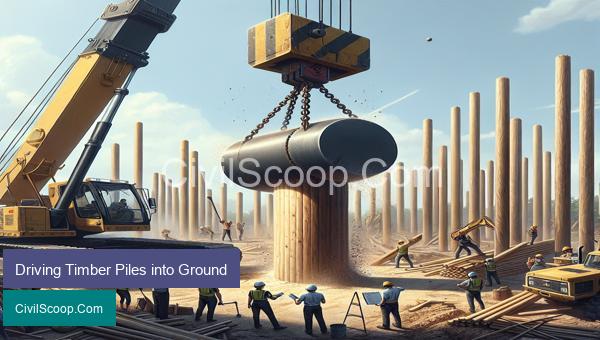
Driving timber piles is a common technique used in civil engineering to provide foundation support for structures such as homes, bridges, and piers. It involves driving timber piles into the ground to create a solid and stable foundation for a structure.
The process of driving timber piles into the ground begins with prepping the site. A pile driver, a heavy machine equipped with a large hammer, is used to drive the piles into the ground. The site is cleared of any obstructions and leveled to ensure a smooth surface for driving the piles.
Selecting the type of timber pile to use is an important step in the process. Different types of timber, such as Douglas fir, cedar, and pine, have varying strengths and durability. Factors such as the weight of the structure, soil conditions, and exposure to weather must be considered when choosing the appropriate type of timber pile.
Once the piles are chosen and delivered to the site, they are cut to the required length. The piles are then driven into the ground using the pile driver. The machine lifts the hammer and then releases it, driving the pile further into the ground. This process is repeated until the pile reaches the desired depth.
A critical aspect of driving timber piles is ensuring proper alignment. Misaligned piles can cause structural issues, so it is crucial to monitor the direction and angle of the piles during installation. This can be done using laser or GPS technology to ensure precision.
Another important consideration during the driving process is the compaction of the soil around the piles. As the piles are driven into the ground, the soil is disturbed, and it is essential to compact it properly to provide support. This can be achieved by using a heavy hammer or vibrating equipment.
An advantage of using timber piles is their ability to adapt to different soil conditions. They can be driven into soft and loose soil, creating a strong foundation. They can also be driven deeper into harder soil, providing a stable foundation in areas with high foundation loads.
One of the primary challenges of driving timber piles is their susceptibility to rot and termite damage. To prevent this, the piles can be chemically treated with preservatives before installation. Proper maintenance of the foundation, including regular inspections and repairs, can also help to prolong the lifespan of the piles.
In conclusion, driving timber piles is an effective and widely used method for creating a solid foundation for structures. With proper preparation, installation, and maintenance, timber piles can provide a long-lasting and durable foundation for various types of structures.
Handling of Timber Piles
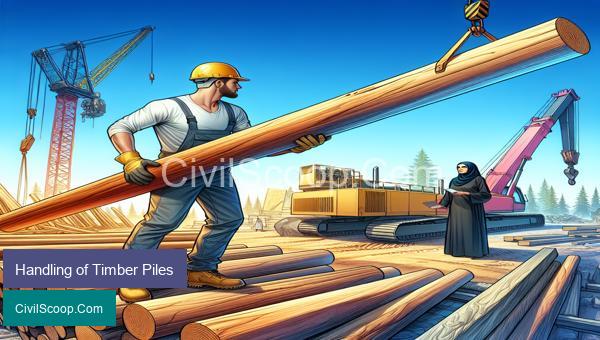
Timber piles are wooden elements that are used as deep foundation elements in civil engineering projects. They are mainly used to transfer heavy loads from structures to the ground. Handling of timber piles is an important step in the construction process as it ensures the piles are installed correctly and are able to support the structure above.
There are several important aspects to consider when handling timber piles, including their storage, transportation, handling on site, and installation.
Storage:
Proper storage is crucial to maintain the quality and strength of timber piles. They should be stored in a dry, well-ventilated area to prevent rot and decay. Piles should be stacked horizontally and supported by blocks or racks to keep them off the ground. Stacking the piles in alternate directions reduces warping and twisting. Piles should also be protected from weather elements such as rain and direct sunlight.
Transportation:
Timber piles are usually transported to the construction site by truck or rail. It is important to ensure that the piles are properly secured and supported during transportation to prevent any damage or deformations. Piling contractors should also make sure that the truck or rail car can support the weight of the piles to prevent accidents.
Handling on site:
When the timber piles arrive on site, they should be handled with care to avoid any damage. As they can be quite heavy and long, special equipment such as cranes, forklifts, or piling rigs are typically used to move and position them. It is important to follow the manufacturer’s guidelines for handling and lifting the piles to prevent any accidents or damage.
Installation:
Proper installation is crucial for the performance of timber piles. Before driving the piles, they should be visually inspected for any defects or damages. Piling contractors should also ensure that the pile is in the proper position and properly supported before driving it into the ground. Timber piles are usually driven using a hammer or a pile driving machine. They should be driven straight and plumb to avoid any bending or buckling. Once installed, the piles should be protected from any lateral forces during construction to prevent any damage.
In conclusion, the handling of timber piles requires careful consideration and attention to detail to ensure that the piles are installed correctly and are able to support the structure above. Proper storage, transportation, handling on site, and installation are crucial for the longevity and stability of timber piles. Piling contractors should also follow the manufacturer’s guidelines and industry best practices to ensure the safety of all workers involved in the process.
Conclusion
In conclusion, drive timber piles are an essential component in many construction projects. They provide a strong and durable foundation for various structures, making them a popular choice among engineers and contractors. Understanding the process of driving timber piles into the ground is crucial for ensuring the safety and stability of buildings. From the preparation of the site to the actual drive process, every step must be carefully executed to achieve the desired results. Proper maintenance and inspection of drive timber piles are also vital to ensure their longevity and effectiveness. With proper knowledge and techniques, drive timber piles can withstand varying soil conditions and serve as a reliable foundation for years to come.