
Concrete curling is a common issue that can cause major problems for construction projects. The process of concrete curling occurs when the concrete slab edges lift off the subbase, resulting in an uneven surface that can lead to safety hazards and structural damage. This issue not only affects the aesthetics of a building but also impacts its functionality and lifespan. To ensure the longevity of concrete structures, it is essential to understand the causes and prevention methods for concrete curling. In this article, we will explore all the necessary information and strategies related to preventing concrete curling, providing insights and solutions for construction professionals and homeowners alike.
Table of Contents
How to Prevent Concrete Curling?
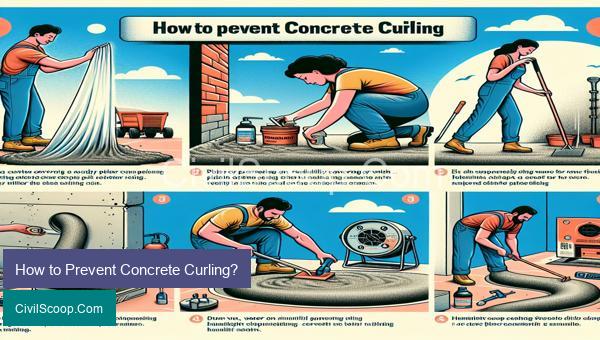
Concrete curling is a common issue faced in construction, especially in large slabs of concrete. It occurs when the corners and edges of the slab start to curl upwards, creating a tripping hazard and affecting the overall appearance of the structure. This problem not only poses safety risks but also affects the durability and functionality of the concrete. As a civil engineer, it is important to understand how to prevent concrete curling to ensure the quality and longevity of the structure. In this article, we will discuss effective methods to prevent concrete curling.
1. Proper Subgrade Preparation
The first step in preventing concrete curling is to ensure that the subgrade is properly prepared. The subgrade refers to the compacted soil or gravel layer upon which the concrete is poured. It is essential to ensure that the subgrade is well-compacted and leveled to provide a stable and uniform base for the concrete. Any variations or unevenness in the subgrade can result in uneven drying and curing of the concrete, leading to curling.
2. Control Joints
Control joints are essential in controlling shrinkage and preventing cracks in concrete slabs. They are created by placing preformed joints or saw cuts in the concrete at predetermined locations to allow the concrete to shrink and expand without cracking. Control joints also help in reducing curling by breaking up large concrete slabs into smaller panels. The joints should be placed at regular intervals, typically between 10 to 20 feet, to prevent excessive curling.
3. Proper Mix Design
The mix design of concrete plays a crucial role in its durability and resistance to curling. It is essential to use a mix with the appropriate amount of water, cement, and aggregates to achieve the desired strength and workability. A high water-cement ratio can lead to excessive shrinkage, resulting in curling. Therefore, it is important to follow the recommended mix design and avoid adding excess water to the concrete mix.
4. Use of Reinforcement
Adding reinforcement, such as steel bars or fibers, to the concrete mix can also help in preventing curling. The reinforcement helps to distribute moisture more evenly throughout the slab, reducing the risk of differential shrinkage and curling. This method is particularly effective in large concrete slabs with significant temperature and moisture variations.
5. Moisture Control
Moisture is one of the primary contributors to concrete curling. Therefore, it is crucial to control the moisture content in the concrete during the pouring and curing process. This can be achieved by covering the slab with a plastic sheet or using a curing compound. It is also important to ensure proper ventilation and drainage around the slab, as excessive moisture from below can also cause curling.
6. Timely Finishing
Proper finishing techniques are crucial in preventing concrete curling. The concrete should be finished in a timely manner to minimize the surface evaporation, which can result in differential shrinkage and curling. Overworking the concrete can also cause trowel marks, which can create uneven drying and lead to curling.
7. Curing Time and Temperature
Lastly, it is crucial to allow the concrete to cure properly before subjecting it to any loads or stresses. Proper curing time and temperature depend on various factors, such as the mix design, ambient conditions, and slab thickness. It is important to follow the recommended curing practices to ensure that the concrete has enough time to dry and gain sufficient strength to resist curling.
In conclusion, preventing concrete curling requires proper planning,
Curling in Concrete Slabs

Curling in concrete slabs is a common issue that can occur during the construction process. It is a phenomenon where the corners and edges of a concrete slab tend to lift or curl upwards, causing an uneven surface. This can be a result of various factors, including inadequate curing, temperature fluctuations, and poor construction techniques.
The root cause of curling is due to the differential shrinkage of concrete. Concrete shrinks as it dries, and when the top surface dries faster than the bottom, it causes the edges and corners to lift. This can also happen if the bottom of the slab is restrained by the subbase or if the reinforcement is not placed properly.
Curling in concrete slabs can have a significant impact on the structural integrity of a building. It can cause cracks, uneven flooring, and even tripping hazards. It can also affect the aesthetic appeal of the structure, hindering the overall appearance.
To prevent curling in concrete, proper curing techniques should be followed. Curing is the process of maintaining moisture in concrete to allow it to gain strength and prevent shrinkage. The use of curing compounds and coverings can help in controlling the evaporation of moisture from the concrete surface. Another method is to cover the slab with wet burlap or plastic sheeting for at least seven days after pouring.
Moreover, controlling the concrete mix design can also help in preventing curling. A concrete mix with lower water-cement ratio and a shrinkage-reducing admixture can reduce the risk of curling. Proper placement of reinforcement is also crucial in preventing curling. The reinforcement bars should be placed close to the bottom of the slab, and joint reinforcement should be used at corners and edges.
In cases where curling has already occurred, various techniques can be used to mitigate the issue. Grinding or jackhammering the curled edges and filling them with epoxy can help in leveling the slab. Another method is saw cutting the slab and installing dowel bars to hold the lifted edges in place.
In conclusion, curling in concrete slabs can be a common issue during construction and can have a significant impact on the structural integrity and aesthetics of a building. To prevent this, proper curing techniques, control of mix design, and placement of reinforcement should be ensured. In cases where curling has already occurred, steps can be taken to mitigate the issue. As a civil engineer, it is crucial to understand the causes of curling and use appropriate techniques to prevent and resolve this issue during construction.
Causes of Curling in Concrete Slabs

Curling in concrete slabs refers to the upward or downward bending of the edges of a concrete slab. This phenomenon is a common issue in construction and can be caused by several factors. Here are some of the main causes of curling in concrete slabs:
1. Differential Drying Shrinkage: Concrete shrinks as it dries and cures, and this shrinkage can be uneven across the slab. If one side of the slab dries faster than the other, it can cause the slab to curl upwards on the drier side. This is because the top surface of the slab, where moisture is evaporating more quickly, is in tension, while the bottom surface is in compression. This imbalance of forces can lead to curling.
2. Temperature Variations: Temperature changes can also cause differential shrinkage in concrete slabs, leading to curling. When one part of the slab is exposed to higher temperatures, it will dry and shrink faster than the rest of the slab, causing it to curl upward. This can happen when one part of the slab is in direct sunlight or when heated slabs are placed next to unheated ones.
3. Excessive Moisture: In some cases, excessive moisture in the concrete mix or improper curing can lead to curling. When there is too much water in the mix, it takes longer for the concrete to dry, which can result in differential drying shrinkage and curling. Improper curing, such as not providing enough moisture or curing for an insufficient amount of time, can also lead to curling.
4. Insufficient Jointing: Joints are necessary in concrete slabs to allow for movement and prevent curling. If the joints are not placed correctly or are too far apart, the slab may not have enough room to expand and contract, leading to curling. Additionally, inadequate jointing can also result in random cracks in the slab, which can contribute to curling.
5. Poor Subgrade Preparation: The subgrade, or the ground underneath the concrete slab, plays a crucial role in preventing curling. If the subgrade is not properly prepared, it can settle or shift over time, which can cause the slab to curl. Additionally, if the subgrade is not compacted correctly or is too soft, it can lead to uneven support and differential shrinkage, resulting in curling.
6. Improper Reinforcement: Reinforcing steel is used in concrete slabs to help distribute loads and reduce cracking. If the reinforcement is not placed correctly or in the right quantity, it can lead to uneven support and cause curling in the slab.
In conclusion, curling in concrete slabs can be caused by various factors, including differential drying shrinkage, temperature variations, excessive moisture, inadequate jointing, poor subgrade preparation, and improper reinforcement. To prevent curling, it is essential to consider these factors during the design and construction phase and take necessary precautions to minimize their effects. Proper curing, jointing, reinforcement, and subgrade preparation are some of the key measures that can help prevent curling in concrete slabs.
How to Prevent Curling in Concrete Slabs?
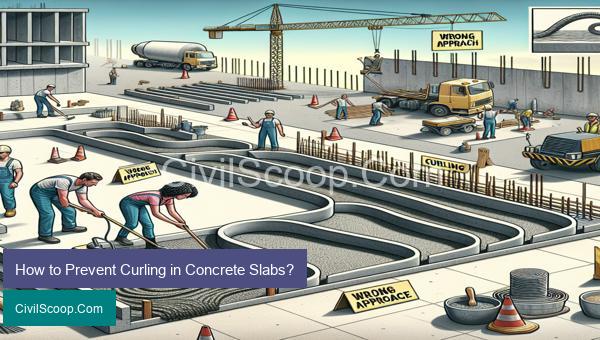
Curling is a common phenomenon that occurs in concrete slabs, where the edges of the slab curl or lift up due to differential shrinkage between the top and bottom layers. This can lead to a range of issues such as cracking, joint failure, uneven floors, and trip hazards. As a civil engineer, it is important to take preventive measures to control curling and ensure the stability and durability of concrete slabs. Here are some methods to prevent curling in concrete slabs:
1. Properly mix and place concrete:
The first step in preventing curling is to ensure that the concrete mix is properly designed and proportioned. Excessive amounts of water, cement or air entrainment can lead to shrinkage, which can cause curling. It is essential to follow recommended mix designs and to properly place and consolidate the concrete.
2. Use low shrinkage concrete:
Concrete with low shrinkage properties can significantly reduce the potential for curling. The use of mineral admixtures, such as fly ash or slag, can decrease the drying shrinkage of concrete and help prevent curling. Additionally, using low shrinkage aggregates and adding shrinkage reducing admixtures can also help control curling.
3. Apply a curing compound:
Proper curing is crucial in minimizing curling. Applying a curing compound on the surface of the concrete prevents rapid moisture loss, which can cause differential shrinkage. This helps to maintain the moisture balance throughout the concrete slab, which reduces the potential for curling.
4. Control temperature and humidity:
Temperature and humidity play a significant role in the potential for curling. Higher temperatures and low humidity can cause rapid moisture loss from the surface of the concrete, leading to curling. Controlling the ambient temperature and keeping it within the recommended range, usually between 50-90°F, can help prevent curling. Using air-conditioning or covering the slab with a curing blanket can also help maintain proper temperature and humidity levels.
5. Install control joints:
Control joints are typically used to control shrinkage and cracking in concrete slabs. They are placed at predetermined locations, usually at regular intervals, to create weakened planes where the concrete can crack and relieve stress. Properly designed and placed control joints can help prevent curling by allowing the concrete to shrink and expand uniformly.
6. Use reinforcement:
Reinforcement is another effective method to prevent curling in concrete slabs. The use of welded wire fabric or steel reinforcement can help control shrinkage and crack formation, which in turn can reduce the potential for curling. Proper spacing and placement of reinforcement are crucial for its effectiveness in controlling curling.
7. Avoid excessive finish operations:
Overworking or finishing the concrete slab too early can contribute to curling. This can result in an uneven surface and increased shrinkage. It is essential to work the concrete only as much as is necessary for proper consolidation and finishing.
In conclusion, curling in concrete slabs can be prevented by using proper mix designs, controlling temperature and humidity, installing control joints, using reinforcement, and avoiding excessive finish operations. It is essential to carefully plan and execute these preventive measures to ensure a durable and stable concrete slab.
Conclusion
In conclusion, understanding the causes and methods of preventing concrete curling is crucial for ensuring a high-quality and durable concrete slab. By implementing preventive measures such as proper subgrade preparation, appropriate curing techniques, and jointing patterns, contractors and engineers can minimize the risks of concrete curling. Additionally, regularly monitoring and maintaining the moisture content and temperature of the concrete during the curing process can greatly reduce the potential for curling. It is essential to incorporate these preventive measures into the construction process to avoid costly repairs and ensure a long-lasting and safe concrete structure. With a thorough understanding of concrete curling and its prevention, we can achieve optimal performance and longevity of our concrete slabs.