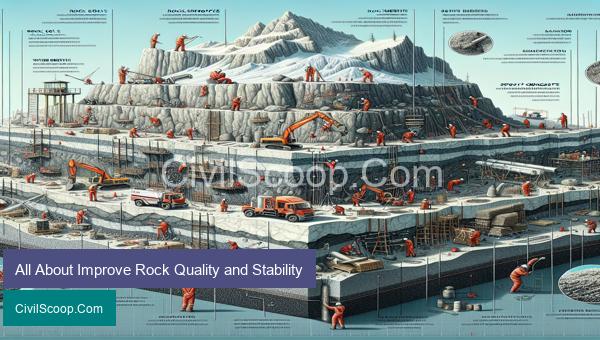
Rock quality and stability are crucial factors to consider in various industries such as mining, construction, and geotechnical engineering. These industries heavily rely on the strength and durability of rock formations to ensure the safety and efficiency of their operations. However, natural and man-made forces can greatly affect the quality and stability of rock, leading to potential hazards and costly damages. That is why improving rock quality and stability has become a significant area of focus for professionals and researchers. In this article, we will dive into the different aspects of improving rock quality and stability, including its importance, methods, and challenges. By understanding these factors, we can effectively address the challenges and maintain the integrity of rock formations, ultimately leading to safe and sustainable developments.
Table of Contents
How to Improve Rock Quality and Stability?
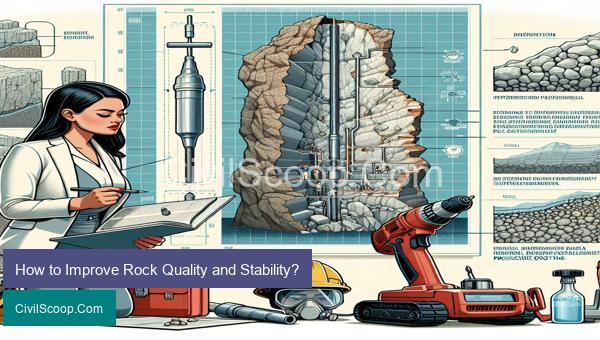
Rock is commonly used as a construction material in civil engineering due to its strength and durability. However, the quality and stability of rock can vary greatly depending on its composition, structure, and geological conditions. Poor rock quality and stability can lead to structural failures and pose safety hazards. Therefore, it is crucial to take measures to improve rock quality and stability in civil engineering projects. In this article, we will discuss some effective ways to achieve this goal.
1. Geotechnical Investigation:
The first step in improving rock quality and stability is to conduct a thorough geotechnical investigation. This involves studying the geological conditions of the project site, identifying the types of rock present, and assessing their properties. The results of the investigation will help determine the appropriate engineering and construction methods for the project and identify potential challenges and risks.
2. Rock Grading and Classification:
Rock grading refers to the process of classifying rocks into different sizes and grades based on their strength and particle size distribution. This is essential as it helps identify the weak zones and the more competent portions of the rock. The weak zones can then be treated or removed, and the competent portions utilized for construction. The most common method of rock grading is the Rock Mass Rating (RMR) system, which assigns a numerical value to rock based on its quality and stability.
3. Rock Stabilization Techniques:
Several techniques can be used to improve the stability of rock in civil engineering projects. Rock bolts, also known as rock anchors, are commonly used to stabilize rock faces by providing support and reinforcement. Shotcreting is another technique that involves spraying concrete onto the rock surface to improve its strength and stability. Grouting, which involves injecting a material into rock fractures and fissures, is also commonly used to enhance the stability of rock.
4. Slope Protection Measures:
In projects involving steep rock slopes, it is essential to employ proper slope protection measures to prevent the risk of rock falls and landslides. This can include installing barriers such as fences or rockfall protection nets, as well as implementing drainage systems to prevent water from accumulating and weakening the rock.
5. Monitoring and Maintenance:
Regular monitoring and maintenance are crucial to ensuring the long-term stability of rock structures. This involves conducting periodic inspections, assessing any changes in the rock condition, and taking appropriate actions to address them. It is also important to repair or reinforce any damaged or weakened areas promptly.
In conclusion, improving rock quality and stability in civil engineering projects requires a multidisciplinary approach, incorporating geotechnical investigation, grading and classification, stabilization techniques, slope protection measures, and ongoing monitoring and maintenance. By following these steps, we can ensure the safe and efficient use of rock as a construction material and minimize the risks associated with poor rock quality.
Remedial Measures to Improve Rock Quality
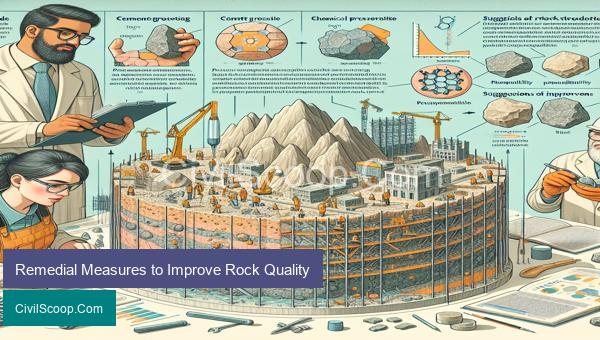
Remedial measures to improve rock quality are essential for ensuring the stability and durability of any construction project involving rocks, such as tunnels, dams, and slopes. Poor rock quality can lead to structural failures, higher maintenance costs, and safety hazards. Therefore, it is crucial to implement appropriate remedial measures to enhance the strength and stability of rock masses. In this article, we will discuss some common techniques used to improve rock quality.
1. Grouting: Grouting is the process of injecting a fluid material into rock fractures to fill the voids and improve the rock’s strength. It is commonly used to stabilize loose or highly fractured rock masses by increasing their overall cohesion and reducing permeability. Grouting can be done in two ways: pressure grouting and permeation grouting. Pressure grouting is suitable for improving rock quality in large voids or fractures, while permeation grouting is useful for more permeable rock masses.
2. Rock bolting: Rock bolting is a widely used technique for reinforcing unstable rock masses. It involves drilling holes into rock and inserting steel bolts or anchors to hold the rock in place. The bolts are then anchored using grout or resin, thus increasing the rock’s residual strength and preventing its movement. Rock bolting is particularly effective in shear zones, fault zones, and rock masses with significant discontinuities.
3. Shotcreting: Shotcreting is a technique that involves spraying a mixture of cement, aggregates, and water onto a rock surface. The resulting layer of concrete acts as a reinforcement, providing support and strength to the underlying rock. Shotcreting is used to stabilize rock slopes, tunnel walls, and underground excavations. It is a cost-effective method and can be used in rock masses of varying qualities and conditions.
4. Rock mass classification and selection of suitable excavation methods: Rock mass classification is a vital step in designing remedial measures for improving rock quality. It involves evaluating the rock mass’s characteristics, such as strength, discontinuities, and permeability, to determine the most suitable excavation and reinforcement methods. By selecting the appropriate excavation method, the risk of damaging the rock mass can be mitigated, and the need for expensive remedial measures can be reduced.
5. Controlled blasting: Controlled blasting is a technique used to break or weaken rock masses to make them more manageable for excavation. It involves reducing the rock’s size and inducing fractures to make it less prone to stresses and failure. Controlled blasting can be used to improve the quality of rocky steep slopes, excavations, and tunnel headings. However, this method requires a high level of expertise to prevent overblasting, which can lead to excessive damage to the rock.
6. Use of rock anchors: Rock anchors are highly efficient in enhancing rock quality and preventing deformations and failures. They are steel tendons inserted into drilled holes and anchored at the end with either grout or mechanical means. Rock anchors provide active reinforcement, working against the rock’s movements, making them especially useful in areas with high ground stresses. They can be used to stabilize rock slopes, tunnel linings, and underground excavations.
In conclusion, remedial measures are essential for improving the quality of rocks in construction projects. A combination of different methods may be necessary, depending on the specific rock mass’s characteristics and conditions. Proper selection and application of these measures can significantly enhance the strength and stability of rock masses, ensuring the safety and longevity of the structure. Therefore, a thorough understanding of the rock mass
How to Reduce Uplift Pressure and Seepage Control
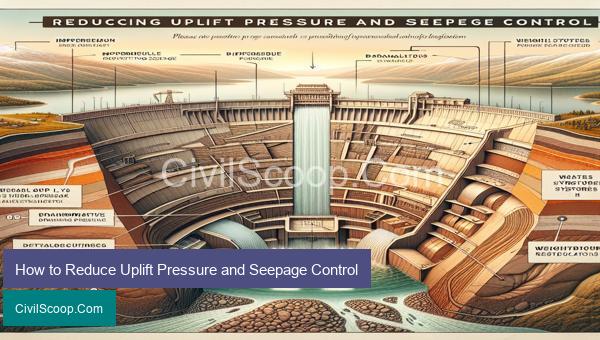
As a civil engineer, it is crucial to understand the potential risks of uplift pressure and seepage in any construction project. Uplift pressure occurs when groundwater or other fluids exert an upward force on a structure, while seepage is the movement of water through soil or porous materials. If left uncontrolled, these forces can cause damage to structures and compromise their stability. In this article, we will discuss how to reduce uplift pressure and implement effective seepage control measures.
1. Proper Site Investigation and Design
The first step in dealing with uplift pressure and seepage is to conduct a thorough site investigation to understand the soil and groundwater conditions. This information is used to design a suitable foundation system that can withstand uplift forces and prevent seepage. The design should consider factors such as the type of soil, groundwater level, and seepage potential to determine the appropriate foundation depth and type.
2. Grading and Drainage Systems
Proper grading and drainage systems are essential to reduce uplift pressure and control seepage. Surface water should be diverted away from the structure to prevent the buildup of hydrostatic pressure. This can be achieved by installing drainage ditches, gutters, and downspouts to direct water away from the building.
In areas with high groundwater levels, installing a well-designed and adequately sized drainage system is crucial. This system can include sump pumps, drain tiles, and French drains to lower the groundwater level and prevent seepage into the structure.
3. Waterproofing and Impermeable Barriers
Waterproofing is essential in reducing the potential for seepage. It involves applying a waterproofing layer to the foundation walls and floors to prevent water from entering the structure. The materials used for waterproofing should have a high resistance to water penetration and be compatible with the surrounding soil.
In addition to waterproofing, impermeable barriers such as geomembranes can also be installed to control seepage. These synthetic liners are placed below the foundation and act as a barrier to prevent water from seeping into the structure.
4. Soil Stabilization and Foundation Anchors
Soil stabilization techniques can be employed to increase the soil’s bearing capacity and reduce its permeability. This can involve mixing cement or lime with the soil to strengthen it and decrease its susceptibility to erosion. Stabilizing the soil can also help to prevent groundwater from entering the structure.
Foundation anchors can also be used to reduce uplift pressure by anchoring the foundation to the underlying bedrock or other stable soil layers. These anchors can be made from steel or reinforced concrete and are installed during the construction of the foundation to provide additional stability.
5. Monitoring and Maintenance
Regular monitoring and maintenance of the foundation system and drainage system are essential in reducing uplift pressure and seepage. This includes inspecting the integrity of the waterproofing layer, checking the functionality of drainage systems, and monitoring the groundwater level. Any issues should be addressed promptly to prevent further damage to the structure.
In conclusion, reducing uplift pressure and controlling seepage is crucial in any construction project. By conducting a thorough site investigation, implementing proper drainage systems and waterproofing measures, using soil stabilization techniques, and regularly monitoring and maintaining the foundation system, civil engineers can mitigate the risks of uplift pressure and seepage and ensure the long-term stability of structures.
Reinforcement of Reduce Uplift Pressure and Seepage Control
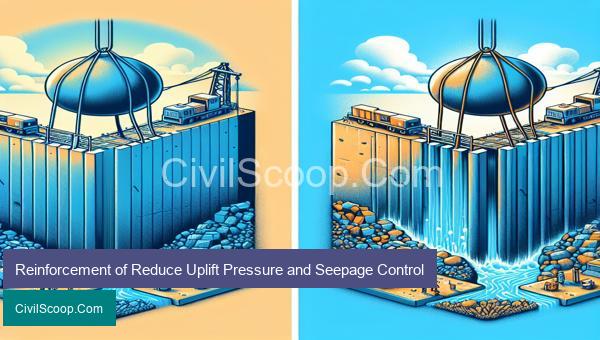
Reinforcement of Reduce Uplift Pressure and Seepage Control are two important aspects in the design and construction of civil engineering structures, especially for structures such as dams, retaining walls, and foundations. These techniques are used to increase the stability and durability of these structures, ensuring their safe and efficient performance.
Reduce Uplift Pressure is a phenomenon that occurs when the water level rises above the base of a structure, creating an upward force on the structure. This can lead to structural failure or instability if not properly addressed. To reduce the uplift pressure on a structure, various methods can be employed, such as the use of drainage systems, grouting, and reinforcement techniques.
One common method for reducing uplift pressure is the use of drainage systems. These systems consist of various components such as filters, conduits, and collection pipes, which allow the water to be drained away from the structure, decreasing the upward force. An effective drainage system should be designed and installed considering factors such as the size of the structure, water flow rates, and soil characteristics.
Another technique for reducing uplift pressure is grouting. Grouting involves injecting a cement-based material into the soil, creating an impermeable barrier, and increasing the soil’s strength and bearing capacity. This helps to reduce the upward force on the structure and increases its stability.
Reinforcement techniques are also commonly used to reduce uplift pressure. These include the use of reinforcement bars or geotextiles to strengthen the soil and increase its ability to resist the upward forces. These materials help to distribute the uplift force more evenly, providing stability and preventing potential failure.
Seepage control is another critical aspect of civil engineering design, which involves controlling or preventing the flow of water through soil or structures. Uncontrolled seepage can result in soil erosion, loss of soil strength, and potential structural failure.
One method of seepage control is through the use of a cutoff wall. A cutoff wall is a barrier constructed between the foundation and the soil to prevent the flow of water. It can be made of materials such as concrete, clay, or steel sheet piles, and is designed to be impermeable to water. Cutoff walls are effective in controlling seepage in earth dams, retaining walls, and foundations.
Other methods of seepage control include grouting, which is also used for reducing uplift pressure, and the use of impermeable liners or membranes. These materials are placed on the surface or embedded in the soil to prevent water from seeping through.
In conclusion, reinforcement of Reduce Uplift Pressure and Seepage Control are essential techniques used in the design and construction of civil engineering structures. They help to increase stability, prevent potential failure, and ensure the long-term performance of these structures. Proper design and installation of these techniques are crucial for the safety and reliability of civil engineering structures.
Conclusion
In conclusion, improving rock quality and stability is crucial in ensuring the safety and longevity of structures built on or near rocky terrain. Through proper planning, testing, and maintenance techniques, engineers and construction professionals can enhance the strength and durability of rock formations. By choosing the right construction methods and materials, incorporating effective reinforcement measures, and regularly monitoring and addressing any potential issues, we can achieve a safer and more stable environment for our built structures. With the constant advancements in technology and techniques, the future holds even more potential for further enhancing rock quality and stability, creating a solid foundation for our built world. It is imperative that we continue to prioritize and invest in these important measures to ensure the utmost safety and stability for our communities.